 ProblemPick
How to Keep a Parked Car Cooler in Summer
Park in dependable shade when possible, then block sunlight before it enters the glass. A fitted window-area half cover provides the broadest accessory coverage; an exterior windshield cover is the focused alternative; an interior sunshade is the quickest everyday option. A steering-wheel cover only protects the surface it touches.
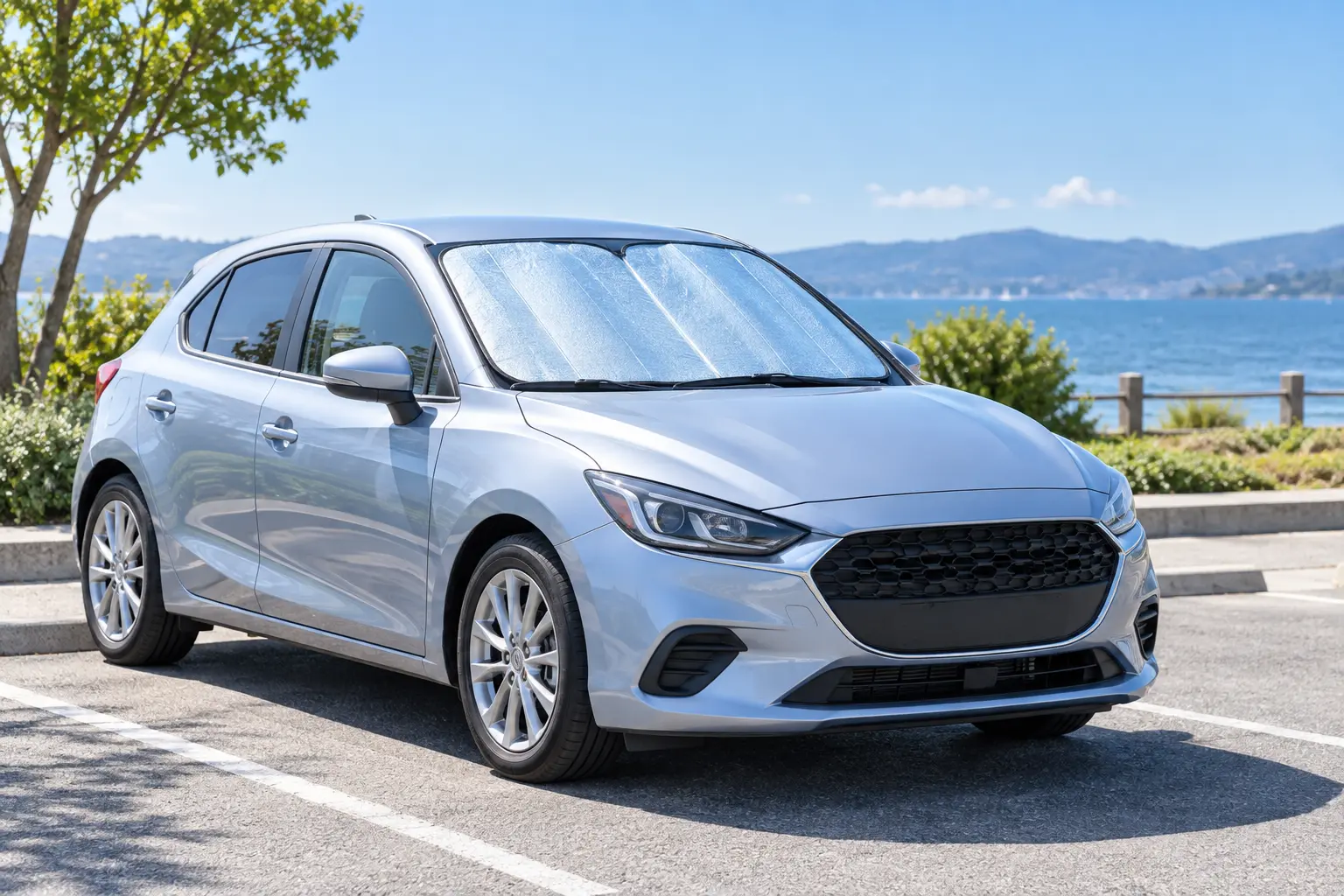
Never leave anyone in a parked vehicle: A cover may reduce heat buildup, but it cannot make a closed car safe for a child, disabled adult, pet or anyone else. The U.S. National Weather Service warns that slightly open windows do not significantly reduce the heating rate. Check every seat before you lock the car.
What helps before you buy a parked-car sunshade?
Start with the parking space. Shade from a garage, structure or tree can reduce direct solar exposure, but remember that shadows move during the day and trees can drop sap or debris. If you often park in full sun, note which glass faces the sun during the longest part of the stop. This tells you whether you need broad window coverage or only a windshield product.
Measure the actual glass rather than the car body. Record the windshield’s widest and tallest usable dimensions, mirror or sensor positions, and the distance across any roof section a half cover must span. Read the vehicle manual for cameras, rain sensors, antennas, airbags and surfaces that must not be covered or loaded.
ADAC’s updated June 17, 2026 comparison found that its tested half cover reduced cabin heating most among the compared sun-protection accessories, while the exterior windshield cover performed better than the interior shade. That result supports a simple principle: broader exterior shading can do more, but fit and setup decide whether you will use it consistently. See the ADAC parked-car sun-protection comparison for its method and full results.
Which products solve different parked-car heat problems?
Window-area half cover
Best for regular outdoor parking when you want to shade several windows at onceA fitted window-area cover, sometimes sold as a half cover, sits outside the vehicle and can shield the windshield, side glass and often the roof section. It blocks sunlight before it passes through the glass, but only when the size and fastening system match the car.
- Benefits
- Covers more glass than a windshield-only product
- Works before sunlight reaches the cabin glass
- Folds away when the vehicle is in use
- Check before buying
- Measure the windshield, roof section and mirror positions, then check the maker's exact vehicle-fit guidance. Look at wind straps, door flaps, seams, storage size and instructions for clean, dry paint. Confirm that the cover will not trap grit against the finish or obstruct charging ports, antennas or required parking displays.
- Possible drawback
- It takes the longest to fit, becomes wet or dirty outdoors and may flap or rub if it is loose, poorly secured or placed on a gritty surface. It also needs more storage space than a simple sunshade.
Exterior windshield cover
Best when front-glass exposure is the main problem and a full half cover feels excessiveThis cover lies against the outside of the windshield, so it intercepts direct sunlight before it crosses the glass and reaches the dashboard. It protects a smaller area than a half cover but is usually quicker to fit.
- Benefits
- Targets the largest front-facing glass area
- Usually faster to fit than a window-area cover
- Can reduce direct heating of the dashboard and steering area
- Check before buying
- Measure the full glass area and check mirror, camera, rain-sensor and wiper clearance. Review how the cover anchors at the doors, mirrors or wipers, whether that method is allowed by the vehicle maker, and how it handles wind and rain. Choose a storage method that keeps a damp or dusty cover away from clean cabin surfaces.
- Possible drawback
- It does not shade the side or rear glass, remains exposed to weather and may be awkward to handle when wet. A poor fit leaves gaps and insecure edges can move in wind.
Fitted interior windshield sunshade
Best for quick daily setup and clean storage inside the carA reflective or opaque interior shade unfolds behind the windshield and mainly reduces direct sunlight on the dashboard, steering wheel and front seats. It is convenient, but sunlight has already crossed the glass before reaching it. In ADAC's comparison, the tested exterior windshield cover reduced cabin heating more than the tested interior shade.
- Benefits
- Fast to deploy from inside the vehicle
- Stays cleaner and drier than an exterior cover
- Stores compactly in many cars
- Check before buying
- Use the vehicle's windshield dimensions rather than a universal-size claim. Check mirror, sensor and camera cutouts, edge gaps, folding direction and how the shade stays upright without stressing trim. Make sure it can be removed completely and stowed before driving.
- Possible drawback
- It protects less effectively than a well-fitted exterior barrier, can sag or leave bright gaps and may be bulky to fold in a small front seat. It must never remain in the driver's view while moving.
Steering-wheel or dashboard touch cover
Best when the real problem is touching a hot control surface after parkingA light-colored cover over the steering wheel, and a separate vehicle-compatible dashboard cloth where permitted, can keep the covered touch surface out of direct sun. This is a surface-comfort tool, not a cabin-cooling product, so it should complement rather than replace window shading.
- Benefits
- Targets the surface you need to touch first
- Small and simple to store
- Useful when a larger cover is impractical
- Check before buying
- Check the vehicle manual before placing anything on the dashboard. The item must stay clear of airbags, vents, displays, sensors and controls, tolerate parked-car conditions, and come off in one motion. Avoid loose, heavy or reflective objects that could move around or create glare.
- Possible drawback
- It does little for the overall cabin temperature and only protects the area it covers. A dashboard item may be unsuitable in some vehicles because of airbag, sensor or visibility zones.
ProblemPick compares product types, not individual offers. Amazon shows current products, prices, ratings and availability only after you choose to open a link.
Quick comparison: which parked-car shade comes first?
| Product type | Best use | Main limitation |
|---|---|---|
| Window-area half cover | Best for regular outdoor parking when you want to shade several windows at once | It takes the longest to fit, becomes wet or dirty outdoors and may flap or rub if it is loose, poorly secured or placed on a gritty surface. It also needs more storage space than a simple sunshade. |
| Exterior windshield cover | Best when front-glass exposure is the main problem and a full half cover feels excessive | It does not shade the side or rear glass, remains exposed to weather and may be awkward to handle when wet. A poor fit leaves gaps and insecure edges can move in wind. |
| Fitted interior windshield sunshade | Best for quick daily setup and clean storage inside the car | It protects less effectively than a well-fitted exterior barrier, can sag or leave bright gaps and may be bulky to fold in a small front seat. It must never remain in the driver's view while moving. |
| Steering-wheel or dashboard touch cover | Best when the real problem is touching a hot control surface after parking | It does little for the overall cabin temperature and only protects the area it covers. A dashboard item may be unsuitable in some vehicles because of airbag, sensor or visibility zones. |
Which option fits your parking routine?
Is the car outside for hours most days?
Start with a fitted window-area half cover if you have a clean place to fit it, dependable anchors and room to store it. Broad exterior coverage is useful only when the cover can stay secure through the actual weather at your parking location.
Does the windshield face direct sun?
Use an exterior windshield cover when you want to stop sunlight before it crosses the front glass without covering the whole upper car. Measure carefully; a loose universal cover gives up useful area at the edges.
Do you need a one-minute daily routine?
Choose a fitted interior windshield sunshade. Accept the lower protection of an interior barrier in exchange for fast, clean handling. A shade you deploy consistently may serve you better than a larger cover that stays in the trunk.
Is the steering wheel the only recurring problem?
Choose a simple steering-wheel cover and remove it before starting the car. Do not expect it to cool the cabin, seats or unshaded controls.
How do you use a parked-car cover safely?
If groceries and small items also move around in the cargo area, solve that separately with our guide to keeping groceries from rolling in the trunk. A sun cover is not a cargo restraint, and a trunk organizer is not heat protection.
Parked-car sunshade buying checklist
Parked-car sunshade questions
Does cracking the windows keep a parked car safe?
No. The National Weather Service says slightly open windows do not significantly reduce the heating rate. Never leave a person or pet in a parked vehicle, with or without a shade.
Is an exterior windshield cover better than an interior sunshade?
An exterior cover blocks sunlight before it crosses the windshield and performed better than the interior shade in ADAC’s cited comparison. The interior option is usually cleaner and faster to deploy, so choose based on the protection you need and the routine you will actually follow.
Does a windshield shade cool the whole car?
It mainly shades the front glass area and the surfaces behind it. Sunlight can still enter through side and rear windows, and heat can still build throughout the cabin. Treat “cooler” as a relative reduction, not a cool or safe interior.
Can I leave the sunshade in place while driving?
No. Remove and stow every windshield, dashboard and steering-wheel cover before moving the car. Nothing should obstruct the driver’s view, controls, mirrors, airbags, sensors or pedals.
Will a universal half cover fit every car?
No. Windshield shape, roof length, mirror position and anchor layout vary. Compare the product’s dimensions and fit instructions with your measured vehicle before buying.
What should I do with a wet exterior cover?
Follow its care instructions, keep the wet surface away from clean upholstery and allow it to dry before long-term storage. Do not refit a dirty or gritty cover against paint without cleaning it as directed.