 ProblemPick
Mail piling up at home? Try these five organizers
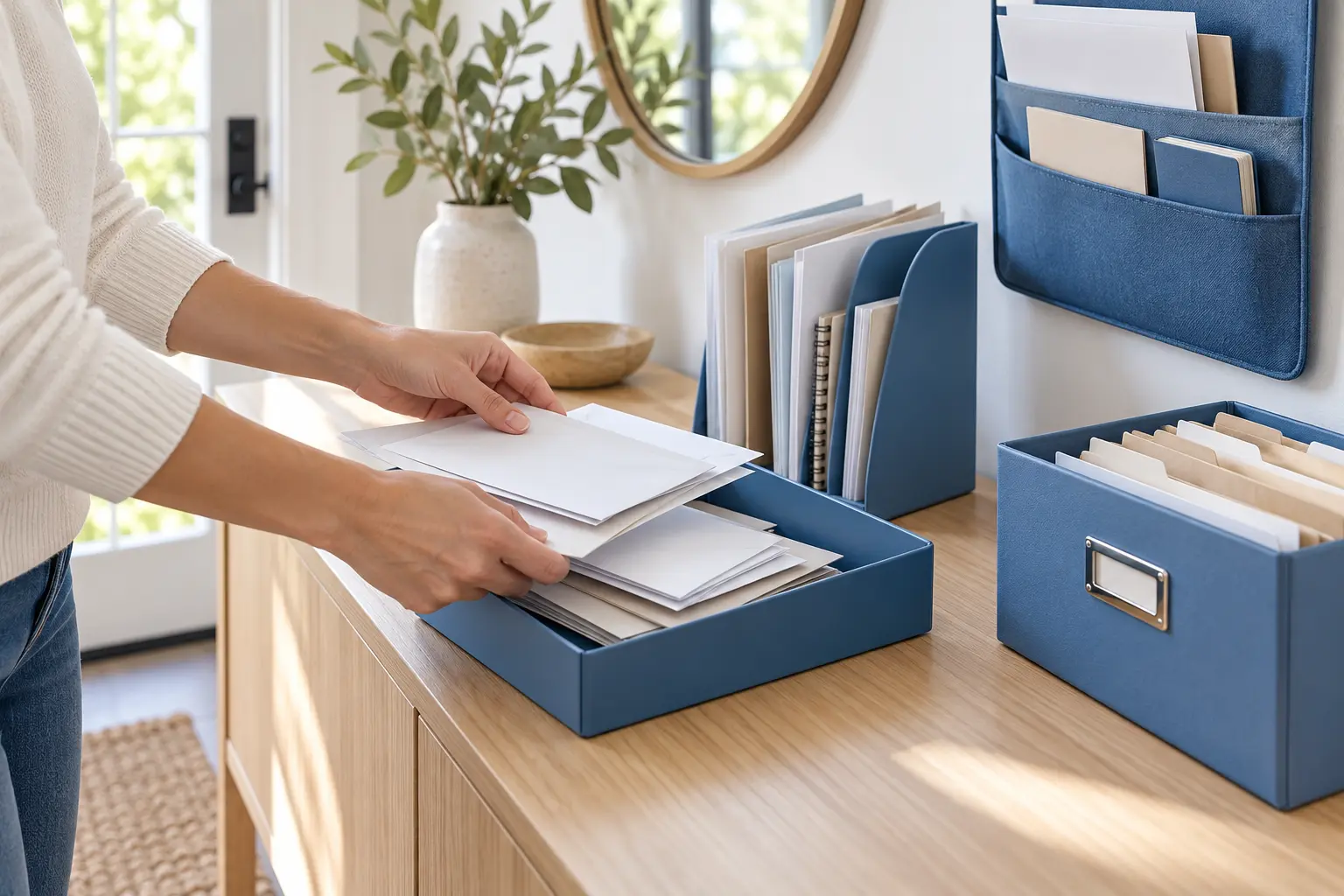
Use a shallow inbox when mail lands on one clear surface, or wall pockets when vertical space is easier. A desktop sorter keeps current papers visible, a portable file box moves with the work, and a lidded box contains papers after they leave the active workflow.
Scope: This guide covers physical organization, not document-retention, privacy, tax, financial or legal advice. Follow issuer requirements and applicable local rules before destroying or discarding important records. Do not display addresses or personal details where visitors can see them.
Where does your paper workflow break down?
Look at the first place envelopes, school notices, receipts or forms collect. A pile by the door needs a landing zone; mixed papers beside a desk need visible separation; folders carried between rooms need a portable home; completed items need a defined destination away from the active surface.
Remove obvious packaging and duplicates only when you can do so safely, then count the active groups. The best organizer fixes one bottleneck without turning every sheet into a filing project.
What should you measure before buying?
Mock up the footprint with paper or reuse a small box for a week. If it is inconvenient to empty, the permanent organizer will not solve that problem.
Which organizers help with mail and paper clutter?
Shallow incoming-mail tray
Best when unopened mail lands on one console, counter or deskOne low tray creates a clear boundary for everything that still needs a first look. It is fast to use with full hands and keeps a small stack visible instead of spreading across the surface.
- Benefits
- Fast one-handed drop-off
- Keeps the active stack visible
- No mounting or filing step
- Check before buying
- Measure the largest envelope and the clear surface footprint. Check the usable inner area, rim height, base grip and surface-friendly underside. Choose a tray that can hold papers flat without becoming a deep archive.
- Possible drawback
- It uses surface space and cannot separate several actions. A deep or oversized tray can hide old paper and encourage the pile to grow.
Wall or door mail pockets
Best when the arrival surface is crowded but a reachable vertical area is availableTwo or three shallow pockets can separate new mail from papers that need action while freeing the console below. Visible labels or distinct positions make the next step easier to recognize.
- Benefits
- Uses vertical space
- Can separate a few active stages
- Keeps counters clearer
- Check before buying
- Measure the widest envelope, pocket depth, total hanging length and door clearance. Confirm the wall or door material, permitted fastener and stated load. Keep switches, handles and walkways clear.
- Possible drawback
- Mounting may mark a surface, and adhesive can fail on unsuitable paint or texture. Deep pockets hide contents, while too many sections create sorting work.
Vertical desktop paper sorter
Best when several current papers need to stay visible beside a desk or household work areaUpright slots separate a few active categories without requiring a drawer. The footprint is narrow, and tabs remain easy to scan when papers are inserted consistently.
- Benefits
- Narrow footprint
- Makes current categories easy to scan
- Supports quick add-and-remove access
- Check before buying
- Measure letter-size papers, folders and the shelf height above the sorter. Check slot width, base stability and whether dividers are fixed or adjustable. Allow room to lift papers out without bending them.
- Possible drawback
- Tall papers can slump or curl, and narrow slots fill quickly. It is not suitable for long-term storage or a large backlog.
Portable file box with folders
Best when household papers move between a desk, dining table and storage shelfA handled box keeps a modest set of working folders together and can be carried to the place where decisions are made. It also lets the active system leave a shared surface after use.
- Benefits
- Moves with the household workflow
- Keeps working folders together
- Stores off the main surface
- Check before buying
- Measure the intended folders, filled weight and the route between storage and work areas. Check handle comfort, lid clearance, interior rails and the box footprint on its shelf. Do not overload it beyond the maker's instructions.
- Possible drawback
- Lifting is an extra step, and a heavy box may be left out. Deep boxes invite overfilling and can make the newest paper hard to find.
Lidded document box
Best for papers that should stay out of sight after they leave the active workflowA fitted lid keeps a defined group of infrequently handled papers visually contained on a shelf. It works as a destination after review, not as the first landing place for every envelope.
- Benefits
- Reduces visual clutter
- Keeps a defined paper group together
- Stacks or shelves neatly when the maker allows
- Check before buying
- Measure folders, shelf depth and clearance for removing the lid. Check the closure, carry points and material care instructions. Treat an ordinary organizer as concealment only—not as certified fire, water or theft protection.
- Possible drawback
- The lid slows everyday access and can let forgotten papers accumulate. Ordinary boxes do not provide certified protection unless the product specifically says so.
ProblemPick compares product types, not current offers. Amazon shows products, prices, ratings, availability and seller terms only after you choose to open a link.
Quick comparison: which paper organizer fits?
| Product type | Best use | Main limitation |
|---|---|---|
| Shallow incoming-mail tray | Best when unopened mail lands on one console, counter or desk | It uses surface space and cannot separate several actions. A deep or oversized tray can hide old paper and encourage the pile to grow. |
| Wall or door mail pockets | Best when the arrival surface is crowded but a reachable vertical area is available | Mounting may mark a surface, and adhesive can fail on unsuitable paint or texture. Deep pockets hide contents, while too many sections create sorting work. |
| Vertical desktop paper sorter | Best when several current papers need to stay visible beside a desk or household work area | Tall papers can slump or curl, and narrow slots fill quickly. It is not suitable for long-term storage or a large backlog. |
| Portable file box with folders | Best when household papers move between a desk, dining table and storage shelf | Lifting is an extra step, and a heavy box may be left out. Deep boxes invite overfilling and can make the newest paper hard to find. |
| Lidded document box | Best for papers that should stay out of sight after they leave the active workflow | The lid slows everyday access and can let forgotten papers accumulate. Ordinary boxes do not provide certified protection unless the product specifically says so. |
Which organizer matches the way paper piles up?
Does new mail spread across one surface?
Choose one shallow tray that fits the largest envelope. Keep it small enough that reaching capacity becomes a prompt to process the stack.
Is the landing surface already full?
Use two or three reachable wall pockets with one action per pocket. Confirm the mount and keep doors and switches clear.
Do current papers need to remain visible?
Use a stable vertical sorter with a few wide slots. It suits active work, not long-term storage.
Do papers move between rooms?
Use a portable file box sized for the folders and a comfortable filled weight. Return it to one shelf after each session.
Are completed papers creating visual clutter?
Move them to a measured lidded box after retention decisions are made. Do not treat an ordinary box as certified protection.
How do you build a paper routine that lasts?
If the same surface also collects everyday carry items, use the guide to giving keys a fixed landing zone. For paper that belongs in the work area, see how to organize a desk without wasting space. Browse more Organization guides.
Mail-organizer buying checklist
Mail and paper-organization FAQs
What is the simplest way to organize incoming mail?
Use one shallow inbox at the place mail already lands, then empty it on a repeatable schedule. Sort only into a few next actions, such as respond, file or recycle, instead of building a complicated category system.
Should a mail organizer have several compartments?
Only if each compartment represents a real action used by the household. Two or three visible stages are usually easier to maintain than many narrow pockets. Empty or ambiguous sections tend to collect unrelated paper.
Is a wall organizer better than a desktop tray?
A wall organizer saves surface space and can separate a few active stages, but it needs suitable mounting and reachable pockets. A tray is faster when a clear landing surface already exists. Test the location with a temporary box or paper outline first.
How do I stop a paper organizer from becoming another pile?
Limit it to active paper, give every section one purpose and schedule a short reset before it fills. Move completed items out of the active organizer instead of adding more trays.
What size organizer fits household mail?
Measure the largest envelopes and folders you actually receive, then compare those dimensions with the product's usable interior—not only its outside size. Leave enough clearance to insert and remove papers without folding them.
How long should I keep household documents?
Retention depends on the document, issuer requirements and applicable local rules. This guide does not set retention periods. Check the source of the document or an appropriate local authority before discarding anything important.