 ProblemPick
Keep losing your keys? Try these five organizers
Put everyday keys in a shallow tray when you already have a clear arrival surface, or use a wall rack when vertical space is easier. A closed cabinet hides several assigned hooks, a bag clip helps during commuting, and a compatible Bluetooth finder provides backup when the routine still fails.
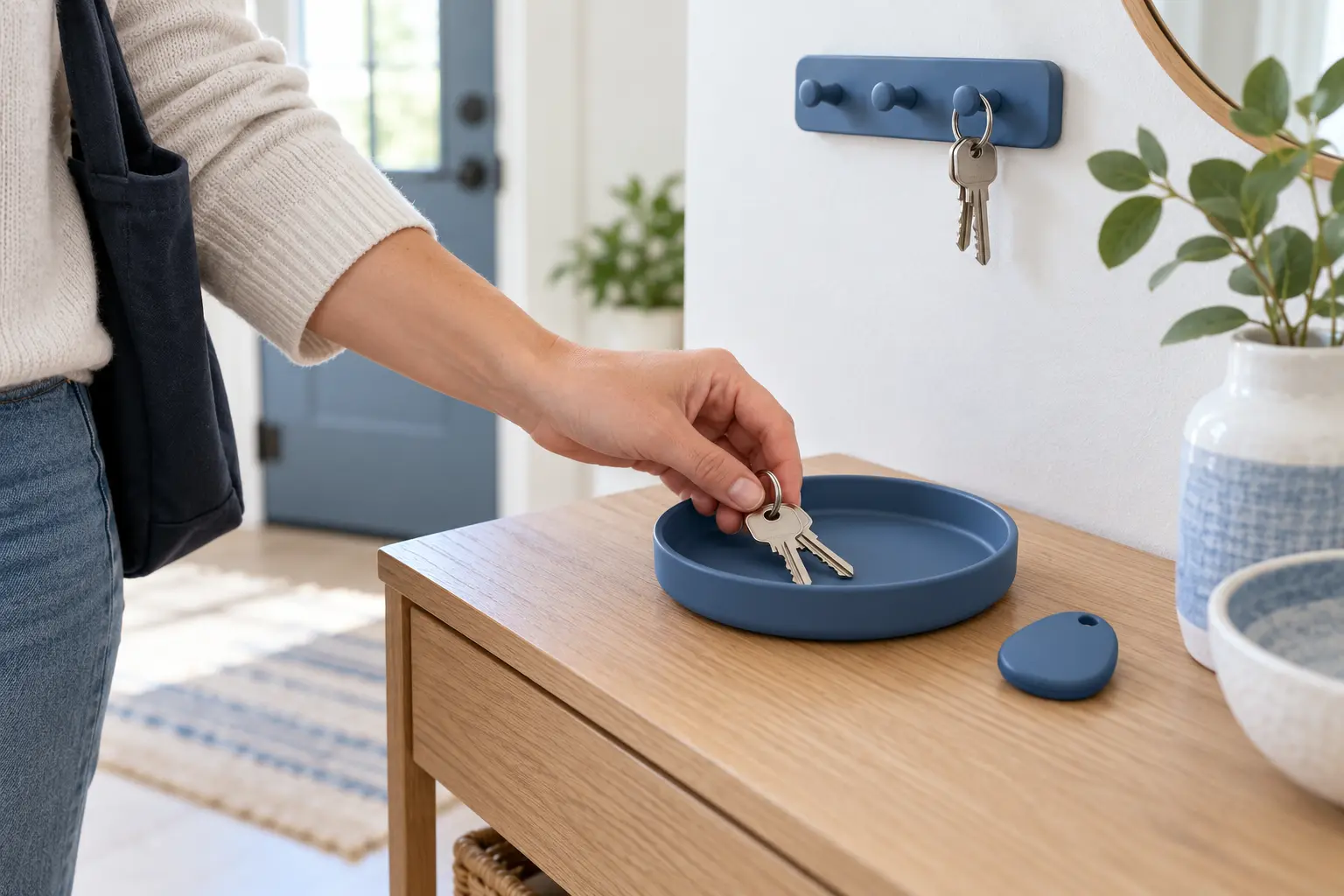
Keep the setup practical: Never put an address or other identifying information on a key ring. Follow the organizer and finder instructions, use only permitted wall fasteners, keep doors and walkways clear, and inspect clips, batteries and mounts regularly.
Why do keys keep getting lost at home?
Keys usually disappear during a transition. They are set down while shoes come off, buried under mail, carried into the kitchen, dropped into a different bag or left in a coat pocket. Write down the last three places where you found them and the task you were doing at the time. That identifies whether the missing piece is a surface landing zone, vertical hooks, a bag attachment or a recovery device.
Separate the daily ring from spare and rarely used keys. An organizer works best when each visible position has one clear owner. A deep drawer full of unlabeled rings may hide the clutter, but it makes the next departure slower.
What should you check before buying a key organizer?
Test the location before committing. Use an existing dish for a tray, removable notes for hook positions or one bag clip you already own. A week of real arrivals tells you more than a styled entryway photo.
Which products help you stop losing keys?
Entryway key tray or catchall
Best when keys are usually dropped on a console, kitchen counter or dresser after coming homeA shallow tray turns an existing surface into one obvious landing zone. It is quick to use with full hands and can hold a daily key ring without hiding it under mail or other objects.
- Benefits
- Fast one-handed drop-off
- No mounting or batteries
- Easy to see during the exit routine
- Check before buying
- Place your largest everyday key ring in a measured outline before buying. Check the tray's usable inner area, rim height, base grip and surface-friendly underside. Keep enough clear space to set keys down without moving décor.
- Possible drawback
- A tray consumes surface space and can become a general catchall. Deep bowls hide small keys, while smooth lightweight trays may slide when a heavy key ring is dropped.
Wall-mounted key rack with hooks
Best when no clear surface is available and a fixed vertical home is easiest to rememberA hook rack or small shelf keeps each key ring visible and separates household, vehicle and utility keys. Mounting it near the normal arrival route makes the return action part of entering the home.
- Benefits
- Uses vertical space
- Gives several key rings separate places
- Creates a fixed visual reminder
- Check before buying
- Count the key rings, measure their hanging length and confirm the wall material and permitted fastener. Check the rack's stated load, hook spacing and reach for every user. Keep doors, switches, outlets and walkways clear.
- Possible drawback
- Installation can mark a wall, and adhesive may fail on unsuitable paint or texture. Crowded hooks tangle key rings, and a poorly placed rack can be bumped by bags or coats.
Closed key cabinet
Best when several key rings need assigned hooks but visible metal and tags make the entryway feel clutteredA shallow cabinet keeps labeled positions behind a door while preserving a fixed location. It suits households that want visual calm without mixing keys into a drawer or deep box.
- Benefits
- Hides visual clutter
- Keeps hooks in an ordered grid
- Can keep keys separate from loose countertop items
- Check before buying
- Measure the largest ring and any fob from hook to closed door, including the turning path of the cabinet door. Verify mounting requirements, hook count, closure and reach. Treat it as organization, not a substitute for certified secure storage.
- Possible drawback
- The door adds an extra step, so keys may be left outside when people are rushed. A small cabinet may not close around bulky fobs, and mounting changes the wall.
Key clip, tether or bag leash
Best when keys disappear inside bags, pockets or the handoff between home and commutingA clip or short tether attaches the ring to one designated loop inside a bag or to a daily carry item. It reduces rummaging and keeps the key ring from dropping to the bottom of a changing bag.
- Benefits
- Keeps keys in one part of a bag
- Moves with the daily carry routine
- Requires little storage space
- Check before buying
- Confirm the clip fits the intended loop and that the tether leaves enough reach to unlock normally. Inspect the gate, swivel and attachment regularly. Use it only as an organizer, not for climbing, lifting or safety restraint.
- Possible drawback
- It adds a release step and can snag on bag contents. A weak loop or bulky clip may wear fabric, and it fails when the user switches bags without moving the system.
Bluetooth key finder tag
Best when a key ring still wanders after it has a fixed home and the household uses a compatible phoneA small finder can trigger a sound or show the last available location through its companion system. It is a recovery tool for occasional mistakes, not a replacement for returning keys to the tray or hook.
- Benefits
- Can help locate a misplaced ring
- Adds a recovery layer to a fixed-home routine
- Often fits an existing key ring
- Check before buying
- Confirm phone and operating-system compatibility, setup steps, account or permission requirements, battery format and replacement method. Check the attachment clearance around the fob and follow the maker's privacy, alert and disposal instructions.
- Possible drawback
- It needs compatible software, power and permissions. Sound can be muffled, location data may be delayed or unavailable, and a tag adds bulk without guaranteeing recovery.
ProblemPick compares product types, not current offers. Amazon shows products, prices, ratings, availability and seller terms only after you choose to open a link.
Quick comparison: which key organizer fits?
| Product type | Best use | Main limitation |
|---|---|---|
| Entryway key tray or catchall | Best when keys are usually dropped on a console, kitchen counter or dresser after coming home | A tray consumes surface space and can become a general catchall. Deep bowls hide small keys, while smooth lightweight trays may slide when a heavy key ring is dropped. |
| Wall-mounted key rack with hooks | Best when no clear surface is available and a fixed vertical home is easiest to remember | Installation can mark a wall, and adhesive may fail on unsuitable paint or texture. Crowded hooks tangle key rings, and a poorly placed rack can be bumped by bags or coats. |
| Closed key cabinet | Best when several key rings need assigned hooks but visible metal and tags make the entryway feel cluttered | The door adds an extra step, so keys may be left outside when people are rushed. A small cabinet may not close around bulky fobs, and mounting changes the wall. |
| Key clip, tether or bag leash | Best when keys disappear inside bags, pockets or the handoff between home and commuting | It adds a release step and can snag on bag contents. A weak loop or bulky clip may wear fabric, and it fails when the user switches bags without moving the system. |
| Bluetooth key finder tag | Best when a key ring still wanders after it has a fixed home and the household uses a compatible phone | It needs compatible software, power and permissions. Sound can be muffled, location data may be delayed or unavailable, and a tag adds bulk without guaranteeing recovery. |
Which solution fits the way your keys disappear?
Do keys land on a clear surface near the door?
Choose a shallow, stable tray sized for the daily ring. Keep mail and loose change in a different container so the key remains visible.
Is surface space already crowded?
Use a measured hook rack where everyone can reach it. Give each active ring one hook and leave enough spacing to lift it without tangling.
Do visible hooks make the entryway feel busy?
A shallow cabinet can hide assigned hooks. Confirm that the largest fob fits behind the closed door and that users will still complete the extra step.
Do keys vanish inside a work bag or tote?
Attach them to one designated internal loop with a short clip or leash. Check the loop and clip for wear, especially after switching bags.
Does the key ring still wander after it has a home?
Add a compatible finder as a recovery layer. Keep its software and power requirements current, but do not treat it as a guarantee.
How do you make the key home stick?
The same fixed-home method works for remote controls that keep disappearing. If the arrival area is crowded from the floor up, start with the guide to storing shoes in a small entryway. Browse more Organization guides.
Key-organizer buying checklist
Key-organization FAQs
Where is the best place to keep house keys?
Use the first convenient place on the route you naturally take after entering: a shallow tray on a clear surface or a reachable hook rack. The best spot is visible, consistent and easy to use with one hand, without blocking a door, switch or walkway.
How can I stop leaving keys in different rooms?
Choose one landing zone and complete the return before putting down bags, mail or groceries. If keys must travel to another room, attach them to one daily bag loop or carry item so the handoff stays consistent.
Is a key bowl or a wall hook better?
A tray is faster when you already have a clear arrival surface. Hooks use vertical space and separate several rings, but they need permitted installation and enough spacing. Test the intended spot with an existing dish or removable marker before buying.
Are Bluetooth key finders worth it?
They can help with occasional misplacement when the phone, operating system and permissions are compatible. They still need power and may not provide immediate or exact location data. Build a fixed-home routine first, then add a finder as backup.
How do I keep keys easy to find inside a bag?
Clip the ring to one strong, designated internal loop or use a short key leash that reaches the opening. Check the clip and fabric regularly, and move the whole setup when switching bags.
How many hooks should a key organizer have?
Provide one clearly assigned hook per active key ring, plus only the small amount of spare capacity you genuinely need. Too many unused hooks invite unrelated items and make the system harder to scan.