 ProblemPick
How to Sleep More Comfortably on a Long Flight
Build a small comfort kit around the problem that interrupts your rest: head movement, light, noise or temperature. Start with one well-fitting item for the biggest problem, keep it within your airline’s cabin-bag allowance and make sure nothing blocks the aisle, seat belt or crew instructions.
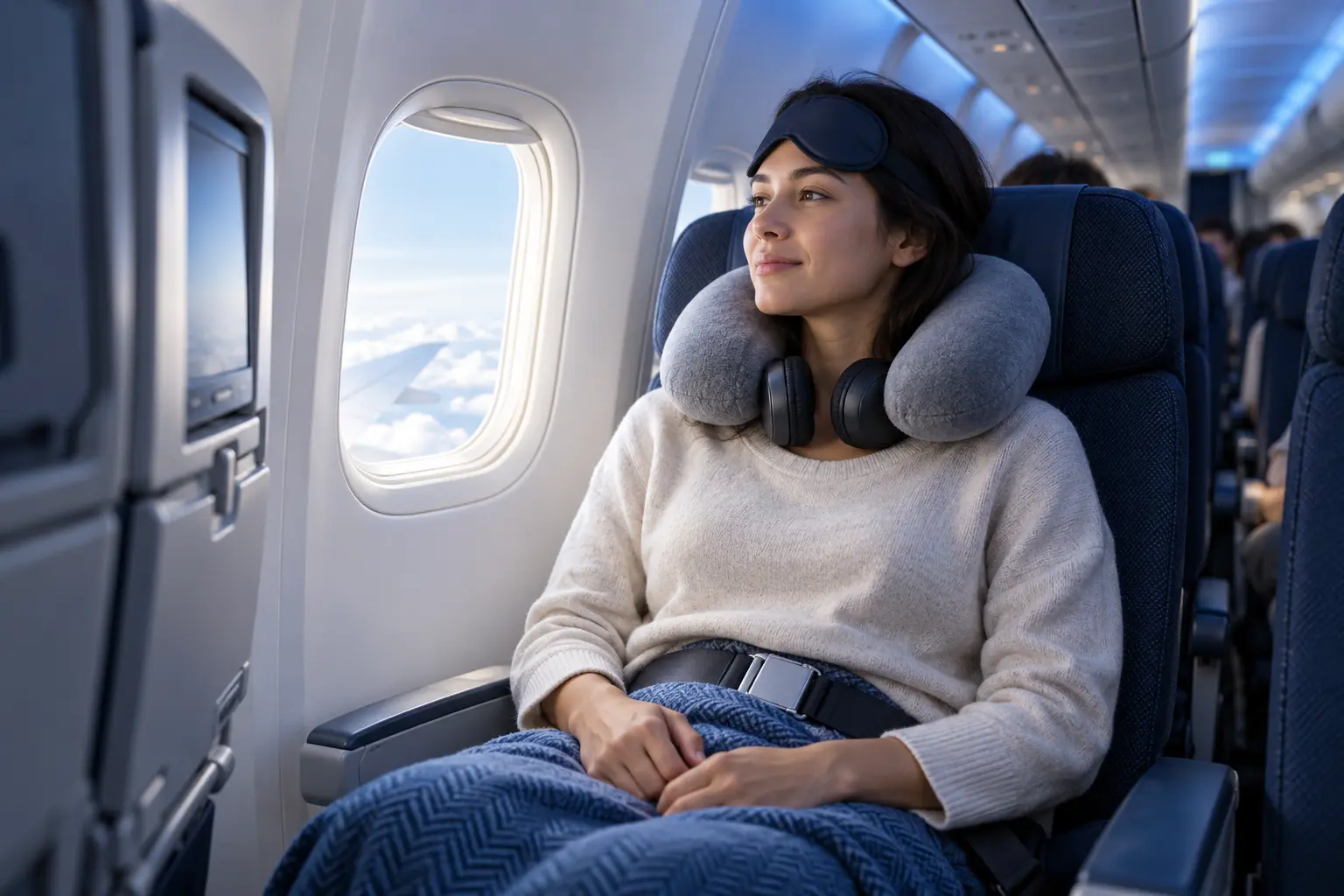
Comfort, not treatment: These products may make the cabin environment easier to manage, but they cannot guarantee sleep or prevent jet lag. The CDC’s jet-lag guidance treats time-zone adjustment as a separate issue. If you have a medical concern about flying or sleeping upright, ask a qualified clinician rather than relying on a travel accessory.
What should you check before buying comfort products for a flight?
Look at your actual itinerary first: flight duration, local departure and arrival times, seat type, personal-item allowance and whether the airline lists bedding or headphones. A product that seems compact at home may take most of the space beneath a narrow seat. Check your airline’s current dimensions and rules directly instead of relying on a universal-size label.
Pack the kit in the order you will use it. Keep the mask, earplugs and pillow near the top of your personal item so you do not need to open the overhead bin after the cabin lights are dimmed. Tuck away straps and cables. The FAA’s carry-on guidance says heavy items should go under the seat rather than overhead and loose straps should be tucked in to reduce trip and falling-object hazards.
Battery-powered headphones and power banks also require planning. The FAA says spare lithium batteries must remain in carry-on baggage, including when a carry-on is checked at the gate. Review its current portable-electronics rules, protect batteries from damage and short circuit, and follow any stricter airline instructions.
Which products solve the main long-flight comfort problems?
Adjustable travel pillow
Best when your head drops forward or to one side while you rest uprightA travel pillow creates a support point between your head, neck, shoulder and seat. U-shaped foam, inflatable and wrap-style designs feel very different, so the useful choice is the one that supports your usual leaning direction without pushing your head forward.
- Benefits
- Targets upright head movement
- Can make a fixed seat position easier to tolerate
- Inflatable versions pack especially small
- Check before buying
- Try the shape while sitting upright. Check neck opening, chin support, rear thickness, cover washability, packing size and whether it works with your headphones. An inflatable model should have a valve you can close securely and adjust without disturbing nearby passengers.
- Possible drawback
- A bulky or overfilled pillow can feel warm, crowd the seat or push the head into an awkward position. One shape does not suit every body or seatback.
Contoured sleep mask
Best when cabin, reading or screen light keeps reaching your eyesA sleep mask creates a personal dark zone even when the cabin schedule does not match yours. A contoured mask leaves space around the eyelids, while a flatter fabric mask usually packs smaller. The seal around the nose matters as much as the material.
- Benefits
- Works independently of cabin lighting
- Small enough for a personal-item pocket
- Useful in airports and hotels as well as on the flight
- Check before buying
- Check strap adjustment, nose shape, eye clearance, fabric feel and cleaning instructions. Make sure the strap can sit comfortably with your pillow and headphones. Avoid a fit that presses uncomfortably on the eyes or leaves a large light gap beside the nose.
- Possible drawback
- Poor fit can leak light, shift when you lean against the seat or conflict with headphone bands. Some people dislike pressure or warmth around the face.
Reusable earplugs or over-ear headphones
Best when conversation and steady cabin sound are the main distractionSoft reusable earplugs are compact and require no battery. Over-ear noise-canceling headphones take more room but can also play audio. Treat them as two routes to the same noise problem: choose passive simplicity or powered control, not both by default.
- Benefits
- Earplugs use almost no packing space
- Headphones can combine quieter listening with entertainment
- Both can be reused when maintained as directed
- Check before buying
- For earplugs, follow the maker's insertion, cleaning and replacement directions and choose a comfortable size. For headphones, check clamp force, packed dimensions, battery duration, cable option and airline rules. Keep volume moderate enough that you can respond to crew instructions.
- Possible drawback
- Earplugs depend on correct fit and hygiene. Over-ear headphones are bulkier, can feel warm and still require you to remain attentive to safety announcements.
Compact travel blanket or wrap
Best when the cabin temperature changes during a long flightA lightweight wrap adds or removes one layer without relying on the airline to provide bedding. A rectangular blanket offers broad coverage; a wearable wrap is less likely to slide. Either should remain compact enough for your allowed personal item.
- Benefits
- Adds a removable warmth layer
- Can double as a shoulder wrap in the terminal
- Washable options are easy to reset between trips
- Check before buying
- Check packed size, washable material, edge finish and how easily you can place it without unfastening or hiding the seat belt. Avoid cords, long loose fringes and oversized fabric that can spill into the aisle or under another passenger's feet.
- Possible drawback
- It occupies valuable carry-on space and may bunch around the lap. A very thin layer may add little warmth, while a large one can interfere with the seat area.
ProblemPick compares product types, not individual offers. Amazon shows current products, prices, ratings and availability only after you choose to follow a link.
Quick comparison: which travel comfort item should come first?
| Product type | Best use | Main limitation |
|---|---|---|
| Adjustable travel pillow | Best when your head drops forward or to one side while you rest upright | A bulky or overfilled pillow can feel warm, crowd the seat or push the head into an awkward position. One shape does not suit every body or seatback. |
| Contoured sleep mask | Best when cabin, reading or screen light keeps reaching your eyes | Poor fit can leak light, shift when you lean against the seat or conflict with headphone bands. Some people dislike pressure or warmth around the face. |
| Reusable earplugs or over-ear headphones | Best when conversation and steady cabin sound are the main distraction | Earplugs depend on correct fit and hygiene. Over-ear headphones are bulkier, can feel warm and still require you to remain attentive to safety announcements. |
| Compact travel blanket or wrap | Best when the cabin temperature changes during a long flight | It occupies valuable carry-on space and may bunch around the lap. A very thin layer may add little warmth, while a large one can interfere with the seat area. |
Which option fits what keeps you awake on the plane?
Does your head fall forward or sideways?
Start with the pillow, not a complete kit. Test it in a dining chair with a similar upright back. Choose a shape that supports the direction you actually lean and does not push the back of your head forward.
Can you rest until a screen or reading light appears?
Prioritize a contoured sleep mask. Check the seal near the nose and make sure the strap remains comfortable beneath or above your headphones.
Is sound the main problem?
Choose reusable earplugs for the smallest battery-free option. Choose over-ear headphones when you also want audio and have enough bag space. Do not make both your first purchase unless they solve distinct needs for you.
Do you alternate between feeling warm and cold?
Wear comfortable layers first. Add a compact wrap only if your clothing layers are not enough and the packed item still fits your personal allowance without displacing essentials.
How do you use a comfort kit without crowding the seat?
If bright rooms also affect your sleep after arrival, compare window coverings and portable options in our guide to making a bedroom darker for sleep. The flight kit should remain compact; room-scale blackout products belong at the destination.
Long-flight comfort buying checklist
Long-flight sleep comfort questions
Do I need both earplugs and noise-canceling headphones?
Usually not. Earplugs are compact and battery-free, while headphones take more room but can play audio. Start with the format that fits your bag, ears and routine; add a second only if it serves a genuinely different purpose.
Is an inflatable or foam travel pillow better?
An inflatable pillow packs smaller and lets you adjust firmness. Foam keeps its shape without a valve but is bulkier. The better choice is the one that supports your leaning direction without pushing your head forward.
Can I bring a travel blanket on a plane?
Airline baggage policies vary, so check whether it must fit inside your allowed personal item. Once seated, keep it away from the aisle and seat mechanisms and follow crew instructions about stowage.
Does a sleep mask help with jet lag?
A mask only controls the light reaching your eyes at that moment. Jet lag involves adjustment to a new time zone and is a separate issue; consult current public-health guidance for that planning.
Where should I pack my comfort kit?
Keep small items in one pouch near the top of the personal item that will remain accessible at your seat. Do not leave loose accessories in the aisle, around your feet or in an overhead bin that you must reopen repeatedly.
Can a travel pillow guarantee sleep on a long flight?
No. It may support a more comfortable seated position, but seat design, noise, light, timing and personal preference all affect whether you rest. Treat it as one comfort tool, not a guarantee.