 ProblemPick
How to Organize Carry-On Luggage for an Easier Trip
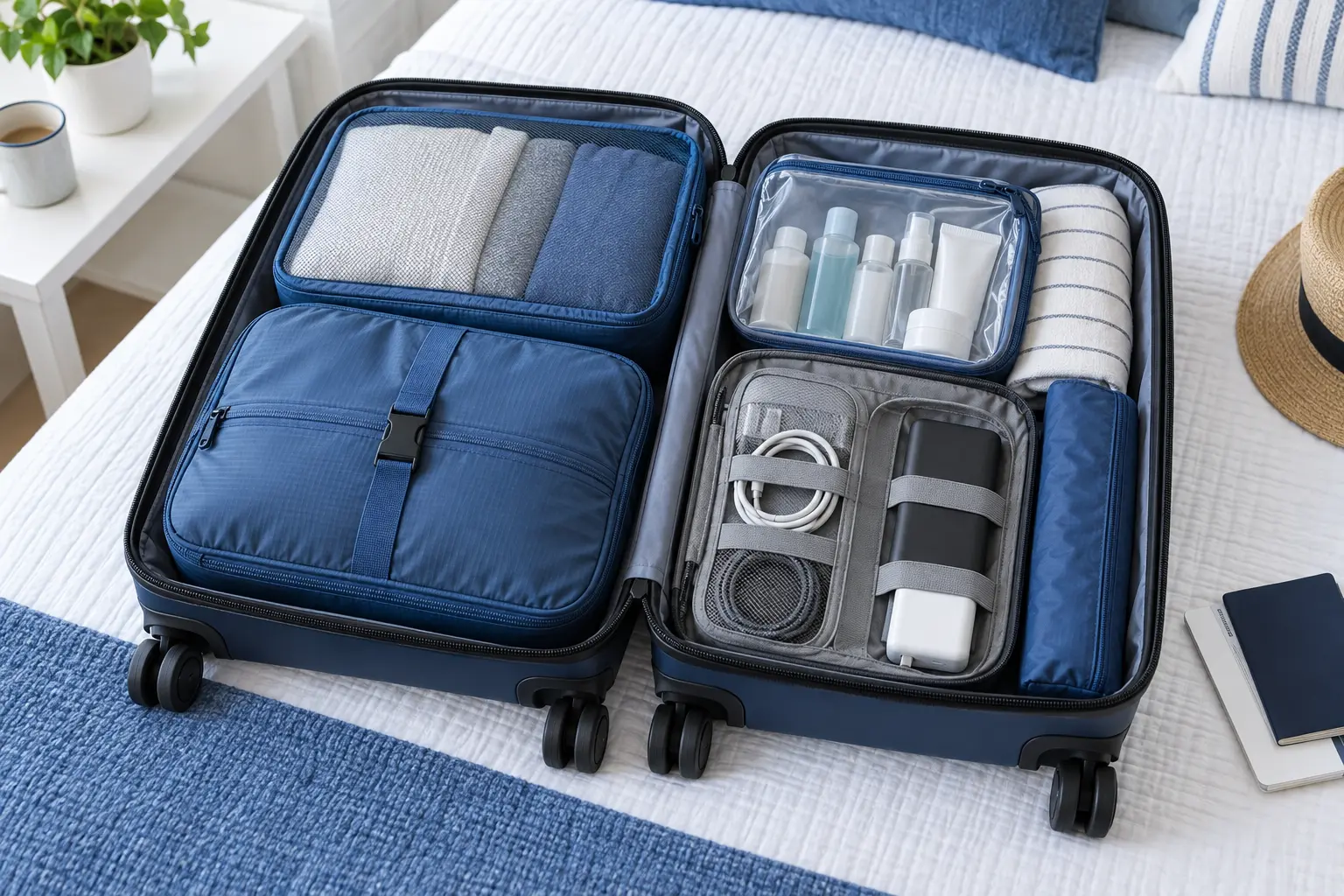
Pack by access, not just by category. Put clothing in fitted cubes, keep liquids in one compliant clear pouch and give cables and batteries a separate organizer. Place anything you may need at security or during the journey where it can be removed without disturbing the rest of the bag.
Rules come before organizers: Airlines set cabin-bag dimensions and item allowances, while security rules can vary by airport and change as screening equipment changes. Check the operating airline and every departure or connecting airport shortly before travel. Do not use compression to force an overweight or overfilled bag through its limits.
What carry-on rules should you check before packing?
Open the page for the airline operating each flight, not only the company that sold the ticket. Record the permitted number of cabin items, external dimensions and weight. Measure your case including wheels, handles and external pockets, then weigh it after packing. A “cabin size” product label is not a universal guarantee.
For departures from the European Union, the official Your Europe luggage guidance, last checked June 16, 2026, says airlines set cabin-bag size and item limits. It also gives the common liquid-screening baseline of containers no larger than 100 ml in a transparent bag with a maximum capacity of 1 litre, with exceptions for medicines and baby food. The same page tells travelers to check their airport for detailed or changing restrictions.
In the United States, review the current TSA liquids rule and the searchable “What Can I Bring?” guidance before leaving. Airport-specific procedures and international connections can add another set of requirements, so place the liquids pouch where it can be removed even when an airport lets it remain inside.
Battery placement matters too. The FAA’s PackSafe guidance, updated September 23, 2025, says spare lithium batteries must be in carry-on baggage and protected from damage and short circuit. If staff take a cabin bag at the gate, remove spare batteries and power banks first and keep them in the cabin.
How do you plan the suitcase layout before buying organizers?
Make four groups on the bed or table: clothing, liquids, electronics and immediate-access essentials. Remove “just in case” duplicates before selecting containers. The organizer should fit the final group; the group should not expand just because an empty cube is available.
Measure the suitcase’s usable internal rectangle and note wheel housings, handle tubes and curved corners. Sketch where each group can sit without forcing the lid. Dense items belong close to the wheel end when that improves balance, while anything you may need to present at screening should remain near the opening.
Keep travel documents, required medication and one small comfort kit in the personal item when possible. That preserves access if the roller bag is placed overhead or checked at the gate. If a long flight is part of the trip, our long-flight comfort guide helps limit that kit to the cabin problem you actually need to solve.
Which carry-on organizer fits each packing problem?
Standard packing cubes
Best for separating clothing by person, day or garment typeA packing cube gives soft clothing a visible boundary, so you can lift out one group without unpacking the whole case. A small coordinated set is usually more useful than many tiny cubes because every zipper and wall also occupies space.
- Benefits
- Keeps clothing groups together
- Makes repacking easier during a multi-stop trip
- Can move directly into a drawer or shelf
- Before you buy
- Measure the flat internal length, width and usable depth of the suitcase between wheel housings and handle channels. Compare those measurements with each cube when filled, not only when empty. Check zipper access, seams, handle placement and care instructions.
- Possible drawback
- Cubes organize space but do not create more of it. Poorly matched shapes can leave unusable gaps or encourage overpacking.
Compression packing cubes
Best for bulky soft clothing when volume, not weight, is the limitA second zipper or compression panel can reduce the thickness of compressible clothing. This may help a jacket or knitwear fit within the case, but it does not reduce the bag's weight and can make one section dense and hard to balance.
- Benefits
- Reduces the volume of some soft items
- Keeps compressed clothing contained
- Useful when the return trip includes the same bulky layers
- Before you buy
- Check the expanded and compressed dimensions, zipper path, fabric tension and whether the suitcase can still close without force. Weigh the packed bag after compressing it and keep fragile or structured garments out unless their care guidance allows tight compression.
- Possible drawback
- Compression can crease clothes, strain zippers and hide a weight problem. It is unnecessary for items that already pack flat.
Clear reusable liquids pouch
Best for toiletries that must stay visible and easy to removeOne transparent, leak-resistant pouch keeps small containers together and makes the liquids group easy to reach. The pouch should match the rules at every departure and connecting airport; an attractive toiletry bag is not automatically accepted for security screening.
- Benefits
- Keeps the screening group together
- Makes leaks easier to contain and notice
- Can stay near the top of the bag
- Before you buy
- Confirm the current container and bag limits with the departure airport and airline before every trip. Check the pouch's external capacity, closure, seam construction and whether every bottle can stand closed without forcing the zip. Keep medicines and special dietary items under the applicable local rules.
- Possible drawback
- Security rules can change or differ by airport. A pouch that is too large, opaque or overfilled may have to be repacked.
Padded electronics organizer
Best for cables, adapters and small devices that otherwise tangleElastic loops and shallow pockets give each cable or adapter a repeatable place. A compact folio works best when it holds only the electronics used during the journey; oversized cases can become dense, heavy blocks.
- Benefits
- Separates cables from clothing and liquids
- Makes missing items easier to spot
- Moves easily between the carry-on and personal item
- Before you buy
- Lay out the exact cables and devices first. Check pocket depth, cable bend radius, padding, closure and whether a power bank remains easy to remove. Protect spare battery terminals from short circuit and follow the airline and aviation authority rules for batteries.
- Possible drawback
- Too many loops and pockets add bulk, and a heavily filled case can concentrate weight on screens or other fragile items.
ProblemPick compares product types, not current listings. Amazon shows available products, prices, ratings and seller terms after you choose to open it.
Quick carry-on organizer comparison
| Product type | Best for | Main limitation |
|---|---|---|
| Standard packing cubes | Best for separating clothing by person, day or garment type | Cubes organize space but do not create more of it. Poorly matched shapes can leave unusable gaps or encourage overpacking. |
| Compression packing cubes | Best for bulky soft clothing when volume, not weight, is the limit | Compression can crease clothes, strain zippers and hide a weight problem. It is unnecessary for items that already pack flat. |
| Clear reusable liquids pouch | Best for toiletries that must stay visible and easy to remove | Security rules can change or differ by airport. A pouch that is too large, opaque or overfilled may have to be repacked. |
| Padded electronics organizer | Best for cables, adapters and small devices that otherwise tangle | Too many loops and pockets add bulk, and a heavily filled case can concentrate weight on screens or other fragile items. |
Which organizer should you choose first?
Does unpacking one shirt disturb everything else?
Start with standard packing cubes. Use two or three meaningful groups rather than a separate pouch for every item, and choose dimensions that tile the suitcase instead of leaving narrow gaps.
Do bulky layers prevent the lid from closing?
Try a compression cube for clean, dry, compressible clothing. Close it away from the suitcase first, then weigh the entire bag. If the zipper or shell remains under visible strain, remove an item rather than tightening harder.
Do toiletries slow down screening or leak into clothes?
Choose a transparent pouch that fits the current airport rule, then reduce the number of containers. Close every cap, keep the pouch accessible and avoid assuming that a different airport or connection uses the same procedure.
Do cables and power accessories disappear between clothes?
Use one shallow electronics organizer and include only the cables required for this trip. Keep the power bank accessible and follow current battery rules; a padded case does not make a damaged or recalled battery safe to fly.
How do you pack a carry-on in the order you will use it?
Leave a small amount of flexible space rather than filling every corner. That makes security checks, an unexpected layer change and return-trip repacking easier. Browse more ProblemPick travel guides for product-first help with the rest of the journey.
Carry-on organizer buying checklist
Carry-on organization FAQs
Do packing cubes save space?
Standard cubes mainly organize and contain groups. Compression cubes can reduce the volume of some soft clothing, but neither reduces weight or changes the airline’s bag limits.
Should I roll or fold clothes inside a cube?
Use the method that keeps each garment within its care needs and lets the filled cube close without strain. Rolling can suit some casual items; folding may better protect structured or crease-sensitive pieces.
Where should the liquids pouch go?
Keep it near the bag opening or in an accessible personal-item pocket. Confirm the current rules for every departure and connection because screening procedures can differ.
Can a power bank go in checked luggage?
The FAA says spare lithium batteries, including power banks, must be in carry-on baggage. Other aviation authorities and airlines may publish additional limits, so check the rules for the complete itinerary.
How many packing cubes should I buy?
Start with enough to separate two or three meaningful groups and fit the measured suitcase. More pieces can add walls, zippers and gaps without improving access.
What should stay outside the main carry-on?
Keep documents, required medication and essentials for the journey where you can reach them if the main bag is overhead or checked at the gate. Follow security and airline rules for each item.