 ProblemPick
Shower Curtain Sticks to You? Try These Fixes
First confirm that the liner is the correct width and length, hangs inside the tub and does not pool at the bottom. If it still moves inward, match the fix to the problem: a more structured liner or enclosed weighted hem for flutter, magnetic or suction restraints for the lower edge, or a curved rod when the shower simply lacks elbow room.
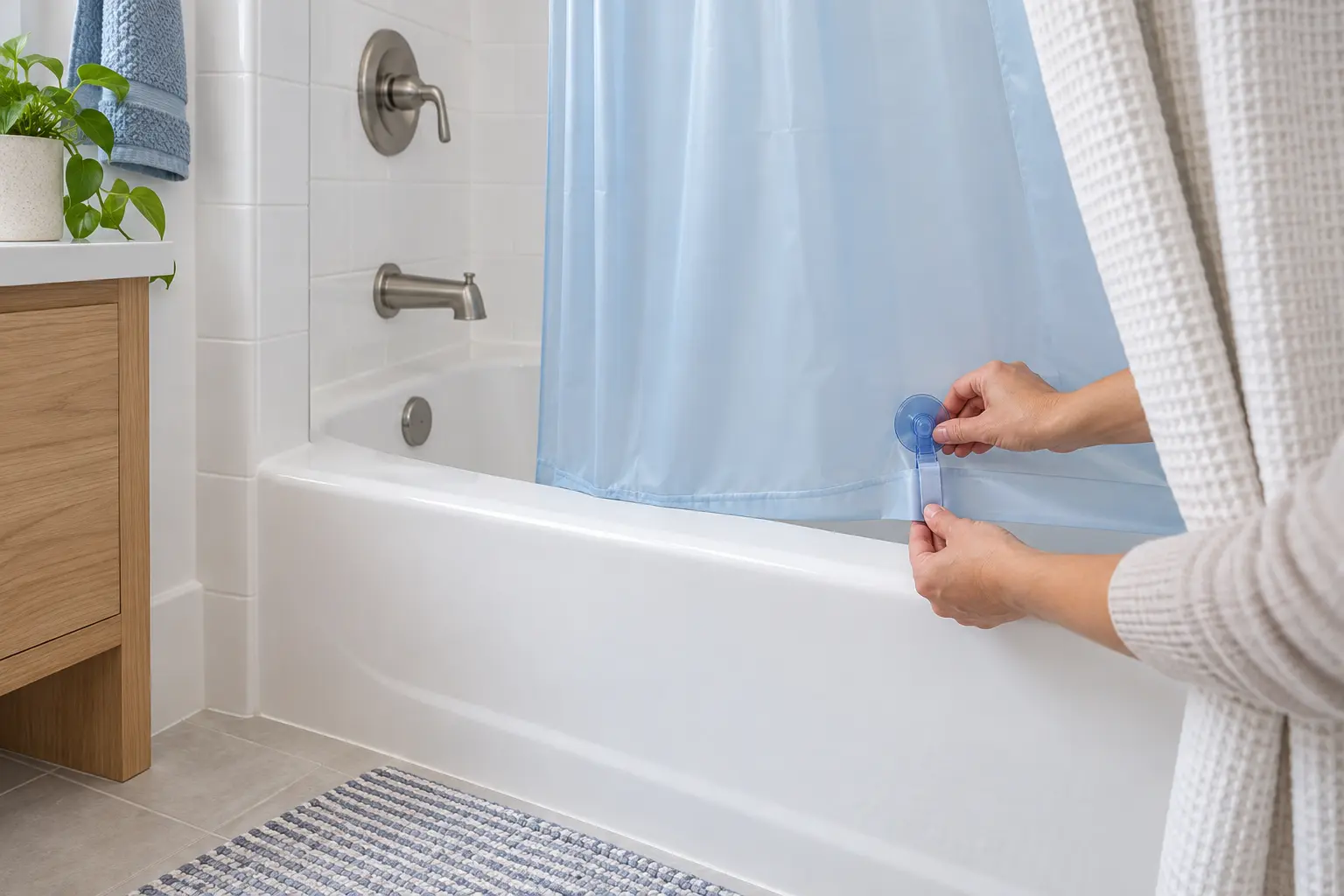
Safe setup: Keep the liner and any clips clear of the drain, faucet controls, grab bars and the route into and out of the tub. Do not add loose improvised weights or drill into tile, plumbing zones or rented walls without appropriate permission and installation guidance. Replace damaged rods or mounts rather than loading them with more accessories.
Why does the shower curtain move inward?
Separate three problems before shopping. A liner that is too narrow stretches toward the center. One that is too long gathers in the tub and loses a clean hanging line. A very light lower edge can flutter even when the dimensions are correct. Finally, a small straight-rod enclosure may simply place the curtain too close to the user's shoulders and elbows.
What should you measure before buying?
There is no universal liner size for every tub and rod position. Use the maker's finished dimensions and the narrowest real clearance in your bathroom.
Which products can stop a shower curtain sticking to you?
Washable fabric shower liner
Best when a very light liner billows inward and easy laundering mattersA fabric liner usually drapes with more structure than a thin film liner. Choosing the correct width and length lets it stay inside the tub without a large amount of material pooling at the bottom.
- Benefits
- More structured drape than many thin liners
- Reusable when the care label permits washing
- Available without tub-specific magnets
- Check before buying
- Measure rod height, usable tub length and the distance to the inside edge of the tub. Check the care label, reinforced hook holes and whether the maker requires a separate waterproof liner. Confirm the finished length stays inside the tub without touching the bathroom floor.
- Possible drawback
- Fabric can hold water and needs regular drying and care. It may still move inward if it is too narrow, too long or positioned close to the shower stream.
Water-resistant liner with enclosed weighted hem
Best for a standard tub when the lower edge lifts or floats inwardAn enclosed weighted hem adds stability along the bottom without separate loose parts. A correctly sized liner can remain inside the tub while the extra lower-edge structure reduces flutter.
- Benefits
- Adds stability across the lower edge
- Works without a magnetic tub surface
- Simple replacement for a very light liner
- Check before buying
- Check the liner dimensions, material, enclosed-hem construction and care instructions. Avoid improvised loose weights, and make sure the hem cannot cover the drain or collect in standing water. Follow the maker's hanging direction and cleaning guidance.
- Possible drawback
- A weighted hem does not create more elbow room, and an overly long liner can still bunch in the tub. Material feel and washability vary by product.
Magnetic-hem shower liner
Best only when a test magnet sticks securely to the tub where the liner will restMagnets enclosed along the lower edge can hold the liner against a compatible tub surface. This targets movement at the bottom rather than changing the whole curtain system.
- Benefits
- Targets lower-edge movement directly
- No wall mounting
- Can be combined with a correctly sized liner
- Check before buying
- Test the actual tub with a household magnet before buying; many non-steel tubs will not hold it. Check magnet placement, sealed construction, liner dimensions and care guidance. Keep the liner clear of the drain and release it after use when needed for drying.
- Possible drawback
- It is ineffective on non-magnetic tub surfaces and may not reach a deeply recessed tub wall. The magnets do not fix a liner that is too short, too narrow or hung outside the tub.
Removable suction-cup side clips
Best for smooth, non-porous side walls when the liner pulls away at the edgesSide clips hold selected points of the liner near the tub wall while leaving the center free. They are a small, removable option when the liner itself is otherwise suitable.
- Benefits
- No drilling on compatible surfaces
- Targets the side that moves most
- Easy to test before replacing the whole liner
- Check before buying
- Confirm the mounting surface is smooth and approved for suction products. Check clip opening, liner thickness and whether the cups must be removed between showers. Do not place clips on damaged finishes, grout, grab bars or areas that interfere with entry and exit.
- Possible drawback
- Suction can release on textured, wet or uneven surfaces. Clips add a setup step and must not create a snag point or restrict safe access to the tub.
Curved shower-curtain rod
Best when the tub feels cramped even after the liner is stabilizedA curved rod moves the upper curtain line outward and creates more shoulder and elbow clearance. It addresses usable shower space rather than relying only on a heavier liner.
- Benefits
- Creates more upper-body clearance
- Keeps the floor footprint unchanged
- Works with several liner materials
- Check before buying
- Measure the wall-to-wall span, curve projection, ceiling and door clearance, and the resulting liner length. Choose a mounting style suitable for the walls and follow the load and installation instructions. Confirm the curve will not pull the lower liner outside the tub.
- Possible drawback
- It costs more and may require secure mounting. The curve can place the curtain outside the tub if the liner is too short or the rod is installed in the wrong position.
ProblemPick compares product types, not current offers. Amazon shows products, prices, ratings, availability and seller terms only after you choose to open a link.
Quick comparison: which option fits?
| Product type | Best use | Main limitation |
|---|---|---|
| Washable fabric shower liner | Best when a very light liner billows inward and easy laundering matters | Fabric can hold water and needs regular drying and care. It may still move inward if it is too narrow, too long or positioned close to the shower stream. |
| Water-resistant liner with enclosed weighted hem | Best for a standard tub when the lower edge lifts or floats inward | A weighted hem does not create more elbow room, and an overly long liner can still bunch in the tub. Material feel and washability vary by product. |
| Magnetic-hem shower liner | Best only when a test magnet sticks securely to the tub where the liner will rest | It is ineffective on non-magnetic tub surfaces and may not reach a deeply recessed tub wall. The magnets do not fix a liner that is too short, too narrow or hung outside the tub. |
| Removable suction-cup side clips | Best for smooth, non-porous side walls when the liner pulls away at the edges | Suction can release on textured, wet or uneven surfaces. Clips add a setup step and must not create a snag point or restrict safe access to the tub. |
| Curved shower-curtain rod | Best when the tub feels cramped even after the liner is stabilized | It costs more and may require secure mounting. The curve can place the curtain outside the tub if the liner is too short or the rod is installed in the wrong position. |
Which fix matches the way your curtain moves?
Does the whole thin liner billow inward?
Compare a correctly sized fabric liner or a water-resistant liner with an enclosed weighted hem. Keep the lower edge inside the tub and avoid excess length.
Does only the bottom lift?
Test whether the tub accepts a magnet. Use a magnetic hem only when it grips securely; otherwise choose a sealed weighted hem that does not depend on the tub material.
Does one side pull away from a smooth wall?
Removable suction clips can restrain that edge. Confirm surface compatibility and position them where they cannot interfere with safe entry, controls or grab bars.
Is the curtain stable but too close to your shoulders?
A curved rod may be the better answer. Measure its outward projection and confirm the resulting liner length still directs water into the tub.
Is the liner bunched at the bottom?
Correct the size or rod height before adding magnets or clips. A restraint cannot make excess material fit safely.
How do you keep the setup working?
The US Environmental Protection Agency recommends an outdoor-vented bathroom fan or an open window when conditions allow during and after a shower. For damp towels as well as curtain care, use the separate guide for towels that do not dry in the bathroom. If shower products and toiletries are crowding the area, see how to organize a bathroom with very little storage.
Shower-curtain buying checklist
Shower-curtain FAQs
Why does the shower curtain stick to me?
A light flexible liner can move inward when air and water move through a small shower space. An incorrect liner size, a low or inward rod position, and a loose lower edge can make the contact worse.
What is the easiest fix to try first?
Check that the liner hangs inside the tub, spreads across the full opening and does not pool at the bottom. Then test a removable side clip or a correctly sized liner with a structured hem before changing the rod.
Do magnetic shower curtains work on every bathtub?
No. Test the exact tub surface with a household magnet where the liner will touch. If it does not hold securely, choose a weighted hem or suction option designed for the surface instead.
Is a fabric liner better than a plastic-style liner?
Neither material is automatically best. Fabric often drapes with more structure and may be washable; a smooth water-resistant liner may shed water more readily. Compare dimensions, care instructions and whether a separate liner is required.
Will a curved shower rod stop the curtain touching me?
It can create more upper-body room, but it does not automatically stabilize the lower edge. Check that the curve, rod height and liner length keep the liner inside the tub.
How should the liner dry after a shower?
Spread it open instead of leaving it folded, keep its lower edge out of pooled water and use the bathroom ventilation provided for the space. Clean and dry it according to the product's care instructions.