 ProblemPick
How to Organize a Bathroom With Very Little Storage
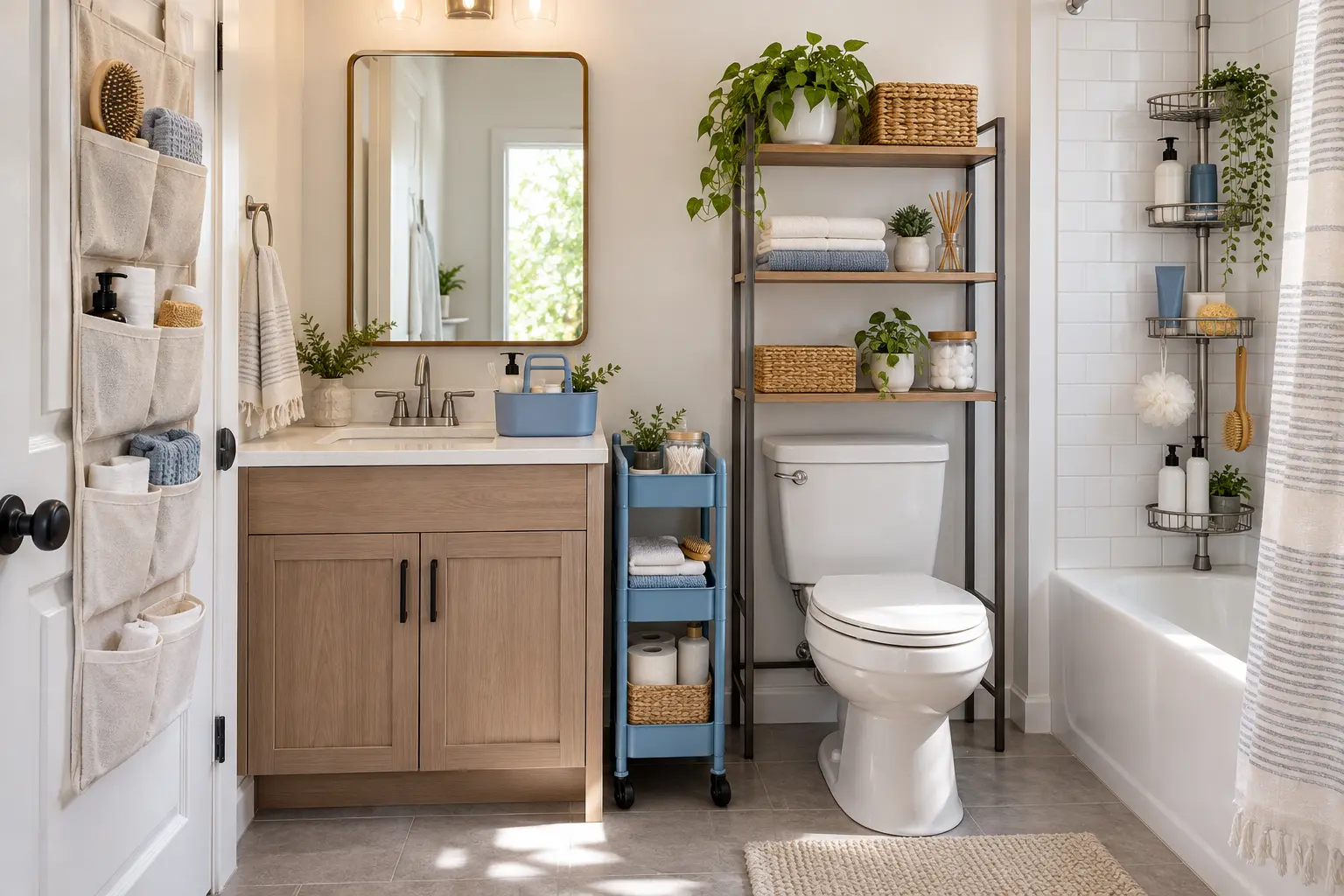
Start with what must stay in the bathroom, then give each remaining access problem one removable solution: a narrow cart for a floor gap, an over-toilet shelf for unused height, a light door organizer for small items, a tension caddy for shower bottles, or a handled caddy for the daily routine.
Moisture and safety: Keep ventilation openings, doors, grab bars, toilet controls, plumbing access and electrical fixtures clear. Follow every load, surface, anti-tip and installation instruction. Store medicines and hazardous chemicals according to their own labels and security requirements, not in these open organizers.
What should you remove before adding bathroom storage?
Empty one small zone at a time and make four groups: used every day, used weekly, sealed backup and belongs elsewhere. Keep only ordinary bathroom items in this plan. Move duplicate stock, bulk packages and occasional grooming tools to another dry location when they do not need immediate bathroom access.
Return daily items first and watch where they naturally land. A brush beside the sink is a counter-access problem; bottles on the shower floor are a wet-zone problem; spare towels without a shelf are a vertical-storage problem. Naming the problem prevents one large cabinet from becoming a mixed container for everything.
Moisture control still comes before more storage. The U.S. Environmental Protection Agency recommends running the bathroom fan or opening a window while showering and increasing ventilation when bathroom mold keeps returning. Keep organizers away from vents, let damp items dry and leave enough access to clean around every unit.
Which bathroom measurements matter most?
Write down the external size of the item that must fit, not only the room opening. Wheels, hooks, wall restraints, basket lips and door hardware all consume space. Leave working clearance so every control remains usable and the floor can still be cleaned.
Which organizer types work when a bathroom has little storage?
Narrow rolling cart
Best for a slim strip of floor beside a vanity, toilet or tubA cart turns an otherwise awkward gap into visible tiers for spare towels, toilet paper and sealed daily-use items. Wheels make the whole unit easier to move for cleaning, so it suits a space where fixed furniture would block access.
- Benefits
- Uses a narrow floor gap
- Moves for cleaning and restocking
- Keeps several categories visible
- Check before buying
- Measure the narrowest width, depth and baseboard clearance along the full route. Check wheel locks, shelf lips, overall stability, handle clearance and the maker's load limit. Confirm that the cart will not block a door, vent, toilet control or cleaning path.
- Possible drawback
- A cart consumes floor space and may roll or wobble on uneven tile. Open shelves expose contents to splash, dust and visual clutter, so they need washable bins or a strict category limit.
Freestanding over-toilet shelf
Best when the wall above a toilet is open but drilling is not practicalA freestanding frame can use vertical space without adding another cabinet footprint. It works for light spare towels, paper goods and closed containers that are needed occasionally rather than during every sink routine.
- Benefits
- Uses otherwise empty height
- Separates spare stock from the sink
- Can leave with a renter
- Check before buying
- Measure toilet width, tank height, flush controls, shutoff access, ceiling height and baseboard depth. Check the frame's exact footprint, shelf clearance, load limits and every required anti-tip or wall-restraint step. Do not buy a unit that prevents plumbing access.
- Possible drawback
- Tall narrow furniture can become unstable and may need the maker's wall restraint even when described as freestanding. It can also make a small room feel tighter and may not fit concealed-cistern or unusual toilet layouts.
Lightweight over-door pocket organizer
Best for small, light items when the door has enough hinge and frame clearancePockets can group hair accessories, washcloths, spare toiletries or grooming tools by person or routine without taking floor space. Clear or open fronts reduce searching, while a removable organizer can move to another room.
- Benefits
- Uses hidden door surface
- Keeps small items separated
- Needs no permanent cabinet
- Check before buying
- Measure door thickness, top and side gaps, handle clearance and the space behind the open door. Confirm the hook style, total load and whether the door and hinges are intended to carry accessories. Test that the door closes freely before filling every pocket.
- Possible drawback
- Hooks can stop a tight door from closing or mark the finish, and excess weight can strain hinges. Deep pockets hide contents and can swing into the wall when the door moves.
Tension-pole shower caddy
Best when bottles crowd the tub or shower edge and the corner has a firm floor-to-ceiling pathA tension pole moves bottles and wash tools into vertical corner baskets while keeping the shower floor easier to clear. Adjustable baskets are useful when bottle heights vary, provided the pole and surfaces are compatible.
- Benefits
- Uses shower-corner height
- Keeps the floor edge clearer
- Adjustable baskets fit different bottles
- Check before buying
- Measure floor-to-ceiling height at the exact corner and check the product's supported range, surface requirements, corrosion-care instructions and basket load. Keep it away from grab bars, controls and the entry path. Recheck tension regularly and remove it if it shifts.
- Possible drawback
- Tension can loosen, especially on unsuitable or uneven surfaces. Metal finishes can deteriorate without proper care, and an overloaded basket may tip or fall.
Handled daily-use caddy
Best when the sink has to serve as both preparation area and storageOne low caddy groups the small items used in the same morning or evening routine. Lift the complete set to a shelf, cart or another room after use, leaving the sink area clear without creating a container for every object.
- Benefits
- Clears the sink in one move
- Keeps a routine together
- Works with existing shelves or carts
- Check before buying
- List only the items used together, then measure their tallest bottle and the caddy's storage destination. Check handle strength, a stable washable base, drainage or easy drying, and enough clearance below a shelf or inside the cart.
- Possible drawback
- A large caddy becomes a mixed catchall and still needs a home between uses. Open designs can collect water; closed designs hide leaks or residue unless emptied and dried.
ProblemPick compares product types, not current offers. Amazon shows products, prices, ratings, availability and seller terms only after you choose to open a link.
Quick comparison: which bathroom organizer fits the gap?
| Product type | Best use | Main limitation |
|---|---|---|
| Narrow rolling cart | Best for a slim strip of floor beside a vanity, toilet or tub | A cart consumes floor space and may roll or wobble on uneven tile. Open shelves expose contents to splash, dust and visual clutter, so they need washable bins or a strict category limit. |
| Freestanding over-toilet shelf | Best when the wall above a toilet is open but drilling is not practical | Tall narrow furniture can become unstable and may need the maker's wall restraint even when described as freestanding. It can also make a small room feel tighter and may not fit concealed-cistern or unusual toilet layouts. |
| Lightweight over-door pocket organizer | Best for small, light items when the door has enough hinge and frame clearance | Hooks can stop a tight door from closing or mark the finish, and excess weight can strain hinges. Deep pockets hide contents and can swing into the wall when the door moves. |
| Tension-pole shower caddy | Best when bottles crowd the tub or shower edge and the corner has a firm floor-to-ceiling path | Tension can loosen, especially on unsuitable or uneven surfaces. Metal finishes can deteriorate without proper care, and an overloaded basket may tip or fall. |
| Handled daily-use caddy | Best when the sink has to serve as both preparation area and storage | A large caddy becomes a mixed catchall and still needs a home between uses. Open designs can collect water; closed designs hide leaks or residue unless emptied and dried. |
Which small-bathroom problem points to which product?
Is there a narrow empty strip beside a fixture?
Measure the full route and compare a slim rolling cart. Use low washable bins for items that need splash protection, keep the heaviest suitable items on the lowest tier and confirm the cart can move without catching a valve or door.
Is the only open space above the toilet?
Compare a freestanding over-toilet unit only after measuring the toilet and all service access. Follow every restraint instruction and use the shelves for light items, not glass or dense bulk stock.
Do small items crowd the sink and drawers do not exist?
Use a handled caddy for one routine or a lightweight door organizer for several small categories. The caddy is better when everything moves together; pockets are better when each item needs its own visible home.
Do shower bottles sit on the floor or tub edge?
A correctly fitted tension caddy can use the corner height. Check surfaces and supported height, keep controls clear and load baskets evenly. Remove the unit if the pole twists, slips or corrodes.
Does every organizer make the room feel smaller?
Reduce what stays in the bathroom before adding another product. Keep one daily caddy and move sealed backups elsewhere. Empty space around the sink and door is useful working room, not wasted storage.
How do you build a bathroom layout that stays easy to reset?
The German Federal Environment Agency likewise emphasizes regular, adequate ventilation to help prevent indoor mold. Its current ventilation guidance is useful when the room relies on a window rather than an exhaust fan. Organization cannot compensate for a leak, failed fan or persistent moisture problem.
For another measurement-first small-space setup, see the guide to organizing a small wardrobe without new furniture. If household cleaners are the specific problem, use the separate guide to storing cleaning supplies in a small home; it covers label-led, secure storage rather than open bathroom access.
Bathroom-storage buying checklist
Questions about organizing a bathroom with little storage
How do I organize a bathroom with no cabinets?
Give the most-used items one portable caddy, use one narrow cart or stable vertical unit for spare stock, and move overflow out of the bathroom. Keep the sink, toilet controls, shower entry and ventilation path clear. One product per access problem works better than filling every surface.
What should stay on a bathroom counter?
Only items used during the next routine and a small hand-washing setup need to stay out. Group daily items in a low handled caddy so the counter can be cleared and wiped. Store backups somewhere dry and reachable rather than lining them around the sink.
Are adhesive bathroom shelves a good no-drill option?
They can work only when the wall material, surface preparation, moisture exposure and product load instructions all match. Because failure can drop objects, this guide favors movable options. If you choose adhesive storage, use light items, follow the maker's installation and curing directions, and stop using it if the bond changes.
Can I put a shelf over the toilet?
Yes, if the exact unit fits around the toilet, preserves access to flushing and shutoff controls, stays stable and is secured exactly as its manufacturer requires. Keep heavy or breakable objects off high shelves and do not improvise around plumbing or electrical fixtures.
How do I keep bathroom storage from looking cluttered?
Limit each open shelf or pocket row to one named category, keep packaging and backups together, and leave some empty space for easy return. Repeated low bins or one consistent color can quiet the view, but fewer visible categories matter more than matching containers.
What items should not be stored in this bathroom setup?
Do not use these open organizers for medicines, hazardous chemicals or anything whose label requires secure, cool or dry storage. Follow the item's own directions and household safety needs. This guide is for ordinary towels, paper goods and personal-care accessories.