 ProblemPick
How to Organize a Small Wardrobe Without Adding Furniture
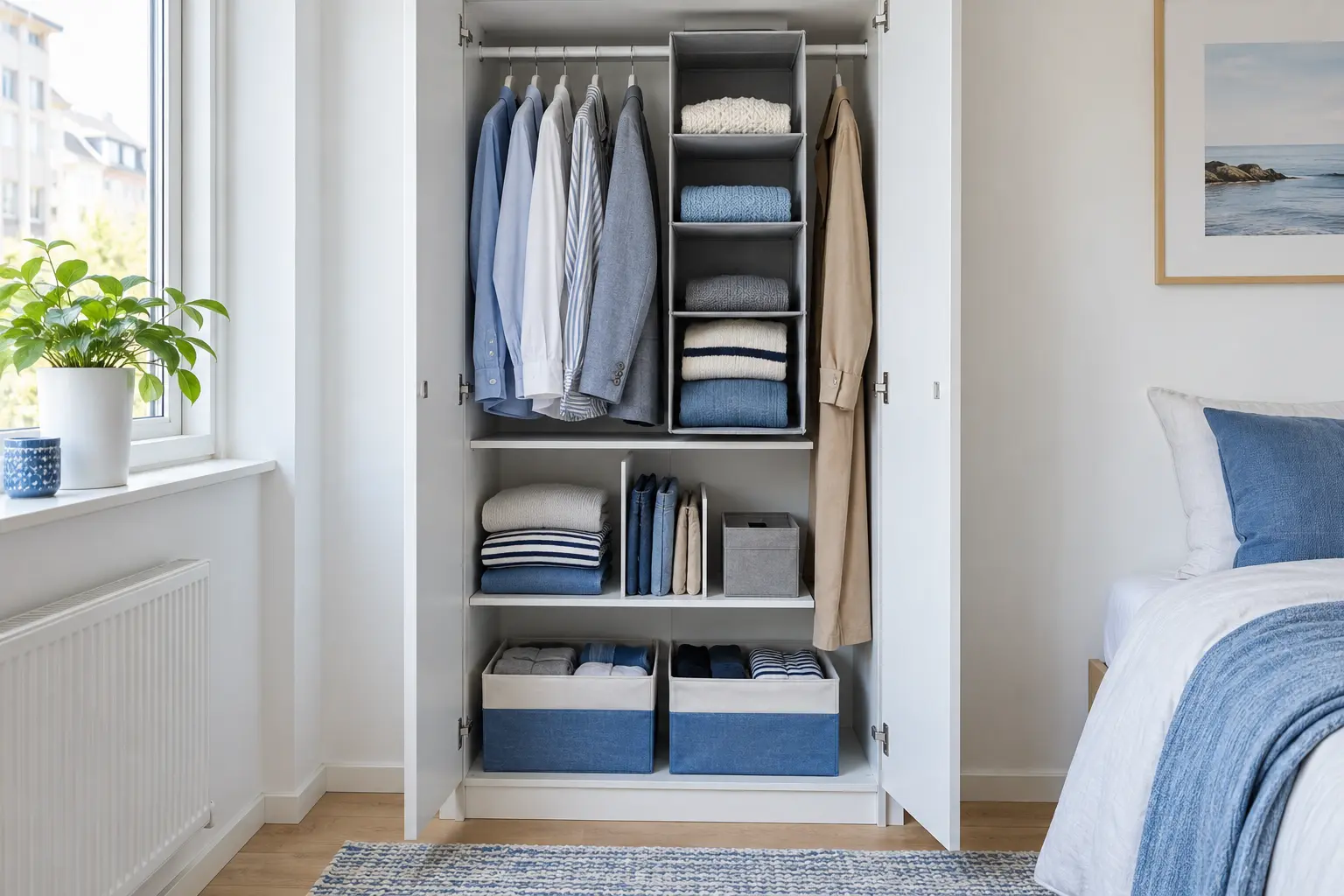
Keep the existing wardrobe and give each zone one job. Use matching slim hangers for clothes that must hang, a fabric hanging shelf for folded daily items, dividers for unstable stacks and removable bins for small pieces. Measure the rail, shelves, doors and longest garment before buying anything.
Important: Do not overload a rail, shelf, door or hanging organizer. Follow the wardrobe maker's load and anchoring instructions, keep heavy items low, and do not attach a door organizer unless the hinges and door are designed for it. Stop using any unit that leans, loosens or becomes unstable.
How do you reset a small wardrobe before buying organizers?
Photograph the wardrobe, then clear one rail, shelf or floor section at a time. Make four groups: hang, fold, small accessories and belongs elsewhere. Keep a separate decision pile for damaged, duplicate or no-longer-worn items so those decisions do not interrupt the physical setup.
Return only what belongs in the wardrobe and suits the season or routine you are arranging. Count hanging garments, folded stacks and loose small items. Those counts matter more than an inspirational photo: they show whether you need narrower hangers, visible cubbies, boundaries on a shelf or a pull-out category.
Do not start by buying a coordinated set. A bin placed where shirts need to hang or a hanging shelf added beside long coats can reduce usable space. The goal is not to fill every gap; it is to make each frequently used item visible and easy to return.
What should you measure inside a small wardrobe?
Write the measurements down and compare them with the product's external dimensions, not only its advertised category. A “closet bin” can still be too deep for your hinge clearance, while a hanging shelf may touch the lower shelf before all its cubbies can be used.
Which organizer type fits the wardrobe problem?
Matching slim hangers
Best when bulky mixed hangers consume most of the railA consistent set uses the hanging rail more predictably and keeps shoulders at similar heights. Slim hangers help most with shirts, blouses and light jackets that genuinely belong on the rail; they do not create space if too many garments remain.
- Benefits
- Makes rail spacing more consistent
- Reduces visual tangles from mixed hanger shapes
- Lets garments slide as one group
- Before you buy
- Count the garments that should hang, then measure the rail length, internal depth and distance from rail to shelf. Match the hanger width and shape to adult or children's clothing, and check the maker's stated garment and weight limits.
- Possible drawback
- Very thin hangers can mark delicate shoulders or bend under heavy coats, and crowding still creases clothes.
Fabric hanging shelf organizer
Best when there is spare rail width but not enough folded-clothing shelvesA soft vertical organizer turns part of the rail into open cubbies for knitwear, T-shirts or small bags. Every section stays visible, which suits items used frequently and folded to a repeatable size.
- Benefits
- Adds visible vertical compartments
- Needs no drilling
- Can be removed or folded when needs change
- Before you buy
- Measure the organizer's full hanging height, width and depth, including its fastening loop. Compare those dimensions with the wardrobe doors and the longest garments beside it. Confirm the total load limit and whether the base stays level when only one cubby is full.
- Possible drawback
- It gives up hanging width, can sag under dense clothing and may block a lower shelf when it is too long.
Clip-on shelf dividers
Best when folded stacks collapse into one another on a wide shelfDividers give each stack a side boundary without enclosing it. They work well for trousers, sweaters or towels when the shelf already has enough height and the pile is kept short enough to remove one item cleanly.
- Benefits
- Keeps neighboring stacks separate
- Preserves a quick view of every category
- Uses little shelf width
- Before you buy
- Measure shelf thickness, depth and clearance to the door. Choose a fastening style intended for that shelf material and edge, with covered contact points that will not scratch or crack the finish.
- Possible drawback
- Dividers do not fix stacks that are too tall, and a tight clip can damage an unsuitable shelf edge.
Removable open bins
Best for socks, underwear, accessories or seasonal items that become loose pilesOne low bin turns many small pieces into a pull-out category. Open or front-labeled bins are easiest for daily items, while higher bins suit light seasonal pieces placed on a less accessible shelf.
- Benefits
- Groups many small pieces
- Pulls out for a complete view
- Can move when the wardrobe layout changes
- Before you buy
- Measure the narrowest internal width, depth and clear height, including hinges and door openings. Leave finger space to pull the bin forward, and check washability, handle strength and whether the base may snag the shelf.
- Possible drawback
- Deep opaque bins hide their contents, and too many small bins can waste space between their walls.
ProblemPick compares product types, not current listings. Amazon shows available products, prices, ratings and seller terms after you choose to open it.
Quick wardrobe-organizer comparison
| Product type | Best for | Main limitation |
|---|---|---|
| Matching slim hangers | Best when bulky mixed hangers consume most of the rail | Very thin hangers can mark delicate shoulders or bend under heavy coats, and crowding still creases clothes. |
| Fabric hanging shelf organizer | Best when there is spare rail width but not enough folded-clothing shelves | It gives up hanging width, can sag under dense clothing and may block a lower shelf when it is too long. |
| Clip-on shelf dividers | Best when folded stacks collapse into one another on a wide shelf | Dividers do not fix stacks that are too tall, and a tight clip can damage an unsuitable shelf edge. |
| Removable open bins | Best for socks, underwear, accessories or seasonal items that become loose piles | Deep opaque bins hide their contents, and too many small bins can waste space between their walls. |
Which small-wardrobe solution should you choose?
Is the rail full of bulky, mismatched hangers?
Count only the garments that need hanging and test a small set of suitable slim hangers. Keep shaped or stronger hangers for coats, suits and delicate shoulders rather than forcing every garment onto one type.
Do you have spare rail width but too few shelves?
A hanging shelf can turn that width into visible cubbies. It suits folded daily items better than dense heavy clothing, and it must end above the lower shelf or floor zone.
Do folded piles merge across one wide shelf?
Use one or two compatible dividers and shorten each stack. If you cannot remove the bottom garment without rebuilding the pile, the problem is stack height, not a lack of dividers.
Do socks and accessories disappear into loose piles?
Choose one open removable bin per clear category. Prefer a shallow daily-use bin at an easy height; reserve higher or deeper storage for light, infrequently used items.
How do you build a layout that stays organized?
Place daily clothes in the easiest zone to see and reach. Put occasional light items above them, long garments in a clear vertical section and heavier items on the lowest stable shelf. Leave enough open rail for hangers to move and enough space above folded stacks to lift one item without dragging the others.
Name categories by use rather than by vague size: work shirts, weekend knitwear, exercise clothes and cold-weather accessories are easier to reset than “miscellaneous.” Give each category a visible boundary and stop filling it when items no longer move freely. A one-in, one-out rule can help a category whose boundary is already full.
Keep the safety of the wardrobe itself separate from organization. The U.S. Consumer Product Safety Commission's current clothing-storage-unit guidance addresses tip-over performance and anti-tip devices. Follow the instructions supplied with your unit and never treat organizers as a substitute for required anchoring.
For a similar measurement-first approach at work, see our guide to organizing a cluttered desk. You can also browse all organization guides.
Small wardrobe organizer buying checklist
Small wardrobe organization FAQs
Do slim hangers really create more room?
They can reduce the width lost to bulky mixed hanger shapes, but they do not increase the rail's load limit or make overcrowding harmless. Choose a shape and strength suitable for each garment.
Should I hang or fold sweaters?
Follow the garment's care guidance. Many knit items store more predictably when folded because hanging can stretch or mark them, but the fiber, construction and maker's instructions decide.
Are vacuum storage bags useful inside a wardrobe?
They may compress some clean, fully dry seasonal textiles, but they are inconvenient for daily access and may be unsuitable for delicate lofted or structured items. Follow the textile and bag instructions and do not create a heavy unstable stack.
Can I put an organizer on the wardrobe door?
Only if the furniture instructions, door construction, hinge capacity and clearances permit it. Added weight and thickness can affect closing and stability, so an internal shelf or removable bin is often the simpler option.
How high should folded stacks be?
Keep them low enough that you can remove one item without lifting or rebuilding the full stack. A divider controls sideways collapse; it does not make a tall pile easy to use.
What should go on the top shelf?
Use it for light, infrequently needed items that can be lifted down safely. Avoid placing dense boxes or everyday essentials where you must overreach or climb on furniture to retrieve them.