 ProblemPick
How to Organize Cleaning Supplies in a Small Home
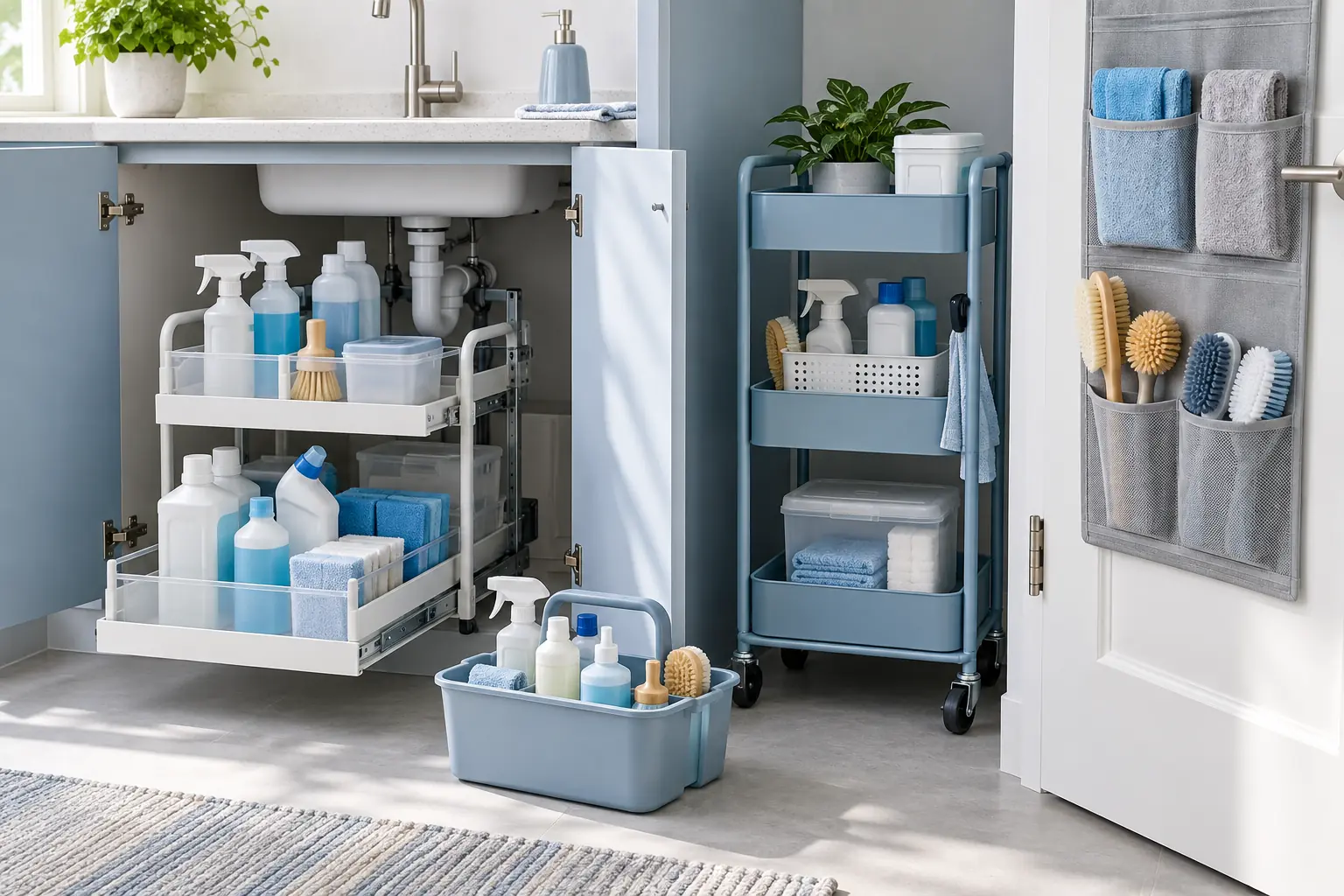
Create one main storage zone, keep every chemical product closed in its original container, and match the organizer to the space: cabinet pull-out, handled bin, portable caddy, slim cart or door pockets for dry tools.
Safety first: Never mix cleaning products or decant them into decorative or food containers. Follow each original label for use, ventilation, storage and disposal. Keep products out of reach of children and pets. An organizer cannot make a damaged, leaking or incorrectly stored product safe.
What should you decide before buying an organizer?
Separate chemical products from dry tools first. Count the original bottles, measure the tallest and widest package, and read every storage direction. Then choose one primary location that keeps labels visible and products upright. Only after that should you decide whether access depth, shelf grouping, portability or tool storage is the real problem.
The CDC household-cleaning guidance dated January 31, 2025 says to follow product labels, not mix products, and store chemicals out of reach of children and pets. If you are replacing a product rather than adding another organizer, the EPA Safer Choice program, updated September 22, 2026 provides a searchable route to products whose ingredients meet its criteria. Neither source turns a label, secure location or household-specific access check into an optional step.
Which organizer fits your cleaning-supply problem?
Two-tier cabinet pull-out
Best for a deep cabinet where pipes leave usable space at the sideA sliding organizer brings bottles at the back into view without making you unload the front row. Offset or narrow designs can fit beside plumbing better than a full-width shelf.
- Benefits
- Uses cabinet depth without stacking bottles
- Makes the back row easier to inspect
- Raised edges can contain small drips
- Before you buy
- Measure the cabinet opening, hinges, pipe positions and both tiers at full extension. Keep shutoff valves, the trap and any leak-prone connection visible and reachable. Confirm the organizer material and mounting method suit a damp-prone cabinet.
- Possible drawback
- A poor fit can block plumbing access, tip when extended or hide a leak. Under-sink storage is unsuitable when the product label or household access risks call for a higher or locked location.
Handled shelf bins in a high or secured cabinet
Best when one existing cabinet can become the main storage zoneSeparate bins can group everyday surface care, laundry products and spare cloths without removing products from their original containers. Handles make a deep shelf easier to use while a defined home limits duplicates.
- Benefits
- Keeps original labels and closures together
- Groups supplies without permanent installation
- Easy to remove for a full shelf inspection
- Before you buy
- Measure the tallest original container, shelf depth and handle clearance. Choose stable bins that remain level when lifted. If children, pets or vulnerable household members could reach the cabinet, use an appropriate secured location or cabinet lock; no consumer lock makes unsafe storage acceptable.
- Possible drawback
- Opaque or overfilled bins can hide leaks and expired or duplicate products. A bin is an organizer, not a substitute for label directions or secure storage.
Portable cleaning caddy
Best for a small set you carry between rooms during one cleaning sessionA caddy keeps the few items used together in one liftable kit. It is most useful as temporary transport from the main storage zone—not as a permanent basket left on the floor or counter.
- Benefits
- Moves a focused kit in one trip
- Reduces repeated cabinet visits
- Open compartments keep current items visible
- Before you buy
- Check the handle rating, comfortable loaded weight, bottle height, stable base and wipe-clean material. Make sure every bottle stands upright with its cap closed and the caddy can be returned to the secured storage location after use.
- Possible drawback
- A large caddy becomes heavy and encourages unnecessary products. It also creates easy access if left out after the task.
Slim rolling utility cart
Best for an adult-only utility zone with an unused narrow gapA narrow cart turns a small vertical strip into several shallow, visible levels. Raised tray edges help keep closed bottles upright, while wheels let an adult move the cart for cleaning or inspection.
- Benefits
- Uses a narrow gap instead of deep shelf space
- Separates categories by level
- Contents stay visible for quick checks
- Before you buy
- Measure the gap, handle width, tray height and turning space. Check wheel locks, anti-tip guidance and load limits. Use it only where it can be parked securely away from food, heat and anyone who should not access the products.
- Possible drawback
- A mobile cart is easier to tip or access than a cabinet and can block a walkway. It is a poor choice for homes where products need locked or high storage.
Over-door organizer for dry tools
Best when cloths, gloves and brushes create clutter but liquids already have safe storageDoor pockets can keep lightweight, dry tools off a shelf without moving chemical products into a swinging or hard-to-inspect position. Clear or mesh pockets make the contents easy to identify.
- Benefits
- Adds storage without taking floor space
- Separates clean cloths and brushes
- Makes lightweight tools easy to see
- Before you buy
- Use it only for dry, lightweight items. Check door thickness, hinge clearance, pocket load limits and whether the organizer stays flat when the door moves. Keep the latch, handle and ventilation openings clear.
- Possible drawback
- It can interfere with door closure, mark the surface or swing when overloaded. Do not use the pockets for liquids, aerosols or heavy bottles.
ProblemPick compares product types, not current listings. Amazon shows current products, prices, ratings, availability and seller terms after you choose to open it.
Quick organizer comparison
| Organizer type | Best for | Main limitation |
|---|---|---|
| Two-tier cabinet pull-out | Best for a deep cabinet where pipes leave usable space at the side | A poor fit can block plumbing access, tip when extended or hide a leak. Under-sink storage is unsuitable when the product label or household access risks call for a higher or locked location. |
| Handled shelf bins in a high or secured cabinet | Best when one existing cabinet can become the main storage zone | Opaque or overfilled bins can hide leaks and expired or duplicate products. A bin is an organizer, not a substitute for label directions or secure storage. |
| Portable cleaning caddy | Best for a small set you carry between rooms during one cleaning session | A large caddy becomes heavy and encourages unnecessary products. It also creates easy access if left out after the task. |
| Slim rolling utility cart | Best for an adult-only utility zone with an unused narrow gap | A mobile cart is easier to tip or access than a cabinet and can block a walkway. It is a poor choice for homes where products need locked or high storage. |
| Over-door organizer for dry tools | Best when cloths, gloves and brushes create clutter but liquids already have safe storage | It can interfere with door closure, mark the surface or swing when overloaded. Do not use the pockets for liquids, aerosols or heavy bottles. |
What should you choose first?
Is a deep cabinet hiding the back row?
Choose a narrow pull-out only after mapping pipes, hinges and valve access. If the cabinet cannot be secured or stays damp, move the products elsewhere rather than forcing the fit.
Do products fit on one shelf but keep mixing together?
Use stable handled bins by job or room. Keep original labels facing outward and leave enough empty space to lift each bottle without snagging a trigger or cap.
Do you carry the same few items around the home?
Build a light caddy for the current task. Return the closed products to the main secured cabinet after use instead of leaving the caddy on the floor.
Is the only free space a narrow utility gap?
A slim cart can work in a secure adult-only zone with a level floor and a clear parking spot. If access, tipping or walkway blockage is a concern, choose a cabinet solution instead.
Are cloths and brushes consuming the shelf?
Move only clean, dry, lightweight tools to an over-door organizer. Keep liquids and aerosols in stable storage where they cannot swing or fall when the door moves.
How do you set up a cleaning-supply zone?
If this zone shares space with laundry, continue with our guide to drying laundry efficiently in a small apartment. For broader small-space storage, the small-wardrobe guide explains how to measure existing height and depth before adding organizers.
Cleaning-supply organizer buying checklist
Cleaning-supply storage FAQs
Where is the best place to store cleaning supplies in a small home?
Use one cool, dry location that follows every product label and is away from food, heat and anyone who should not access the products. A high or appropriately secured cabinet is often more suitable than scattered low cupboards. Keep containers upright, closed and in their original packaging.
Can I store cleaning products under the kitchen sink?
Only if the labels allow it, the cabinet can be secured for your household and plumbing remains visible and accessible. Measure around pipes, check for leaks and never pack products against electrical parts or heat sources. Choose a higher or locked location when access is a concern.
Should I pour cleaners into matching bottles to save space?
No. Keep products in their original containers with labels, closures and directions intact. Decorative or unlabeled bottles can hide what a product is and how it must be used or stored.
Can different cleaners share one storage bin?
A bin may group closed products only when their labels permit the same storage conditions. Keep leaking, damaged or incompatible products apart, and never mix their contents. A secondary bin does not override instructions on the original package.
What should go in a cleaning caddy?
Carry only the small set needed for the current task, with each original bottle closed and upright. Keep the load comfortable, do not leave the caddy unattended, and return every product to the main secured storage zone when finished.
Is an over-door organizer safe for cleaning supplies?
Use it for dry, lightweight tools such as clean cloths, gloves and brushes. Liquids, aerosols and heavy bottles are better in stable cabinet storage because a moving door can swing, spill or overload the pockets.