 ProblemPick
Gift wrap taking over the closet? Try these five storage ideas
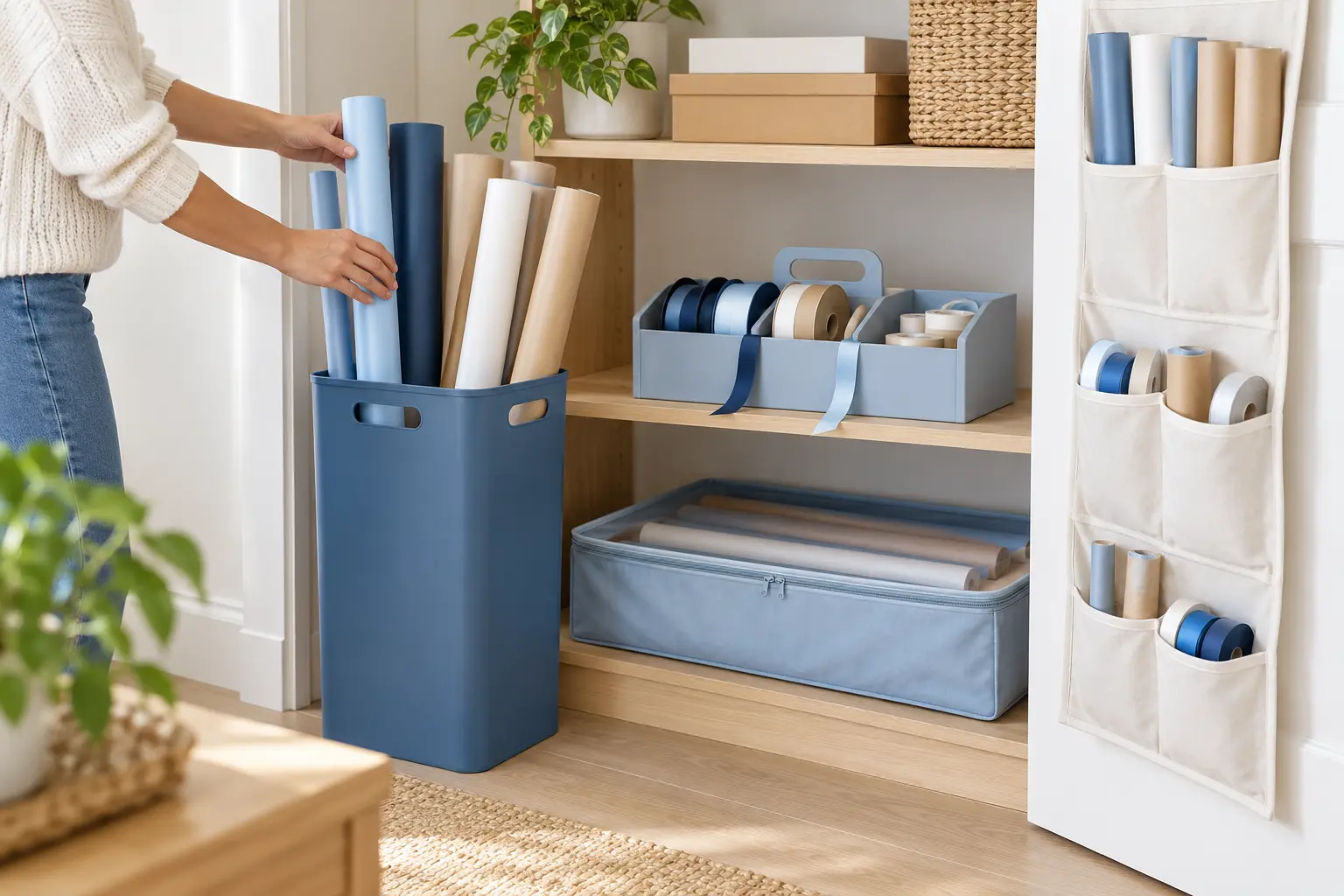
Use a tall bin for full-length rolls, an under-bed case for occasional supplies, door pockets for visible small items, a divided caddy for a portable kit or shallow drawer trays beside the work surface.
How should you sort gift-wrap supplies before buying storage?
Put every wrapping item in one visible area and separate it into long rolls, folded paper or tissue, bags, ribbon and bows, small tools, and cards or tags. Remove empty tubes, damaged paper and supplies that belong elsewhere. Count what remains and note which items are used throughout the year.
The key split is size: long rolls need protected length, while ribbon, tape and tags need shallow visible compartments. One deep box rarely serves both groups well because small items fall beneath the rolls.
What should you measure before choosing an organizer?
Use a paper outline or a spare box to test the location. If a long case cannot slide out fully or a tall bin blocks hanging clothes, its listed capacity will not matter.
Which gift-wrap storage type fits your space?
Tall vertical roll bin
Best when full-length rolls need one upright home in a closet cornerA stable tall bin keeps rolls together without folding them and uses a small patch of floor. Open access makes it easy to see colors and return one roll after use.
- Benefits
- Small floor footprint
- Keeps full rolls visible
- No mounting or folding
- Check before buying
- Measure the longest roll, the bin's usable inner height and the clear floor footprint. Check base stability, handles and whether the opening is wide enough to remove a middle roll without lifting everything.
- Possible drawback
- Short rolls can disappear behind tall ones, and a narrow lightweight bin may tip when it is unevenly loaded.
Under-bed zip case
Best when floor space is tight and rolls are used only occasionallyA long low case groups rolls and flat supplies in an unused horizontal zone. A zip cover keeps loose ribbon and tags contained while the case slides out as one unit.
- Benefits
- Uses low hidden space
- Contains mixed supplies
- Moves as one unit
- Check before buying
- Measure the longest roll, under-bed clearance including the handle, and the pull-out path. Check usable internal length, zipper opening and whether the base stays supported when carried.
- Possible drawback
- It requires bending and clear pull-out space. Overfilling makes contents harder to see and can strain the zipper or handles.
Over-door pocket organizer
Best when a door has safe clearance and small supplies need visible separationShallow pockets can separate ribbon, tape, tags, bows and folded bags without using a shelf. Transparent or open-front pockets make quantities easy to check before buying more.
- Benefits
- Uses vertical space
- Keeps small items visible
- Separates several supply types
- Check before buying
- Measure door thickness, hinge and frame clearance, organizer length and pocket depth. Confirm the maker's hanging method and load guidance, then verify the door can open and close freely.
- Possible drawback
- Hooks can interfere with a close-fitting door, and deep or opaque pockets hide small items. Heavy loads may affect movement.
Portable divided caddy
Best when ribbon, tape, tags and cards move to a table for each projectA handled caddy keeps the small tools and consumables together while rolls stay elsewhere. Removable dividers can create a simple kit that returns to one shelf after use.
- Benefits
- Carries small supplies together
- Keeps categories visible
- Returns neatly to a shelf
- Check before buying
- Lay out the supplies that must travel and measure the largest tape roll or card pack. Check divider positions, handle comfort, filled weight and whether compartments are easy to wipe.
- Possible drawback
- It does not hold full-length paper rolls and becomes a catch-all if every compartment lacks a purpose.
Shallow drawer organizer
Best when tape, tags, cards and folded tissue already live near a work surfaceLow trays turn one shallow drawer into visible categories without adding a separate container to the room. They suit flat items and small repeat-use supplies.
- Benefits
- Keeps the work surface clear
- Makes small flat supplies easy to scan
- Can reuse an existing drawer
- Check before buying
- Measure the drawer at its narrowest internal points and include hinges, screws and handle clearance. Compare tray height with the closed drawer and leave finger space around frequently lifted items.
- Possible drawback
- It needs a suitable empty drawer and does not fit long rolls or bulky bows. Too many tiny sections waste usable space.
ProblemPick compares product types, not current offers. Amazon shows products, prices, ratings, availability and seller terms only after you choose to open a link.
Quick comparison: which organizer solves which problem?
| Storage type | Best use | Main limitation |
|---|---|---|
| Tall vertical roll bin | Best when full-length rolls need one upright home in a closet corner | Short rolls can disappear behind tall ones, and a narrow lightweight bin may tip when it is unevenly loaded. |
| Under-bed zip case | Best when floor space is tight and rolls are used only occasionally | It requires bending and clear pull-out space. Overfilling makes contents harder to see and can strain the zipper or handles. |
| Over-door pocket organizer | Best when a door has safe clearance and small supplies need visible separation | Hooks can interfere with a close-fitting door, and deep or opaque pockets hide small items. Heavy loads may affect movement. |
| Portable divided caddy | Best when ribbon, tape, tags and cards move to a table for each project | It does not hold full-length paper rolls and becomes a catch-all if every compartment lacks a purpose. |
| Shallow drawer organizer | Best when tape, tags, cards and folded tissue already live near a work surface | It needs a suitable empty drawer and does not fit long rolls or bulky bows. Too many tiny sections waste usable space. |
Which gift-wrap organizer should you choose?
Do full-length rolls lean in a closet corner?
Choose a stable tall bin that is shorter than the rolls but high enough to support them. Keep shorter tubes in a separate section so they remain visible.
Do you have no spare closet floor?
Use a long under-bed case only after measuring the narrowest clearance and pull-out route. Store occasional supplies there, not the tape you need every month.
Are ribbon and tags buried in a deep box?
Use shallow door pockets, a caddy or a drawer with visible compartments. Give each section one role and leave enough room to remove a spool without disturbing the rest.
Do you wrap gifts at the dining table?
Keep small supplies in a handled caddy and rolls in their own holder. Carry only the kit to the table, then return it to one shelf when the project is done.
Is there an empty shallow drawer near the work area?
Use low trays for tape, tags, cards and flat tissue. Measure the drawer height carefully so nothing catches when it closes.
How do you build a gift-wrap setup that stays organized?
If wrapping supplies share a crowded closet, start with our guide to organizing a small wardrobe without adding furniture. For bags and incoming cards that have become household paper clutter, use the focused guide to organizing mail and paper. Browse more Organization guides or Home guides.
Gift-wrap organizer buying checklist
Gift-wrap storage FAQs
What is the best way to store wrapping-paper rolls?
Choose by orientation and access. A stable tall bin suits frequent upright access; a long under-bed case suits occasional horizontal storage. Measure the longest roll and the usable interior before buying.
Should wrapping paper be stored vertically or horizontally?
Either can work if the rolls are supported and the storage location stays suitable for the paper. Vertical storage uses less floor area; horizontal storage can fit under furniture. Avoid forcing rolls into a container that bends or crushes them.
How do I keep ribbon from tangling in storage?
Give each spool a visible compartment or short dowel system designed for the holder, and secure the loose end gently. Do not mix loose lengths with tape, tags and tools in one deep bin.
Can I hang a gift-wrap organizer on any door?
No. Check door thickness, frame and hinge clearance, the organizer's hanging method and stated load. The door must still open, close and latch normally without the organizer rubbing the frame.
How can I store gift bags without creasing them?
Nest similar sizes loosely or keep them upright in a wide magazine file or bin. Remove bulky tissue first and avoid packing them so tightly that handles and sides bend.
Do I need one organizer for every wrapping supply?
Usually not. Full-length rolls need different space from small items, but ribbon, tape, tags and cards can often share one divided caddy or drawer. Start with the two size groups before adding more containers.