 ProblemPick
Pet Toys All Over the Floor? Try These Storage Ideas
Keep dry everyday toys in a low open basket, reserve toys in a lidded box, separate categories with removable cubbies, use high pockets for lightweight adult-managed items, or slide a rolling box beneath a bench. Measure the toys, opening and walking route before buying.
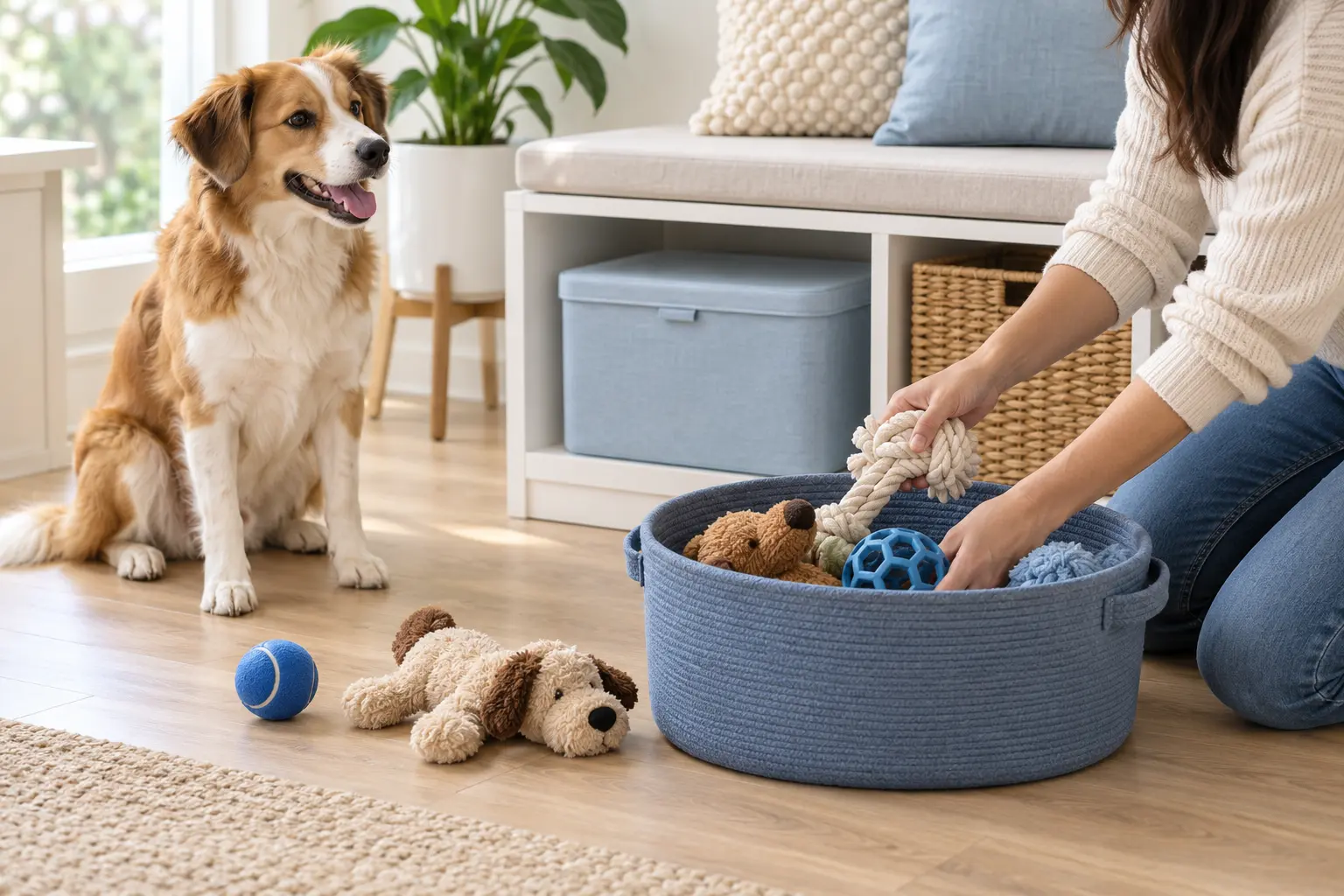
Keep the system pet-appropriate: Follow every toy and storage product's use, care and mounting instructions. Remove worn toys, dry washable items fully before closed storage, and keep containers, handles, cords and small accessories out of reach when a pet may chew or swallow them.
Why do pet toys keep spreading across the room?
The storage often fails because every toy shares one deep container or because the container is far from where play ends. Balls disappear under plush toys, long tug toys hang over the rim and freshly washed toys are mixed back in before they dry.
Gather the toys, set aside anything worn or unsuitable, then group the rest by daily access, supervised play, cleaning and reserve rotation. This separates the floor-clutter problem from pet-food mess, litter tracking or fur removal.
For those separate needs, use our guides to keep a pet feeding area tidy or contain litter around a cat box.
What should you measure before choosing storage?
Which pet-toy storage type fits your home?
Low soft-sided open basket
Best for a small set of dry everyday toys that you want to reach quicklyA wide, low opening makes the daily reset simple and lets you see what is inside without emptying the container. Soft sides are easier to place beside a shelf or bench than a rigid box.
- Benefits
- Fast one-step access
- Easy to carry to the play area
- Soft edges suit compact rooms
- Check before buying
- Measure the basket footprint and the largest toy. Check that the base stays flat, handles and seams are secure, the material can be cleaned, and the basket can be removed if the pet starts chewing it.
- Possible drawback
- It does not hide visual clutter or dust, and it should not stay within reach of a pet that chews the basket or its handles.
Lidded stackable storage box
Best for clean, fully dry reserve toys and a simple rotation systemA fitted lid keeps less-used toys together and allows several categories to use the same shelf footprint. A clear side or external label helps adults identify the contents without opening every box.
- Benefits
- Contains reserve toys neatly
- Stacks on compatible flat lids
- Keeps adult-managed items out of the daily basket
- Check before buying
- Measure shelf height with the lid fitted and leave room to lift the box safely. Check the closure, empty weight, cleaning method and whether air can circulate before storing only fully dry toys.
- Possible drawback
- It slows access, can become heavy when overfilled and is a poor place for damp toys or anything that should dry in open air.
Cubbies with removable bins
Best for sorting toys by pet, size or play type in one visible stationSeparate bins stop balls, plush toys and larger tug toys from becoming one mixed pile. Removable bins can travel to the play area and return as a complete group.
- Benefits
- Creates clear categories
- Bins can be carried independently
- Uses vertical space without stacking loose boxes
- Check before buying
- Measure the full furniture footprint, each bin opening and the largest toy. Follow the furniture maker's stability and anchoring instructions, keep the route clear and avoid loading heavy items high.
- Possible drawback
- The unit takes permanent floor or wall space and needs careful placement so it cannot tip or obstruct a walkway.
Wall or over-door pocket organizer
Best for lightweight adult-managed accessories when floor space is scarceVertical pockets can move small, dry items off the floor while leaving baskets for bulky toys. Transparent or open-top pockets make categories easier to scan.
- Benefits
- Uses otherwise empty vertical space
- Keeps small categories visible
- Preserves floor area
- Check before buying
- Confirm the door still closes, the hanger fits its thickness and every pocket stays out of the pet's reach. Avoid loose cords or loops and follow mounting, load and door-clearance instructions.
- Possible drawback
- It is unsuitable for heavy, wet or bulky toys and may swing, mark a door or create reachable straps if positioned poorly.
Low rolling box for under-bench storage
Best for a larger collection when a bench or low shelf has unused depthA shallow box turns hidden floor depth into one pull-out zone. Dividers can separate toy groups, while a stop or handle keeps the box easier to control during removal.
- Benefits
- Uses low hidden space
- Brings the whole collection forward
- Can include simple dividers
- Check before buying
- Measure the narrowest opening, usable depth and wheel height. Test the pull-out route, floor compatibility, loaded weight and whether the box can be fully removed for cleaning.
- Possible drawback
- Wheels need a clear path, the box can collect floor dust and deep storage encourages overfilling unless the quantity is limited.
ProblemPick compares product types, not current offers. Amazon shows products, prices, ratings, availability and seller terms only after you choose to open a link.
Quick comparison: which storage type fits?
| Storage type | Best use | Main limitation |
|---|---|---|
| Low soft-sided open basket | Best for a small set of dry everyday toys that you want to reach quickly | It does not hide visual clutter or dust, and it should not stay within reach of a pet that chews the basket or its handles. |
| Lidded stackable storage box | Best for clean, fully dry reserve toys and a simple rotation system | It slows access, can become heavy when overfilled and is a poor place for damp toys or anything that should dry in open air. |
| Cubbies with removable bins | Best for sorting toys by pet, size or play type in one visible station | The unit takes permanent floor or wall space and needs careful placement so it cannot tip or obstruct a walkway. |
| Wall or over-door pocket organizer | Best for lightweight adult-managed accessories when floor space is scarce | It is unsuitable for heavy, wet or bulky toys and may swing, mark a door or create reachable straps if positioned poorly. |
| Low rolling box for under-bench storage | Best for a larger collection when a bench or low shelf has unused depth | Wheels need a clear path, the box can collect floor dust and deep storage encourages overfilling unless the quantity is limited. |
Which option suits your situation?
Do toys need a quick reset after every play session?
Choose a low open basket with a wide mouth and washable material. Keep only the daily selection inside so each toy stays visible.
Do you rotate more toys than you display?
Use a lidded box for clean, fully dry reserve toys. One box per broad category is easier to maintain than several tiny containers.
Do multiple pets or toy sizes need separation?
Use removable cubby bins and assign each opening by pet, size or play type. Keep incompatible items in an adult-managed bin.
Is floor space already full?
Use high wall or door pockets only for lightweight dry items and keep straps out of reach, or use a shallow rolling box under a stable bench.
How do you build a pet-toy rotation that stays tidy?
Browse more practical ideas in the Pets and Organization guide collections.
Pet-toy storage buying checklist
Pet-toy storage FAQs
What is the best way to organize pet toys in a small home?
Keep a small daily selection in one low open basket and move clean, fully dry reserve toys to a lidded box, cubby or low rolling bin. Choose one location near the play area without narrowing the walking route.
Should dogs be able to reach the toy basket?
Only if the basket and every toy available there are appropriate for unsupervised access in your household. If your pet chews containers, handles or fabric, keep storage out of reach and hand out toys directly.
Can damp pet toys go straight into a closed bin?
No. Clean them according to their care instructions and let them dry completely before closed storage. Use an open drying area first so moisture is not trapped in a lidded box.
How many pet toys should stay out at once?
There is no universal number. Keep only what fits loosely in the daily container with every item visible and easy to return. Store the rest by type and rotate a small selection when interest or cleaning needs change.
How do I store toys for more than one pet?
Use separate removable bins or clearly defined sections when toys differ by pet, size or play style. Keep any item that is not suitable for every pet in an adult-managed location rather than a shared open basket.
When should a pet toy be removed from storage?
Remove toys that are damaged, coming apart, difficult to clean or no longer appropriate for the pet. Follow the toy maker's use and care directions instead of returning a worn item to the rotation box.