 ProblemPick
How to Keep a Pet Feeding Area Cleaner and Tidier
Contain the mess where it starts: use a raised-edge washable mat for splashes and crumbs, stable bowls for sliding, a spare bowl set for easier rotation, a lidded bin for the original food bag, and a dedicated brush for dry spills.
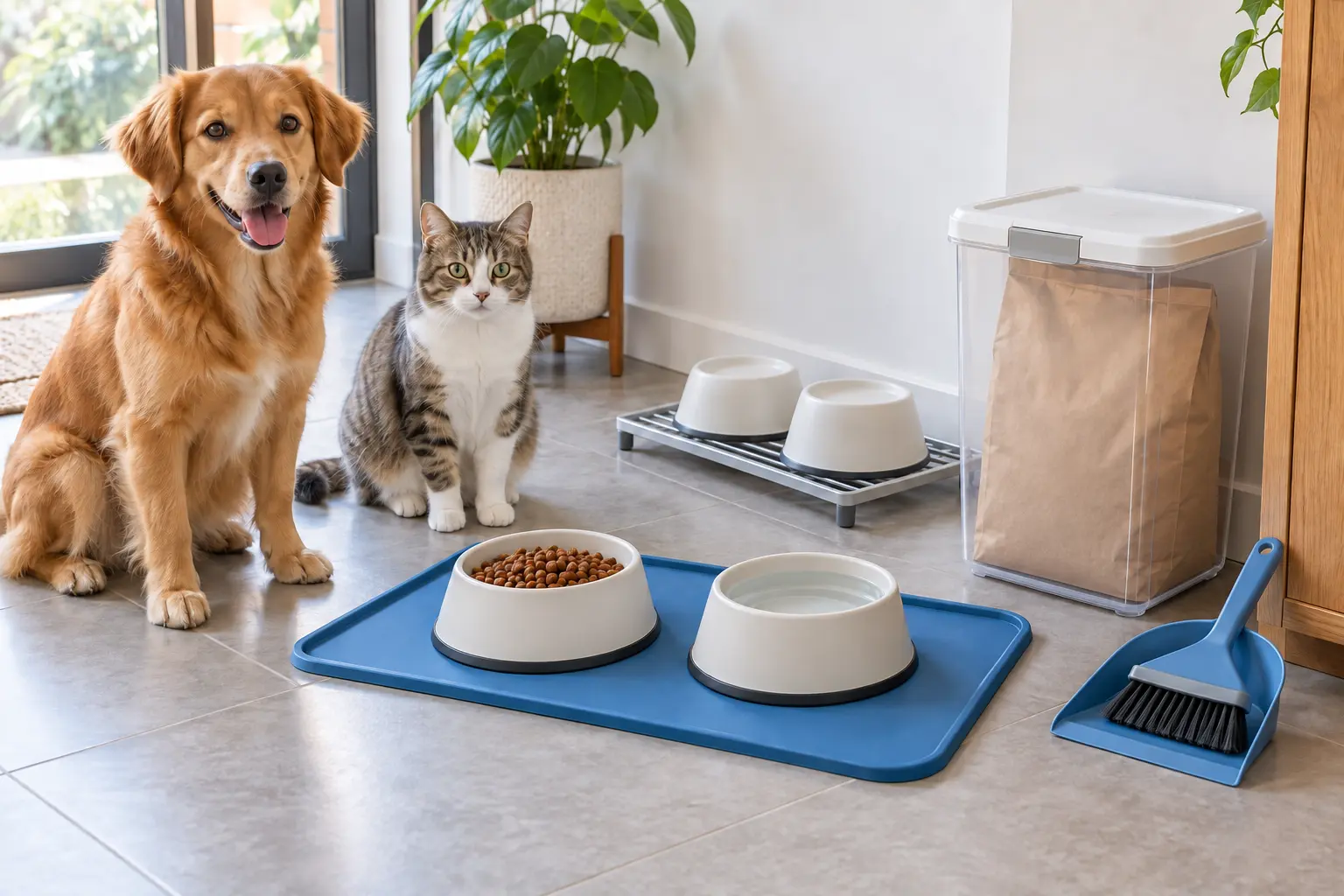
Scope: This guide covers routine organization and product care, not feeding plans or health concerns. Follow the food label and your pet-care professional’s directions, and treat any unusual change in eating or drinking as a separate issue.
Are you dealing with splashes, crumbs, moving bowls or food storage?
Clean the current setup, then watch one ordinary meal. Water radiating from the bowl calls for a wider contained surface. A trail of kibble may come from a moving bowl, an oversized scoop or the route between the bag and station. A dusty, slumping bag is a storage problem. Solving the dominant path first avoids buying a large organizer that misses the cause.
Food-handling details matter too. The FDA advises washing pet-food bowls and measuring utensils with soap and hot water after each use and using a scoop dedicated to pet food. Its storage guidance recommends keeping food in the original bag; if you use another container, put the entire bag inside it and wash and dry the container between bags. See the FDA’s pet-food storage guidance and safe-handling tips.
Which product type fits your feeding-area problem?
Washable feeding mat with a raised edge
Best for keeping ordinary splashes and crumbs within one defined zoneA mat wider than the bowls creates a removable surface for routine wiping or washing. A modest raised edge can contain small spills, while a flat center helps bowls sit steadily.
- Benefits
- Defines one removable cleaning zone
- Protects the floor from routine drips and crumbs
- Can be lifted for a more thorough clean
- Before you buy
- Measure the full bowl arrangement and the pet’s stance, then add usable space around it. Check the edge height, backing, floor compatibility, wash method and whether the mat lies flat without becoming a trip edge.
- Possible drawback
- A shallow edge will not contain a large tipped bowl, and textured mats can take longer to rinse and dry completely.
Stable, non-slip bowls or bowl holder
Best when bowls slide, rotate or tip during normal useA wide base, grippy underside or correctly fitted holder can reduce movement at the source. The right choice depends on the bowl size, floor and how the pet approaches it—not on decorative weight alone.
- Benefits
- Reduces the movement that spreads water or kibble
- Keeps the bowl position predictable on the mat
- Simple designs have fewer crevices to clean
- Before you buy
- Measure bowl diameter and feeding-space width. Check base contact, tip resistance, removable parts, material-care instructions and whether the pet can reach the bowl comfortably. Avoid changing bowl height for cleanliness alone.
- Possible drawback
- Rubber feet can wear or trap residue, and a holder that fits poorly may rattle or be harder to clean than separate bowls.
Second clean bowl set
Best when washing and drying leave the feeding spot without a clean replacementA matching spare set lets one set dry fully while the other is in use. It supports a consistent bowl-cleaning routine without relying on disposable liners or leaving a damp bowl in the feeding area.
- Benefits
- Keeps a clean replacement ready
- Allows washed bowls time to dry
- Makes the routine easier to maintain
- Before you buy
- Match the usable capacity and footprint of the current bowls. Verify the manufacturer’s cleaning instructions and use a dishwasher only when the product is labeled dishwasher-safe.
- Possible drawback
- It uses storage space and only helps when both sets are actually washed, dried and rotated.
Lidded food bin that holds the original bag
Best when an opened food bag slumps, spills or is awkward to closePlacing the entire original bag inside a clean, dry bin combines a steadier container with the food label, lot details and storage directions. A close-fitting lid and dedicated scoop make everyday handling more orderly.
- Benefits
- Keeps the opened bag upright and contained
- Preserves the original label and product details
- Gives the scoop and food one defined home
- Before you buy
- Measure the bag you regularly buy rather than relying on nominal bin volume. Check the opening, lid closure, wheels or handles if needed, scoop storage, cleaning access and the food label’s storage directions.
- Possible drawback
- The bin adds bulk, needs washing and complete drying between bags, and may not fit the largest bag it claims to hold once the bag shape is considered.
Compact hand brush and dustpan
Best for dry kibble crumbs between full floor cleansA small dedicated set can collect dry crumbs from the mat edge or nearby hard floor in under a minute. Hanging or nesting pieces keep the tool close without putting a general household brush beside the food.
- Benefits
- Handles small dry spills quickly
- Reaches mat edges and corners
- Avoids bringing a general-purpose floor brush into the area
- Before you buy
- Choose bristles suitable for the floor, a pan lip that sits flush, and a set that can be washed and dried. Plan a storage point away from the bowls but close enough to use promptly.
- Possible drawback
- It is not for wet spills and becomes another item to clean and store.
ProblemPick compares product types, not current listings. Amazon shows current products, prices, ratings, availability and seller terms after you choose to open it.
Quick product comparison
| Product type | Best for | Main limitation |
|---|---|---|
| Washable feeding mat with a raised edge | Best for keeping ordinary splashes and crumbs within one defined zone | A shallow edge will not contain a large tipped bowl, and textured mats can take longer to rinse and dry completely. |
| Stable, non-slip bowls or bowl holder | Best when bowls slide, rotate or tip during normal use | Rubber feet can wear or trap residue, and a holder that fits poorly may rattle or be harder to clean than separate bowls. |
| Second clean bowl set | Best when washing and drying leave the feeding spot without a clean replacement | It uses storage space and only helps when both sets are actually washed, dried and rotated. |
| Lidded food bin that holds the original bag | Best when an opened food bag slumps, spills or is awkward to close | The bin adds bulk, needs washing and complete drying between bags, and may not fit the largest bag it claims to hold once the bag shape is considered. |
| Compact hand brush and dustpan | Best for dry kibble crumbs between full floor cleans | It is not for wet spills and becomes another item to clean and store. |
What should you choose first?
Does water or food spread beyond the bowl footprint?
Start with a mat or tray that extends beyond the spill pattern while leaving a clear walking route. A usable size and simple wash method usually matter more than decorative texture.
Do the bowls move during every meal?
Choose a wider non-slip base or a holder fitted to the bowls. Test stability on the actual floor and keep the height comfortable for the pet instead of raising it solely to catch mess.
Does washing interrupt the routine?
Add a second compatible bowl set and a defined drying place. The CDC notes that bowls may be cleaned in a sink or dishwasher when the product is dishwasher-safe; follow the label and the CDC’s pet-supply cleaning guidance.
Is the open food bag the real source of clutter?
Choose a bin sized for the entire original bag, plus a dedicated scoop. This preserves the product information and avoids pouring old residue and a new bag together.
How can you reset the feeding area without adding too many products?
If another pet zone is creating a separate mess, use the material-specific guide for a tidier cat litter area or compare tools for pet hair caught in carpet.
Pet feeding-area buying checklist
Pet feeding area FAQs
How often should I clean a pet feeding area?
Remove spills and crumbs promptly, wash food bowls and measuring utensils after each use as FDA guidance recommends, and follow each product’s cleaning directions. Set a repeatable schedule for the mat, floor, bin and brush based on how quickly they become soiled.
Should pet food stay in its original bag inside the bin?
Yes, that is the FDA’s preferred approach when using a secondary container. Put the whole bag into the bin so the label, lot number, best-by date and storage instructions stay with the food. Wash and dry the bin before adding a new bag.
Is a flexible feeding mat or a rigid tray better?
A flexible mat is usually easier to lift, rinse and store; a rigid tray may feel steadier and offer a more defined lip. Choose by the bowl footprint, floor, spill pattern and cleaning space rather than by material alone.
Do I need dishwasher-safe pet bowls?
No. Hand-wash-only bowls can work when their care routine suits you. If you want to use a dishwasher, confirm the manufacturer specifically labels the bowls dishwasher-safe and follow those instructions.
Can a dog and cat share one feeding mat?
They can occupy the same protected floor zone only if each pet still has its own suitable bowl, comfortable access and enough space. If crowding, guarding or rushed eating occurs, separate the stations and ask a qualified pet-care professional for guidance.
What is the simplest way to reduce scattered kibble?
First find where it escapes: from a moving bowl, an overfilled scoop, the pet’s mouth or the open bag. Then use the smallest matching fix—often a stable bowl, a larger mat, a dedicated scoop or a nearby dry-spill brush.