 ProblemPick
How to Keep the Area Around a Cat Litter Box Tidier
Control the mess where it starts: use a mat for litter carried on paws, higher sides for granules kicked out during digging, a scoop and holder for daily clean-up, a lidded pail for short-term disposal, and a sealed container for the unused litter supply.
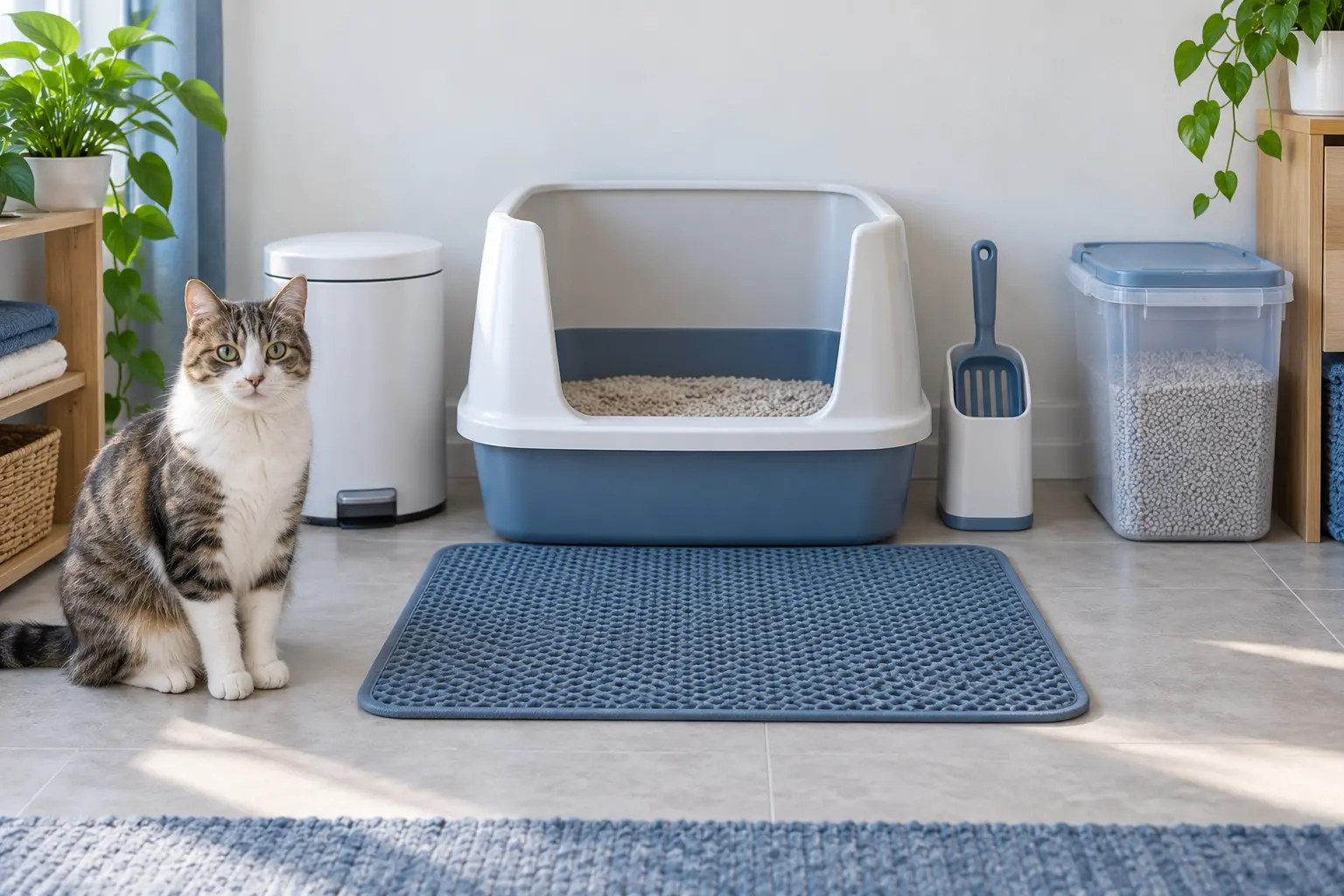
Important: This guide covers routine organization, not litter-box avoidance or illness. Keep the box accessible, follow its cleaning directions, wash your hands after cleaning and do not punish a cat for accidents. Sudden or persistent changes in litter-box use need veterinary guidance.
Is the litter tracked, kicked out or spilled during refilling?
Those three messes look similar on the floor but need different fixes. Tracking usually forms a trail from the entrance. Scatter tends to land beside one or more walls after digging. Refill spills gather near the stored bag or happen when a heavy package is lifted over the box. Clean the floor, observe the next ordinary use and solve the dominant path first.
Do not make the box harder to enter just to protect the floor. The ASPCA’s litter-box guidance notes that box size, access, location, cleanliness, lids and liners can all affect whether a cat is comfortable using it. The tidiest setup is one the cat still uses reliably.
Which product type fits your litter-area problem?
Textured litter-catching mat
Best when clean granules cling to paws and spread just beyond the boxA mat creates a washable landing zone where loose litter can fall before the cat reaches the rest of the room. Double-layer styles can collect granules between layers; a simple solid mat is usually quicker to shake or wipe.
- Benefits
- Defines one easy-to-clean landing zone
- Available in solid and granule-catching designs
- Can protect the floor from routine scratching around the entrance
- Before you buy
- Measure the clear floor area in front of and beside the entrance. Check the surface texture, edge height, backing, wash instructions and whether the mat can lie completely flat without blocking the cat's route.
- Possible drawback
- A mat only catches litter the cat steps on or crosses; it cannot stop forceful digging that throws granules over another side.
High-sided open litter box or removable scatter guard
Best when litter is kicked over a particular side during diggingHigher walls can intercept granules at the source while keeping the top open. A removable guard can add coverage to a compatible box without changing the entire setup, but every added edge must remain stable and comfortable for the cat to use.
- Benefits
- Blocks scatter close to the source
- Open top keeps the interior visible
- Removable guards can simplify emptying when they detach cleanly
- Before you buy
- Measure the cat's turning space as well as the outside footprint. Confirm the entry is low enough, the sides do not flex, the guard attaches securely and the complete box still fits the chosen quiet, accessible location.
- Possible drawback
- High sides or a raised entrance can be unsuitable for kittens, older cats or cats with limited mobility, and some cats simply reject a changed box.
Slotted scoop with a washable holder
Best for making the daily clean-up quick and keeping the scoop off the floorA scoop sized to the litter lets reusable granules fall back into the box while waste stays in the scoop. A stable holder gives the used tool a defined place between clean-ups and can contain loose grains until it is washed.
- Benefits
- Keeps the everyday tool within reach
- Returns compatible clean litter through the slots
- Holder contains drips or stray granules in one washable spot
- Before you buy
- Match slot width to the current litter, check handle reach and stiffness, and choose a holder that stands securely without trapping inaccessible residue. Confirm both pieces can be washed according to their instructions.
- Possible drawback
- Slots that are too wide lose usable litter, while very fine slots clog more easily and slow the task.
Small lidded litter-waste pail
Best when the household wants to bag scooped waste before the main bin is taken outA dedicated, stable pail keeps the disposal step beside the box instead of carrying an open scoop through the home. The useful features are a lid that closes reliably, a liner system you can replace, and surfaces you can clean—not odor claims.
- Benefits
- Shortens the route from scoop to disposal
- Keeps liners and waste in one defined container
- Can support a consistent daily routine
- Before you buy
- Check the closed dimensions, opening size, foot-pedal clearance, liner compatibility, carrying handle and cleaning instructions. Place it where it cannot tip or obstruct the cat's approach.
- Possible drawback
- It occupies floor space, needs liners and regular emptying, and a lid does not replace cleaning the box or pail.
Sealed litter storage container
Best when an open bag spills, slumps or is awkward to pourA rigid container can keep unused litter upright and give it one measured storage place. A wide opening helps with refilling; a smaller pour spout or dedicated cup can reduce over-pouring when the product allows it.
- Benefits
- Prevents an opened bag from folding or spilling
- Makes refill supplies easier to move
- Keeps the litter type and accessories together
- Before you buy
- Choose capacity from the litter bag you actually buy, allowing headroom instead of using the nominal volume alone. Check the lid seal, handle, scoop storage, pour control and the litter maker's storage directions.
- Possible drawback
- The container adds bulk, must be labeled if the original package is not kept beside it, and can be heavy when full.
ProblemPick compares product types, not current listings. Amazon shows current products, prices, ratings, availability and seller terms after you choose to open it.
Quick product comparison
| Product type | Best for | Main limitation |
|---|---|---|
| Textured litter-catching mat | Best when clean granules cling to paws and spread just beyond the box | A mat only catches litter the cat steps on or crosses; it cannot stop forceful digging that throws granules over another side. |
| High-sided open litter box or removable scatter guard | Best when litter is kicked over a particular side during digging | High sides or a raised entrance can be unsuitable for kittens, older cats or cats with limited mobility, and some cats simply reject a changed box. |
| Slotted scoop with a washable holder | Best for making the daily clean-up quick and keeping the scoop off the floor | Slots that are too wide lose usable litter, while very fine slots clog more easily and slow the task. |
| Small lidded litter-waste pail | Best when the household wants to bag scooped waste before the main bin is taken out | It occupies floor space, needs liners and regular emptying, and a lid does not replace cleaning the box or pail. |
| Sealed litter storage container | Best when an open bag spills, slumps or is awkward to pour | The container adds bulk, must be labeled if the original package is not kept beside it, and can be heavy when full. |
What should you choose first?
Does litter form a trail from the entrance?
Start with a mat long enough to cover the cat’s usual first steps. A larger usable surface generally matters more than an elaborate pattern the cat avoids walking on.
Does litter land beside the box after vigorous digging?
Measure for a high-sided open box or stable guard, but preserve an easy entrance and enough internal turning room. Keep the familiar box available while you learn whether the change is accepted.
Is the daily scoop creating a second mess?
Match the scoop slots to the litter and add a holder with a removable, washable base. Put it beside the box, never inside the cat’s entry path.
Is the main problem disposal or refill storage?
Choose the lidded pail when carrying scooped waste is the friction point. Choose a sealed storage container when an open litter bag spills or is difficult to pour. They solve different parts of the routine.
How can you keep the area tidy without adding too many products?
For other pet clean-up problems, compare tools to remove pet hair from carpet without damaging it or use the material-first guide for pet hair on a sofa.
Cat litter-area buying checklist
Cat litter area FAQs
Will a litter mat stop all tracking?
No. It can catch granules that cross its surface, but litter may still leave on fur, jump over the mat or be kicked from another side. Place the mat on the cat's normal exit path and choose a size the cat cannot step over in one stride.
Is a covered litter box the best way to keep the floor clean?
Not automatically. A cover may contain some scatter, but it changes the box's space, airflow and access, and some cats dislike it. Start with the cat's comfort and current box preference; a high-sided open box or removable guard may be a smaller change.
How often should the litter area be reset?
Remove waste and obvious scatter at least daily, following the litter and box instructions. Empty the scoop holder and mat as needed, then wash each item on the schedule and with the method its maker allows.
Can collected litter from a mat go back into the box?
Only if it is visibly clean, dry and free from floor debris, and the mat design lets you transfer it hygienically. When in doubt, discard it according to the litter maker's and local waste guidance.
Should cat litter be flushed down the toilet?
Do not assume it is flushable. Follow the litter package and local wastewater or waste rules. A product label such as biodegradable does not by itself mean the material belongs in a toilet.
What if my cat stops using a newly changed setup?
Restore an accessible familiar option and stop forcing the change. A box that is too small, difficult to enter, poorly located or cleaned with a strong scent may be rejected; persistent elimination outside the box needs veterinary guidance rather than another organizer.