 ProblemPick
How to Remove Pet Hair From Carpet Without Damage
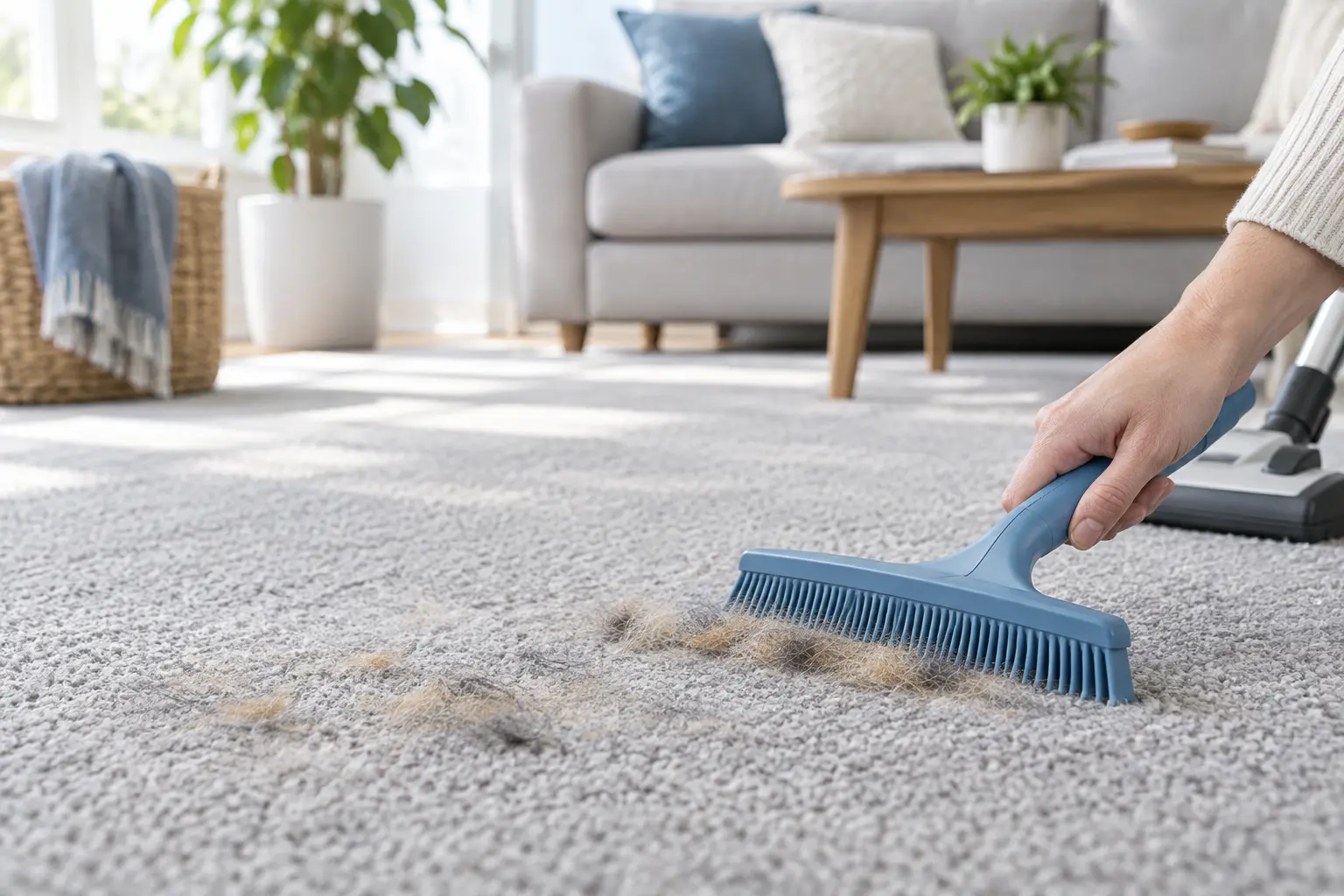
Read the carpet or rug care label first, then vacuum slowly with a suitable floorhead. If hair remains on a compatible durable carpet, gather it with a tested soft rubber rake or use a compatible pet-hair attachment on small patches. A manual sweeper suits quick surface cleanup. Stop if loops pull, fringe catches or the pile changes.
Protect the floor covering: This guide is for dry loose hair, not stains or odors. Avoid improvised liquids and hard scraping. Fringe, loose loops, damaged backing, wool and valuable or handmade rugs need their maker's care instructions; use a qualified cleaner when those instructions call for one.
What should you check before removing pet hair from carpet?
Identify whether you have fitted carpet or a movable rug, then find its fiber and care guidance. Look for loose loops, worn edges, fringe, repairs and a backing that shifts. Test the vacuum setting or manual tool in a hidden area and compare the pile before and after a few gentle strokes.
The Carpet and Rug Institute's care guidance recommends regular, slow vacuuming and more frequent attention in pet and high-traffic areas. It also advises keeping a beater bar away from fringe and following the manufacturer's instructions for specialty rugs. For wool-specific care resources, see WoolSafe.
Which tools solve different carpet pet-hair problems?
Vacuum with an adjustable carpet floorhead
Best for whole rooms and routine pickup on carpet the machine is designed to cleanA suitable floorhead combines suction with pile contact across a broad area. Adjustable suction, brush height or a brush-roll switch can help you follow the carpet maker's instructions instead of forcing one setting onto every surface.
- Benefits
- Covers a room efficiently
- Collects the piles made by a manual tool
- May handle edges with a separate crevice tool
- Check before buying
- Read the carpet and vacuum manuals. Check pile height, loop construction, fringe, floorhead width, brush-roll controls, filtration upkeep and whether the head moves freely without pulling fibers.
- Possible drawback
- Strong suction or an unsuitable rotating brush can make a loose rug lift, catch fringe or disturb delicate loops. A wide head may miss stairs and edges.
Compatible pet-hair vacuum attachment
Best for dense patches, carpeted stairs and smaller areas your main floorhead leaves behindA compact powered, air-driven or brush-style attachment focuses agitation and suction on a small patch. Compatibility matters more than a pet label: the connection, airflow and brush action must suit your vacuum and floor covering.
- Benefits
- Targets stubborn small zones
- Fits stairs and edges better than a full floorhead
- Uses a vacuum you already own when compatible
- Check before buying
- Confirm the exact vacuum model, hose connection, power source and carpet-care rules. Look for accessible brush-roll cleaning and a head narrow enough for the target area. Do not use a rotating tool on fringe or where the maker prohibits it.
- Possible drawback
- It is slow for a whole room, can wrap long hair around the brush and may be too aggressive for delicate, loose-loop or high-value rugs.
Soft rubber carpet rake or broom
Best for gathering hair left on a compatible durable carpet before a final vacuum passFlexible rubber fingers can move surface hair into visible piles without adhesive refills. Short, light strokes are easier to control than hard scraping. Always test because the same friction that gathers hair can change a sensitive pile.
- Benefits
- No power or disposable sheets
- Makes remaining hair easy to see
- Useful between deeper vacuum sessions
- Check before buying
- Check the carpet maker's guidance, then test a clean soft edge in a hidden area. Avoid damaged loops, fringe and specialty rugs unless their instructions permit the tool. Compare head width, handle length and how the rubber edge is cleaned.
- Possible drawback
- It requires physical effort, still needs a second pickup step and can snag loops or alter the appearance of delicate pile if pressed too hard.
Manual carpet sweeper
Best for quick surface pickup on compatible low- or medium-pile carpet between vacuum sessionsA lightweight push sweeper uses its rollers as you move it, so it can collect a light daily layer without a cord or battery. It suits frequent visible touch-ups rather than hair packed deep into the pile.
- Benefits
- Quick to take out and put away
- No charging or power cord
- Integrated bin contains the collected surface hair
- Check before buying
- Compare the stated floor types, pile clearance, head width, turning space, bin access and brush-roll cleaning. Test it on a loose rug only if the rug stays flat and the maker allows mechanical sweeping.
- Possible drawback
- Pickup varies with pile and direction, corners may need another tool, and wrapped hair still has to be removed from the rollers. It is not a deep cleaner.
ProblemPick compares product types, not individual offers. Amazon displays current products, prices, ratings and availability only after you choose to open a link.
Quick comparison: which pet-hair tool fits the job?
| Product type | Best use | Main limitation |
|---|---|---|
| Vacuum with an adjustable carpet floorhead | Best for whole rooms and routine pickup on carpet the machine is designed to clean | Strong suction or an unsuitable rotating brush can make a loose rug lift, catch fringe or disturb delicate loops. A wide head may miss stairs and edges. |
| Compatible pet-hair vacuum attachment | Best for dense patches, carpeted stairs and smaller areas your main floorhead leaves behind | It is slow for a whole room, can wrap long hair around the brush and may be too aggressive for delicate, loose-loop or high-value rugs. |
| Soft rubber carpet rake or broom | Best for gathering hair left on a compatible durable carpet before a final vacuum pass | It requires physical effort, still needs a second pickup step and can snag loops or alter the appearance of delicate pile if pressed too hard. |
| Manual carpet sweeper | Best for quick surface pickup on compatible low- or medium-pile carpet between vacuum sessions | Pickup varies with pile and direction, corners may need another tool, and wrapped hair still has to be removed from the rollers. It is not a deep cleaner. |
Which option suits your carpet and routine?
Is hair spread across a whole room?
Use a vacuum floorhead approved for that carpet. Move slowly, overlap passes and change direction only if the carpet guidance allows it. Save compact attachments for edges and patches.
Are small areas still hairy after vacuuming?
Use a compatible pet-hair attachment or a tested soft rubber rake. The attachment suits stairs and concentrated zones; the rake trades electricity for manual effort and a second pickup step.
Does a light layer return every day?
A manual carpet sweeper can make quick surface rounds easier on compatible pile. It does not replace periodic vacuuming or remove hair that is deep in the carpet.
Is the rug delicate, fringed, handmade or valuable?
Skip generic rakes and rotating brushes until you have the maker's instructions. Use gentle suction only where permitted and choose professional care if the instructions require it.
What is a safe order for lifting dry pet hair?
Hair on upholstery needs a different contact surface. Use our separate guide to remove pet hair from a sofa. For vehicle seats and cargo carpet, see the pet-hair-in-car guide.
Carpet pet-hair remover buying checklist
Pet hair and carpet questions
Why is pet hair still visible after vacuuming?
Hair can sit between pile fibers, wrap around a brush or remain along edges the main head misses. Check the correct setting, move more slowly and use a compatible small-area tool only where needed.
Can a rubber rake damage carpet?
Yes. Friction can alter delicate pile, pull loose loops or catch damaged areas. Use a soft clean edge, light pressure and a hidden-area test, and follow the carpet maker's instructions.
Is a manual sweeper better than a vacuum?
It is convenient for light surface hair and quick touch-ups, but it does not provide the same deeper routine cleaning. Many homes will use it between normal vacuum sessions.
Should I wet the carpet to collect pet hair?
Not for routine dry-hair pickup. Moisture can create a separate cleaning and drying problem and may conflict with the floor covering's instructions. Use a dry compatible tool.
Can I use the same tool on carpet and sofa fabric?
Only if both makers allow it. Carpet pile and upholstery can react differently to rubber edges, rotating brushes and suction. Test each surface separately.
How often should I remove pet hair?
Use a frequency that keeps buildup manageable for your household, carpet and pet. The Carpet and Rug Institute advises more frequent vacuuming in pet areas, but the practical schedule varies.