 ProblemPick
How to Remove Pet Hair From a Sofa Without Damaging It
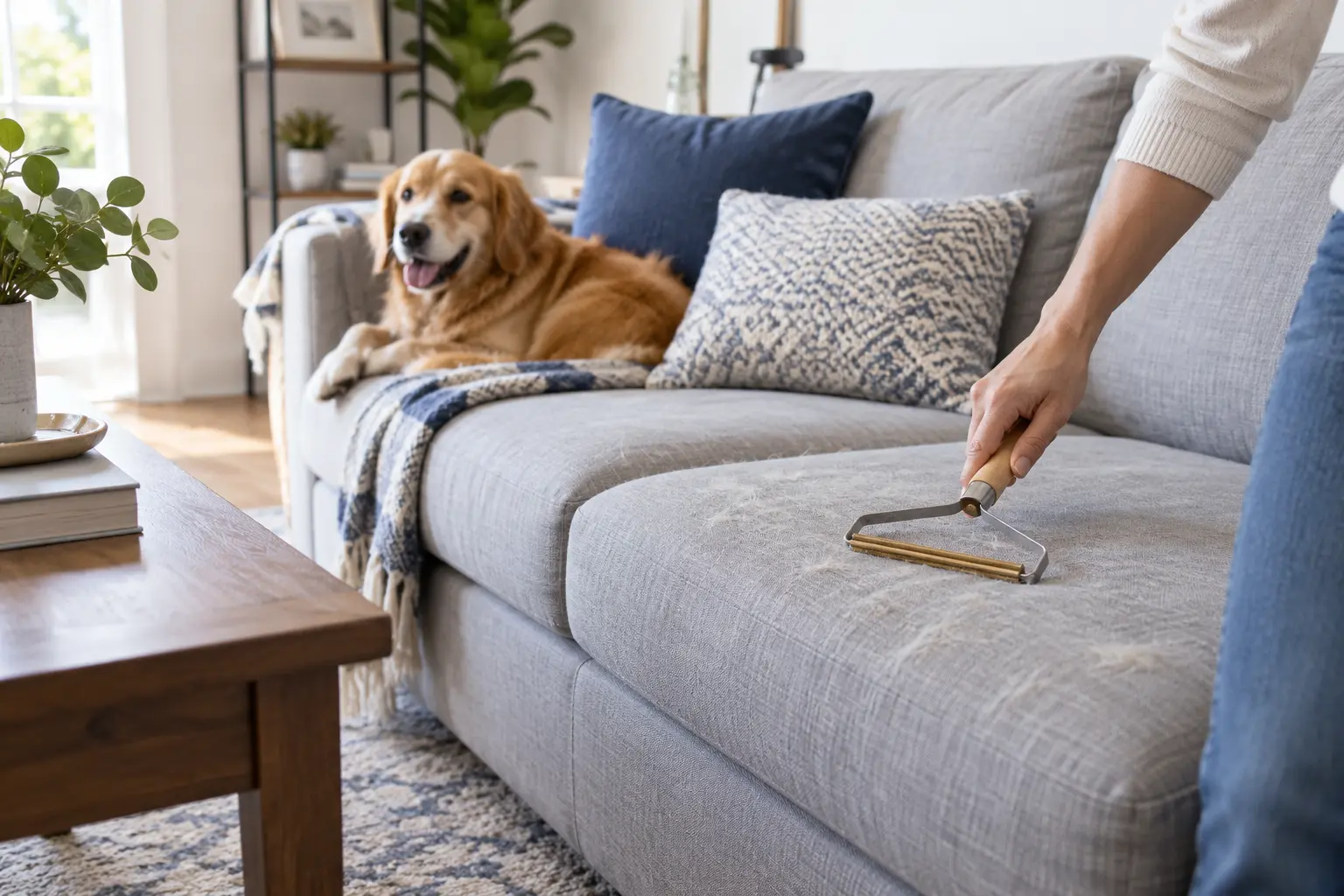
Match the tool to the upholstery before you start. A reusable fabric roller suits light surface hair, a soft rubber tool can gather embedded fur, an upholstery vacuum covers larger areas, and a washable throw reduces the next buildup.
Important: This guide is about dry pet-hair removal, not stains, odors, pests or allergy treatment. Stop if a tool pulls threads, changes the nap or marks the surface.
What should you check before removing pet hair?
Start with the sofa’s label, manual or manufacturer care page. Fabric, microfiber, velvet, boucle, leather and coated materials do not all tolerate the same pressure or attachments. A tool that works on a tightly woven seat may catch loops or flatten the nap on another cover.
Remove one loose cushion if possible and test the tool underneath or at the back. Use only light pressure. This matters most for rubber edges, stiff brushes and motorized vacuum heads. For leather or imitation leather, follow the furniture maker’s care instructions rather than using a tool designed to drag across woven upholstery.
For a practical reference, IKEA’s official upholstery-care guide recommends matching care to the material, using upholstery tools for seams and crevices, and avoiding excessive vacuum power. Your own sofa’s instructions should take priority.
Four product types that solve different parts of the problem
Reusable directional fabric roller
Best for regular surface-hair cleanupIts textured fabric catches loose hair as you move the roller or brush in the intended direction. Many designs collect the hair in a chamber, so there are no adhesive sheets to replace.
- Benefits
- Quick for cushions and seat panels
- Reusable for frequent touch-ups
- No vacuum or disposable sheets needed
- Before you buy
- Confirm that the tool is listed for upholstery and read how the roller must be moved and cleaned. Test it on a hidden area, especially on velvet, boucle or fabric with a directional nap.
- Possible drawback
- It can be slow on a large sofa and may leave deeply embedded hair behind.
Soft rubber pet-hair brush
Best for hair caught in woven fabricA flexible rubber edge or bristle can gather hair into small piles before you lift or vacuum it away. It is useful when loose fur does not come free with suction alone.
- Benefits
- Targets hair held between fabric fibers
- Reusable and simple to rinse
- Useful before a vacuum pass
- Before you buy
- Choose a soft tool with rounded edges and test with very light pressure. Avoid aggressive scraping on loose weaves, loops, damaged fabric, suede, leather or any surface the sofa maker says not to brush.
- Possible drawback
- Too much pressure or a sharp-edged tool can disturb delicate fibers or leave visible marks in the nap.
Vacuum with upholstery attachment
Best for seams, crevices and larger sofasAn upholstery nozzle removes loose hair and debris across wide surfaces, while a crevice tool reaches cushion gaps. A small motorized upholstery head may help on compatible durable fabric.
- Benefits
- Covers broad areas efficiently
- Reaches seams with the right attachment
- Also removes loose crumbs and debris
- Before you buy
- Check the sofa-care instructions and the attachment dimensions. Look for adjustable suction, an easy-to-clean brush roll or tool, suitable filtration and enough reach for the full sofa.
- Possible drawback
- Strong suction or a rotating brush can be too harsh for some covers, and the attachment itself needs regular hair removal.
Washable sofa throw or furniture cover
Best for reducing the next buildupA removable barrier catches much of the fur on the pet’s usual resting area. Washing or shaking out one cover can be easier than repeatedly cleaning the entire sofa.
- Benefits
- Reduces hair reaching the upholstery
- Removes easily for routine cleaning
- Can protect the pet’s favorite section
- Before you buy
- Measure the seat, back and arms you want to protect. Confirm fabric-care instructions, washability, drying method, nonslip features and whether the cover allows reclining parts to move safely.
- Possible drawback
- It changes the sofa’s look, can shift during use and does not stop hair reaching uncovered areas.
ProblemPick compares product types rather than specific listings. Amazon displays current products, prices, ratings and availability after you choose to open it.
Quick product comparison
| Product type | Best for | Main limitation |
|---|---|---|
| Reusable directional fabric roller | Best for regular surface-hair cleanup | It can be slow on a large sofa and may leave deeply embedded hair behind. |
| Soft rubber pet-hair brush | Best for hair caught in woven fabric | Too much pressure or a sharp-edged tool can disturb delicate fibers or leave visible marks in the nap. |
| Vacuum with upholstery attachment | Best for seams, crevices and larger sofas | Strong suction or a rotating brush can be too harsh for some covers, and the attachment itself needs regular hair removal. |
| Washable sofa throw or furniture cover | Best for reducing the next buildup | It changes the sofa’s look, can shift during use and does not stop hair reaching uncovered areas. |
Which pet-hair tool should you choose?
Is the hair loose and spread across cushions?
Start with a reusable directional fabric roller. It is quick to keep nearby and avoids setting up a vacuum for a light layer.
Is short hair caught in a durable woven fabric?
Try a soft rubber brush on a hidden area. Use gentle strokes to collect the fur, then lift or vacuum the piles.
Are the seams and the whole sofa covered?
Choose a vacuum with an upholstery nozzle and crevice tool. Adjustable suction is useful when the cover is delicate.
Does the same pet spot become hairy every day?
Add a washable, correctly sized throw or furniture cover. Keep a handheld tool for the uncovered edges.
What is a gentle order for cleaning sofa hair?
If hair also collects in the vehicle, the related pet-hair-in-car guide compares tools for seats, carpet and cargo areas. Car upholstery has different fit and safety considerations, so keeping the two jobs separate makes the advice more useful.
Sofa pet-hair remover buying checklist
Pet hair and sofa FAQs
What is the easiest way to remove light pet hair from a sofa?
A reusable directional roller is often the simplest tool for a light layer on compatible fabric. Test it first, follow the movement direction and empty the collection chamber as it fills.
Why does vacuuming leave short pet hair behind?
Short hair can sit between woven fibers instead of resting loosely on top. A gentle rubber tool may gather it into piles before a second vacuum pass, provided the sofa material tolerates the tool.
Can a rubber brush damage sofa fabric?
It can mark a directional nap, catch loose loops or worsen damaged fabric if the edge is hard or the pressure is excessive. Test a soft tool in a hidden area and stop at the first sign of change.
Is an adhesive lint roller a good choice?
It can handle small touch-ups, but it creates refill waste and may leave residue on some surfaces. A reusable roller is usually better suited to frequent sofa cleaning.
Should I use a motorized upholstery tool?
Only when the sofa maker permits it and the fabric is compatible. A motorized head can help on durable upholstery, but rotating brushes and strong suction may be too aggressive for delicate covers.
How can I reduce pet hair on the sofa between cleanups?
Place a washable throw on the pet’s usual spot and clean it according to its label. A quick, regular pass with a handheld roller is easier than waiting for a thick buildup.