 ProblemPick
How to Remove Pet Odor From a Sofa Without Damaging It
Find the odor source, follow the sofa's care instructions and use the least-wet compatible method. Start with dry vacuuming; use an upholstery-labeled enzyme cleaner for a defined organic spot, a spot extractor only when wet cleaning is allowed, and a washable cover to reduce repeat buildup.
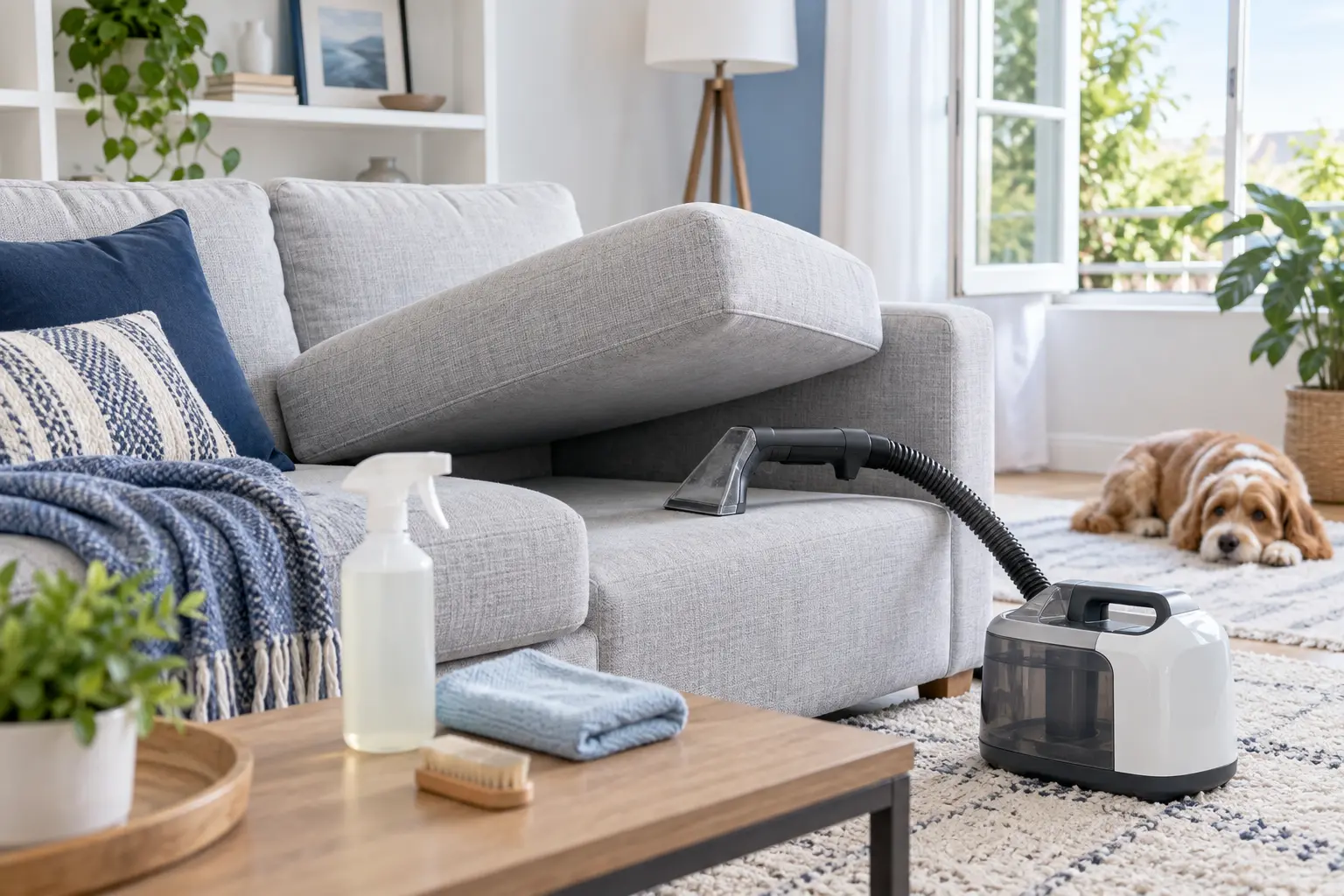
Important: Never mix cleaning products. Ventilate the room, follow every product label and keep pets away until the label says the area is ready for use. If liquid has soaked into the cushion filling, the odor returns after complete drying, or the sofa requires professional cleaning, stop adding products and contact the manufacturer or an upholstery cleaner.
Where is the pet odor actually coming from?
Check one section at a time instead of treating the entire sofa. Remove loose throws, lift removable cushions and inspect the cover, piping, zipper area, seams, platform below the cushions and nearby floor. Dry hair and crumbs can hold everyday smells; a defined accident may have passed through the cover into foam or batting. Those are different jobs.
Do not use fragrance strength as the measure of success. A perfumed spray can make the room smell different while the original source remains. After cleaning and complete drying, close the room for a short period and reassess the specific area. If the smell is strongest inside a cushion, ask the sofa maker whether the insert can be treated or replaced.
What should you check on the sofa before using a product?
The sofa manual and manufacturer care page take priority. Some upholstered furniture also carries a cleaning code: W generally permits a water-based method, S calls for an appropriate solvent method, W-S permits either, and X limits care to vacuuming or brushing. The Association for Contract Textiles' cleaning guidance also stresses pretesting and distinguishes these methods. Do not assume a code applies when you cannot find one.
Check the cover material, hidden zipper labels and whether the cushion cover is truly machine-washable; a zipper alone does not prove it is. For leather, suede, wool, velvet, vintage fabric, loose dye, damaged seams or X-code upholstery, follow the maker or use a qualified professional rather than improvising a wet treatment.
When shopping in the United States, the EPA's Safer Choice program can help identify products whose ingredients meet its criteria, but the label does not replace the sofa's compatibility rules or the product directions.
Which product type fits the odor problem?
Vacuum with upholstery and crevice tools
Best when hair, crumbs or dry debris are holding the smellA dry pass removes loose material from the cover, seams and spaces under the cushions before any compatible cleaner is used. It is a sensible first step even when another treatment will follow.
- Benefits
- Starts without adding moisture
- Reaches seams and cushion gaps
- Useful for the regular maintenance pass
- Before you buy
- Read the sofa instructions, check the attachment width and look for controllable suction. Avoid a rotating brush when the maker excludes it or when the fabric has loose loops, a delicate nap or damage.
- Possible drawback
- Vacuuming does not remove odor that has reached absorbent padding or dried into the cover.
Enzyme cleaner labeled for upholstery
Best for a small, known organic pet-soil area on compatible fabricThis product type is designed for organic residue rather than simply covering the smell with fragrance. It only belongs on the sofa when its label permits the upholstery material and the sofa maker permits the cleaning method.
- Benefits
- Targets a defined odor source
- Available in controlled spray or pour formats
- Can suit a focused spot instead of the whole sofa
- Before you buy
- Match the product directions to the sofa label, test an inconspicuous area and confirm application, contact, blotting and drying instructions. Keep pets away for the full period required on the label.
- Possible drawback
- It may be unsuitable for solvent-only, X-code, leather, suede, wool or other sensitive covers; fragrance can also be distracting without proving the source is gone.
Portable upholstery spot extractor
Best for a larger cleanable section when the care instructions allow wet extractionA compact extractor applies cleaning solution and pulls much of it back out. It can cover a cushion panel more evenly than repeated hand spraying, while the transparent tank makes recovery easier to monitor.
- Benefits
- Treats a broader section consistently
- Combines application and liquid recovery
- Reusable for compatible carpet and upholstery jobs
- Before you buy
- Confirm that wet extraction is permitted, that the cleaning formula is approved for the machine and material, and that the nozzle fits the cushions. Plan airflow and enough time for the upholstery and filling to dry completely.
- Possible drawback
- It costs more, needs cleaning after use and can drive moisture deeper when overused or moved too slowly.
Washable sofa cover or fitted pet throw
Best for preventing repeat buildup on a pet's usual placeA removable layer catches routine hair, dander and minor everyday mess before they reach the upholstery. Washing one correctly sized cover can be simpler than repeatedly treating the full sofa.
- Benefits
- Creates a removable maintenance layer
- Helps define the pet's usual sofa zone
- Reduces how often the underlying cover needs attention
- Before you buy
- Measure the protected seat, back and arms. Check the wash and drying label, nonslip design, colorfastness and whether reclining parts, vents and seams remain unobstructed.
- Possible drawback
- It changes the look, can shift and cannot solve odor already inside a cushion or frame.
ProblemPick compares product types, not current listings. Amazon shows the available products, prices, ratings and seller terms after you choose to open it.
Quick product comparison
| Product type | Best for | Main limitation |
|---|---|---|
| Vacuum with upholstery and crevice tools | Best when hair, crumbs or dry debris are holding the smell | Vacuuming does not remove odor that has reached absorbent padding or dried into the cover. |
| Enzyme cleaner labeled for upholstery | Best for a small, known organic pet-soil area on compatible fabric | It may be unsuitable for solvent-only, X-code, leather, suede, wool or other sensitive covers; fragrance can also be distracting without proving the source is gone. |
| Portable upholstery spot extractor | Best for a larger cleanable section when the care instructions allow wet extraction | It costs more, needs cleaning after use and can drive moisture deeper when overused or moved too slowly. |
| Washable sofa cover or fitted pet throw | Best for preventing repeat buildup on a pet's usual place | It changes the look, can shift and cannot solve odor already inside a cushion or frame. |
Which sofa-odor option should you choose?
Does the sofa smell stale but have no known wet spot?
Vacuum the compatible cover, seams and spaces beneath the cushions first. Wash any removable throw according to its label, ventilate the room and reassess after the sofa has remained dry.
Is there one known organic pet-soil area?
Choose an enzyme cleaner only when both its label and the sofa instructions permit it. Patch-test, treat the smallest necessary area and follow the stated application and drying time.
Is a larger W- or W-S-compatible panel affected?
A portable extractor may make coverage and liquid recovery more controlled. Avoid it when the instructions exclude wet extraction or when the filling cannot dry promptly and completely.
Does the pet use the same clean sofa spot every day?
Add a washable, well-fitted throw after the underlying sofa is odor-free and dry. Clean the layer on a repeatable schedule instead of waiting for another buildup.
What is a careful order for removing pet odor?
Poison Control's household-cleaner safety guidance says not to mix cleaning products and recommends thorough ventilation. Those precautions matter even when a social-media cleaning recipe sounds mild.
If loose fur is the main problem rather than smell, use the separate guide to remove pet hair from a sofa without damaging it. For floor coverings, our carpet pet-hair guide compares tools by pile and area.
Sofa pet-odor product buying checklist
Pet odor and sofa FAQs
Can baking soda remove pet odor from every sofa?
No. Powders can be difficult to remove from seams and filling, and a sofa's material or maker may not permit them. Use only a method allowed by the sofa instructions and test it in a hidden area.
Should I use a steam cleaner on a pet-smelling sofa?
Only if the sofa manufacturer permits that exact method. Heat and moisture may be unsuitable for adhesives, dyes, delicate fibers or absorbent filling, and “steam cleaner” is not interchangeable with a cool-water spot extractor.
Why does the smell return after the sofa dries?
The source may remain in foam, batting, a seam, the platform under the cushions or a nearby surface. Do not keep soaking the visible cover. Ask the manufacturer or a qualified upholstery cleaner about the affected inner component.
Is an enzyme cleaner safe for all upholstery?
No. It must be labeled for the material and permitted by the sofa instructions. Patch-test it, follow the full directions and keep pets away until the label allows contact.
Can I mix vinegar with another cleaner for a stronger result?
Do not mix household cleaning products. The combination can damage materials or create hazardous fumes. Use one compatible, labeled product exactly as directed.
How can I keep the sofa fresher after cleaning?
Vacuum compatible surfaces regularly, wash the pet's removable throw by its label, address new mess promptly and let damp fabric dry fully. A washable fitted cover can make the repeat routine easier.