 ProblemPick
How to Dry Laundry More Efficiently in a Small Apartment
Give each garment its own air space, choose a rack that fits fully open, keep room air moving and remove the released moisture through suitable ventilation or a correctly sized dehumidifier.
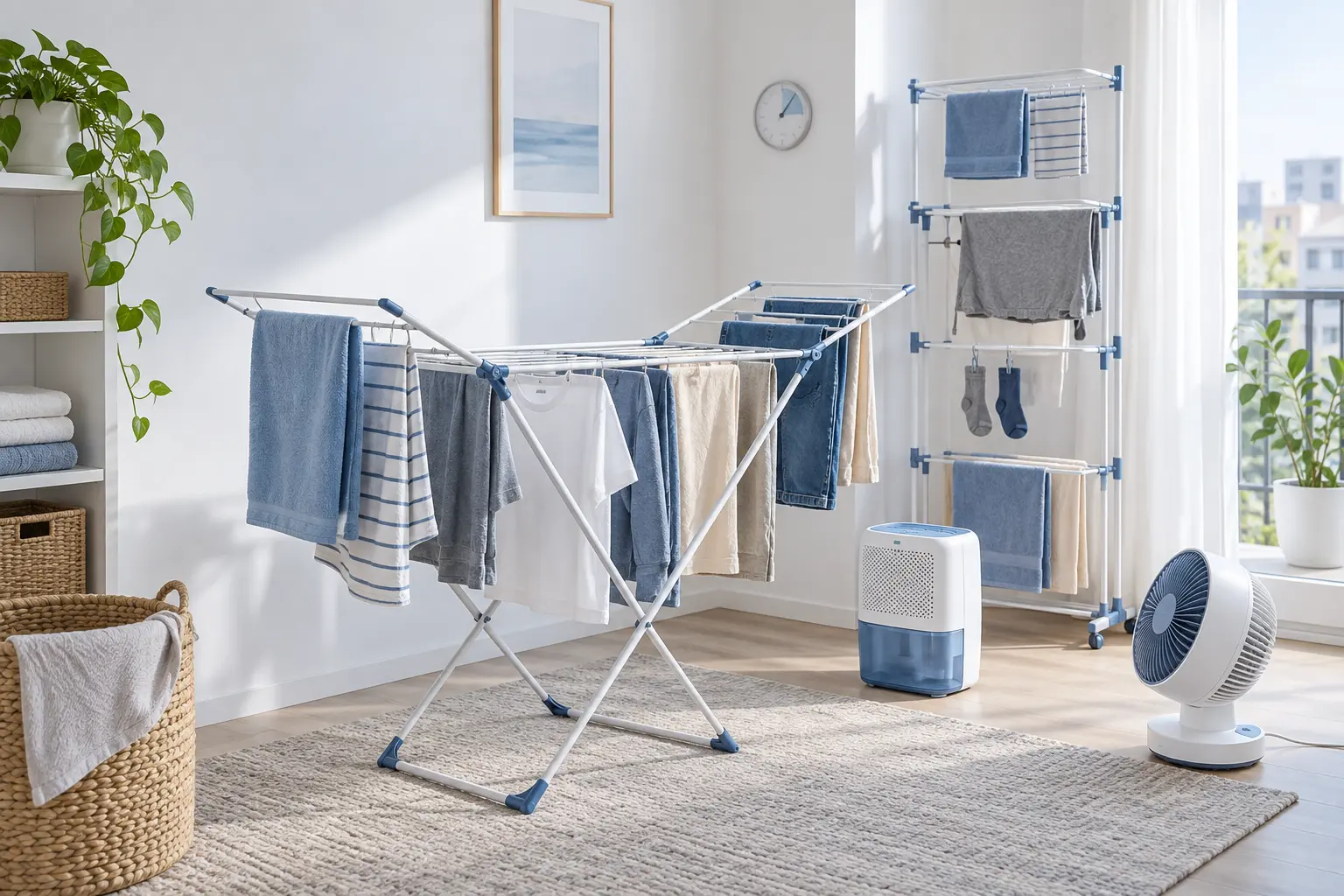
Safety first: Keep damp textiles away from outlets, plugs, heaters and appliance vents. Follow garment-care labels and every rack, fan and dehumidifier instruction. Persistent leaks, visible mold or building moisture need the landlord or an appropriate building professional—not another drying accessory.
Why does laundry dry slowly in a small apartment?
Drying slows when wet surfaces touch, the room air barely moves or the released moisture has nowhere to go. Before buying anything, run an appropriate washer spin cycle, unfold pockets and waistbands, and hang garments with visible gaps. Then decide whether your main limit is rail length, floor area, air movement or room humidity.
The US Environmental Protection Agency says moisture control is central to preventing indoor mold and recommends keeping relative humidity below 60% when possible, ideally 30–50%. Its home moisture guide, updated February 18, 2026, also recommends ventilation or air movement and dehumidifiers as appropriate. Treat a hygrometer reading, window condensation and the room’s normal conditions as decision inputs—not as a promise that one appliance will solve a building problem.
Which product type fits your drying problem?
Winged freestanding drying rack
Best for mixed loads when you can temporarily spare a wider patch of floorA winged rack combines a central section for shirts and towels with raised sides for longer items. Spreading pieces across separate rails exposes more fabric to moving air than folding them over one another.
- Benefits
- Flexible sections for mixed garment lengths
- Folds flat between laundry days
- Needs no permanent mounting
- Before you buy
- Measure the fully opened width, depth and walking clearance—not the folded size. Check rail spacing, usable hanging length, joint stability, load limits and whether the feet protect your floor.
- Possible drawback
- It uses the most floor width while open and can become unstable when heavy wet items are loaded unevenly.
Vertical tower drying rack
Best when the usable footprint is narrow but you have safe vertical clearanceSeveral stacked levels trade width for height. It works well for small and medium items when they can be arranged without upper pieces dripping onto or blocking the lower tiers.
- Benefits
- Uses less floor width than many winged racks
- Separates small items across several levels
- Some models fold or roll away
- Before you buy
- Measure open height and footprint, including casters or side wings. Check shelf spacing, wheel locks, load limits and whether longer garments can hang without touching the floor.
- Possible drawback
- Closely packed tiers restrict airflow, and a tall rack is easier to tip if it is overloaded, pushed or left in a narrow route.
Hanger rail or clip-hanger set
Best for shirts, socks and small pieces that can dry on their final hangerUsing suitable hangers or a multi-clip hanger can free the rack rails for towels and trousers. A stable garment rail can also keep damp pieces separated instead of layering them over doors or furniture.
- Benefits
- Makes use of vertical hanging space
- Can reduce handling after drying
- Clip hangers group small items without stacking them
- Before you buy
- Confirm the hanger material suits damp clothes, count the real hanging positions, check rail and hook load limits, and keep every item clear of walls, curtains, heaters and walkways.
- Possible drawback
- Wet garments are heavier than dry ones, and crowding many hangers together slows airflow and may overload a rail or door hook.
Compact air circulator
Best when laundry has enough rail space but the surrounding air stays stillGentle air movement across—not into a dense pile of—spaced garments helps moisture leave the fabric surface. It is most useful when there is already a sensible route for humid air to leave the room.
- Benefits
- Improves air movement around an existing rack
- Small footprint
- Useful beyond laundry day
- Before you buy
- Compare stable placement, adjustable direction, timer, cleaning access, cord reach and sound. Follow the maker's clearances and electrical instructions; keep the unit, plug and cord away from dripping laundry and water.
- Possible drawback
- It moves moisture into the room rather than removing it, so it does not replace ventilation or dehumidification when indoor humidity remains high.
Portable dehumidifier with humidistat
Best when indoor humidity remains high or outdoor air is too damp for useful ventilationA portable room dehumidifier removes water from the air while the laundry releases moisture. A built-in humidistat can cycle the unit around a selected relative-humidity setting instead of running blindly.
- Benefits
- Removes moisture from the room instead of only moving it
- Humidistat supports measured control
- Bucket or drain options suit different routines
- Before you buy
- Size capacity for the room and conditions, not the appliance footprint alone. Compare operating temperature, humidistat, sound, energy information, bucket access, automatic shutoff and a safe drain route if you will use a hose.
- Possible drawback
- It costs more, uses electricity, warms the nearby air slightly and needs filter, bucket or drainage maintenance.
ProblemPick compares product types, not current listings. Amazon shows current products, prices, ratings, availability and seller terms after you choose to open it.
Quick product comparison
| Product type | Best for | Main limitation |
|---|---|---|
| Winged freestanding drying rack | Best for mixed loads when you can temporarily spare a wider patch of floor | It uses the most floor width while open and can become unstable when heavy wet items are loaded unevenly. |
| Vertical tower drying rack | Best when the usable footprint is narrow but you have safe vertical clearance | Closely packed tiers restrict airflow, and a tall rack is easier to tip if it is overloaded, pushed or left in a narrow route. |
| Hanger rail or clip-hanger set | Best for shirts, socks and small pieces that can dry on their final hanger | Wet garments are heavier than dry ones, and crowding many hangers together slows airflow and may overload a rail or door hook. |
| Compact air circulator | Best when laundry has enough rail space but the surrounding air stays still | It moves moisture into the room rather than removing it, so it does not replace ventilation or dehumidification when indoor humidity remains high. |
| Portable dehumidifier with humidistat | Best when indoor humidity remains high or outdoor air is too damp for useful ventilation | It costs more, uses electricity, warms the nearby air slightly and needs filter, bucket or drainage maintenance. |
What should you choose first?
Do towels and trousers need more uninterrupted rail length?
Start with a winged rack that fits fully open without blocking the apartment’s main route. Load the center and wings evenly and keep the manufacturer’s weight limit visible.
Is the room narrow but tall enough for stacked tiers?
A tower rack can use the footprint more efficiently. It works best when you resist filling every rail and keep enough vertical space for air to reach the lower pieces.
Is the rack adequate but the air feels still?
Use a compact circulator from a dry, stable position, aimed across the hanging area. It supports evaporation; it does not remove the resulting humidity from the apartment.
Do readings or condensation show moisture building up?
Compare portable dehumidifiers by the room and dampness conditions, sound, energy information and water-removal routine. ENERGY STAR’s current buying guidance says capacity depends on both space size and moisture conditions and explains safe placement, drainage and humidistat checks.
How can you make indoor drying more efficient?
When dry clothing is competing for the same limited space, continue with our guide to organizing a small wardrobe without adding furniture. For a room that also traps summer heat, compare the separate options in our bedroom airflow and heat guide.
Small-apartment laundry buying checklist
Small-apartment laundry FAQs
What is the fastest way to air-dry clothes in a small apartment?
Use the washer's appropriate spin setting, shake out each item, leave space between garments, move room air across the rack and give the moisture a route out through suitable ventilation or a dehumidifier. Follow each garment label and appliance instructions.
Is a tower rack better than a winged rack?
A tower rack is usually better for a narrow footprint and many smaller pieces. A winged rack is easier for towels, trousers and mixed lengths but needs more open floor width. The better choice is the one you can load without overlapping fabric or blocking a route.
Should I open a window while drying laundry indoors?
Ventilation can help when outdoor conditions are suitable, but an open window is not always useful in very humid, smoky or otherwise poor outdoor air. Watch indoor humidity and condensation, and follow local ventilation guidance for your building.
Can a fan replace a dehumidifier?
No. A fan circulates air and can help moisture leave fabric, but the water remains in the room air until ventilation or a dehumidifier removes it. If humidity or condensation stays high, air movement alone is not the complete solution.
Where should I place a dehumidifier near a drying rack?
Use the clearances and placement instructions for that model. Keep its intake and outlet unobstructed, keep it away from dripping clothes and water, use a properly grounded outlet, and route any drain hose without creating a leak or trip hazard.
Can I dry laundry directly on a radiator or space heater?
Do not cover or place wet laundry on a heater unless its manufacturer explicitly permits that use. Keep fabrics and racks outside the required clearance and never improvise around an appliance's vents or electrical parts.