 ProblemPick
Pans Getting Scratched in Storage? Try These Options
Use soft protectors when pans must nest, a vertical or adjustable rack when you can separate them, a pull-out organizer for a deep base cabinet, or a correctly mounted rail when cabinet space is the real problem.
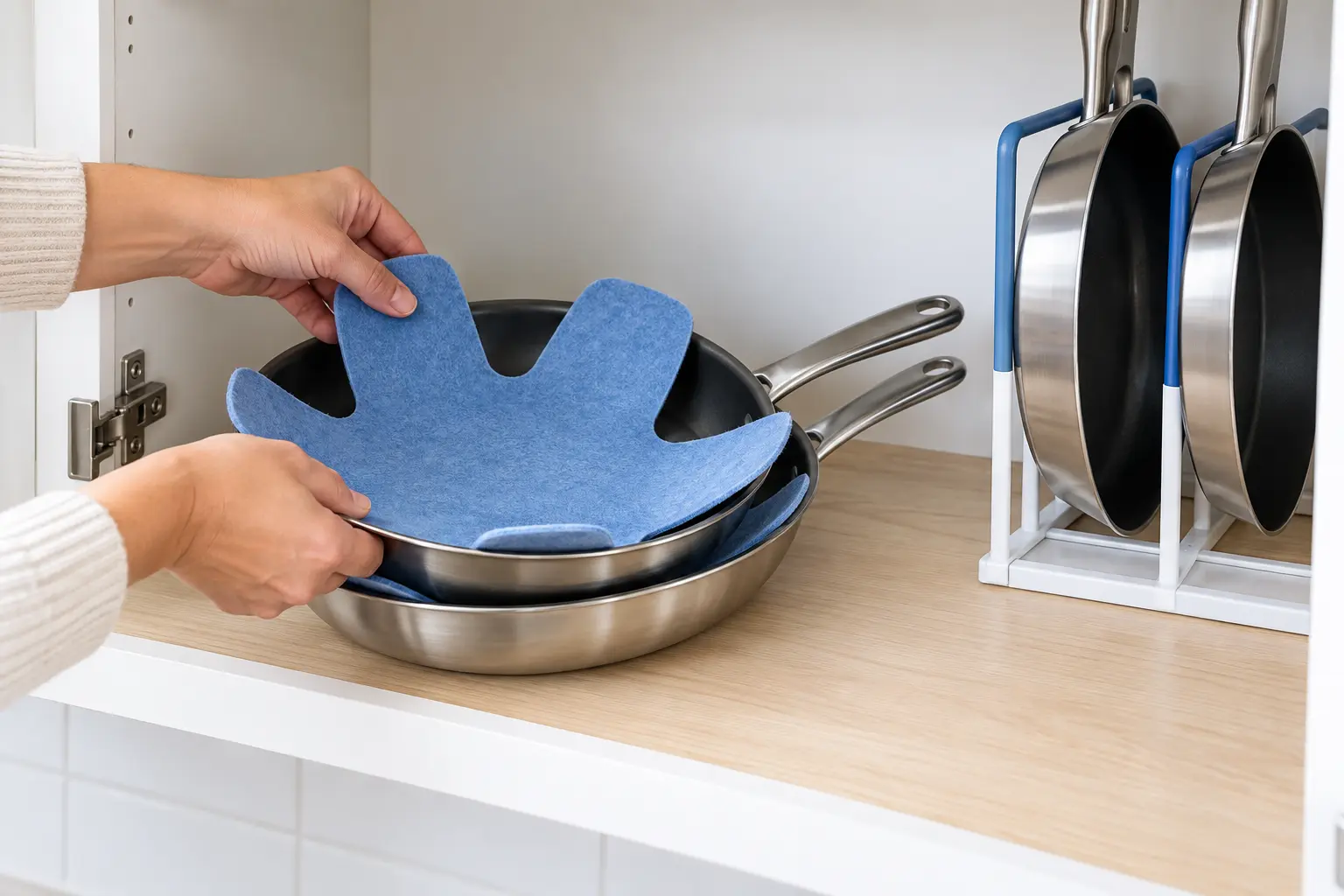
Protect the cookware: Follow the maker's care and storage instructions. Do not keep grit, moisture or hard hardware between cooking surfaces, and do not hang cookware from a handle or hole unless it is designed and mounted for that use.
Why do pans get scratched in the cabinet?
Most storage marks come from hard contact plus movement. The base of an upper pan can rub the surface below when the stack is lifted, pushed sideways or returned at an angle. Trapped crumbs or dried residue make that contact rougher. Handles can also press into rims when pans are nested in the wrong order.
Empty the space and inspect how you actually reach each pan. If the stack fits but the lower pan is used daily, access is the problem. If handles stop the door closing, geometry is the problem. If the pans touch even when stationary, separation is the problem. Choose the organizer only after naming the problem.
This is narrower than general cabinet planning. The small-kitchen storage guide helps allocate shelves and unused height; this guide focuses on separating cookware surfaces and making each pan easier to remove.
What should you measure before buying pan storage?
Use cardboard or removable tape to mark the proposed footprint. Open the door fully, pull out adjacent drawers and remove the largest pan before committing to the organizer.
Which products help store pans without scratching?
Soft pan protectors
Best for people who must nest pans in one short cabinetA clean, soft layer keeps the base of one pan from rubbing directly against the cooking surface below. It preserves the compact footprint of nesting and needs no installation.
- Benefits
- Keeps the smallest storage footprint
- Works in drawers and cabinets
- Easy to move with the cookware
- Check before buying
- Measure the largest and smallest pans, then compare protector diameter, thickness, washability and material guidance. The protector should cover contact points without bunching into the rim or handle joint.
- Possible drawback
- You still lift the upper pans to reach the bottom one, and a damp, gritty or worn protector can create a new source of marks.
Vertical pan rack
Best for a deep cabinet or drawer where pans can stand on edgeSeparate slots keep cookware surfaces apart and let you remove one pan without dragging it across another. The rack can also make pan size visible at a glance.
- Benefits
- Separates each cooking surface
- One-pan access
- No need to lift a full stack
- Check before buying
- Measure internal height, depth and door clearance with the longest handle included. Compare slot width with rims and handles, check the rack's stability, and confirm any coated contact points are smooth.
- Possible drawback
- It uses more width than nesting, and narrow slots may not fit thick rims, lids or unusually shaped handles.
Pull-out cookware organizer
Best for a deep base cabinet where rear pans are difficult to reachA sliding frame brings separated pans toward the cabinet opening. It can reduce reaching and stop cookware from being pushed into an unstable pile at the back.
- Benefits
- Brings rear storage forward
- Keeps pans in defined positions
- Useful in deep lower cabinets
- Check before buying
- Measure clear cabinet width, depth and opening after hinges, plumbing and face frames. Confirm mounting method, load rating, full handle clearance and whether installation suits the cabinet material.
- Possible drawback
- It costs more, occupies some cabinet volume and usually requires secure installation; a poor fit can block the door or adjacent hardware.
Adjustable divider rack
Best for mixed pans, lids and baking pieces whose widths changeMovable dividers can create wider bays for bulky pans and narrow bays for lids. The layout can adapt when the cookware set changes without replacing the whole organizer.
- Benefits
- Custom spacing for mixed pieces
- Can organize lids as well
- Reconfigures as the set changes
- Check before buying
- Compare usable base length, divider spacing, maximum item height and how the frame resists tipping. Check that metal edges are capped or coated where they touch cookware.
- Possible drawback
- The base and dividers consume space, and tall handles or heavy pans can make a light freestanding rack unstable.
Wall rail or ceiling-mounted rack
Best for sturdy, approved mounting outside a crowded cabinetHanging suitable pans by their handle holes removes surface-to-surface contact and frees cabinet space. Frequently used pieces can remain visible and individually accessible.
- Benefits
- No stacked contact
- Frees cabinet space
- Fast access to regular-use pans
- Check before buying
- Only use a system designed for cookware and the actual wall or ceiling structure. Verify fasteners, total stated load, hook closure, head clearance, heat and splash distance, and whether every pan handle is intended to hang.
- Possible drawback
- It is visible, collects kitchen dust and grease, needs reliable mounting, and is unsuitable where pans could be bumped or fall into a work path.
ProblemPick compares product types, not current offers. Amazon shows products, prices, ratings, availability and seller terms only after you choose to open a link.
Quick comparison: which pan-storage method fits?
| Product type | Best use | Main limitation |
|---|---|---|
| Soft pan protectors | Best for people who must nest pans in one short cabinet | You still lift the upper pans to reach the bottom one, and a damp, gritty or worn protector can create a new source of marks. |
| Vertical pan rack | Best for a deep cabinet or drawer where pans can stand on edge | It uses more width than nesting, and narrow slots may not fit thick rims, lids or unusually shaped handles. |
| Pull-out cookware organizer | Best for a deep base cabinet where rear pans are difficult to reach | It costs more, occupies some cabinet volume and usually requires secure installation; a poor fit can block the door or adjacent hardware. |
| Adjustable divider rack | Best for mixed pans, lids and baking pieces whose widths change | The base and dividers consume space, and tall handles or heavy pans can make a light freestanding rack unstable. |
| Wall rail or ceiling-mounted rack | Best for sturdy, approved mounting outside a crowded cabinet | It is visible, collects kitchen dust and grease, needs reliable mounting, and is unsuitable where pans could be bumped or fall into a work path. |
Which option suits your cabinet and cookware?
Is the cabinet short and narrow?
Keep the compact nested layout and add a clean protector between every pan. Put the most-used pan near the top so the stack moves less often.
Is there enough height for pans to stand on edge?
Choose a stable vertical rack and size each slot for the rim and handle. Test door closure with the longest handle in the outer slot.
Do pans disappear at the back of a deep lower cabinet?
A correctly fitted pull-out organizer improves access, but confirm mounting, load and hinge clearance before drilling or ordering.
Do pans and lids have very different widths?
An adjustable divider rack can create custom bays. Keep heavy pieces low and make sure the frame cannot tip when one side is loaded.
Is there no usable cabinet space left?
Consider a purpose-built wall rail only where the structure, fasteners and head clearance are appropriate. Keep cookware away from walkways and splashes.
How do you keep stored pans from rubbing again?
For the whole room, see how to organize a small kitchen. Give cookware lids their own measured slots with the pot-lid organizer guide. The food-container and lid guide handles a separate stack that often competes for the same cabinet. Browse more Kitchen and Organization guides.
Pan organizer buying checklist
Pan-storage FAQs
Can I stack pans without scratching them?
Yes, when the cookware maker allows stacking and every pan is clean and dry. Place a clean soft protector between each surface, align the stack so handles do not press into rims, and avoid sliding one pan across another.
What can I put between stacked pans?
Use a purpose-made washable pan protector or another soft, clean layer that the cookware guidance permits. It should cover the contact area without trapping moisture, grit or a raised seam against the cooking surface.
Is vertical storage better than stacking pans?
Vertical storage gives faster one-pan access and prevents direct nesting contact, but it needs enough cabinet height and width. Stacking with protectors fits a smaller footprint. The better choice depends on your cabinet and how often you reach the lower pans.
How do I measure for a pan organizer?
Measure the cabinet's clear width, depth and height after subtracting hinges, face frames and shelf supports. Add the longest handle and tallest pan or lid to the test, then compare those measurements with the organizer's installed dimensions.
Can pan protectors go between lids too?
They may help if the protector fits without forcing the lid or handle out of position. Glass lids are often easier to store upright in a stable, suitably spaced divider. Follow the lid maker's storage guidance and avoid pressure on knobs or edges.
Should pans be stored in the oven?
The oven is easy to forget before preheating and may not be the storage location recommended for every pan, lid or accessory. A measured cabinet, drawer or correctly mounted rack is usually easier to inspect and keep dry.