 ProblemPick
How to Keep Couch Cushions From Sliding
Start with the direction and cause of movement. Use a removable non-slip pad for a firm cushion on a flat deck, an approved fastener for repeat forward movement, a fitted cover for several drifting cushions, a support panel for a sagging base, or a correctly sized insert when the cushion itself has lost shape.
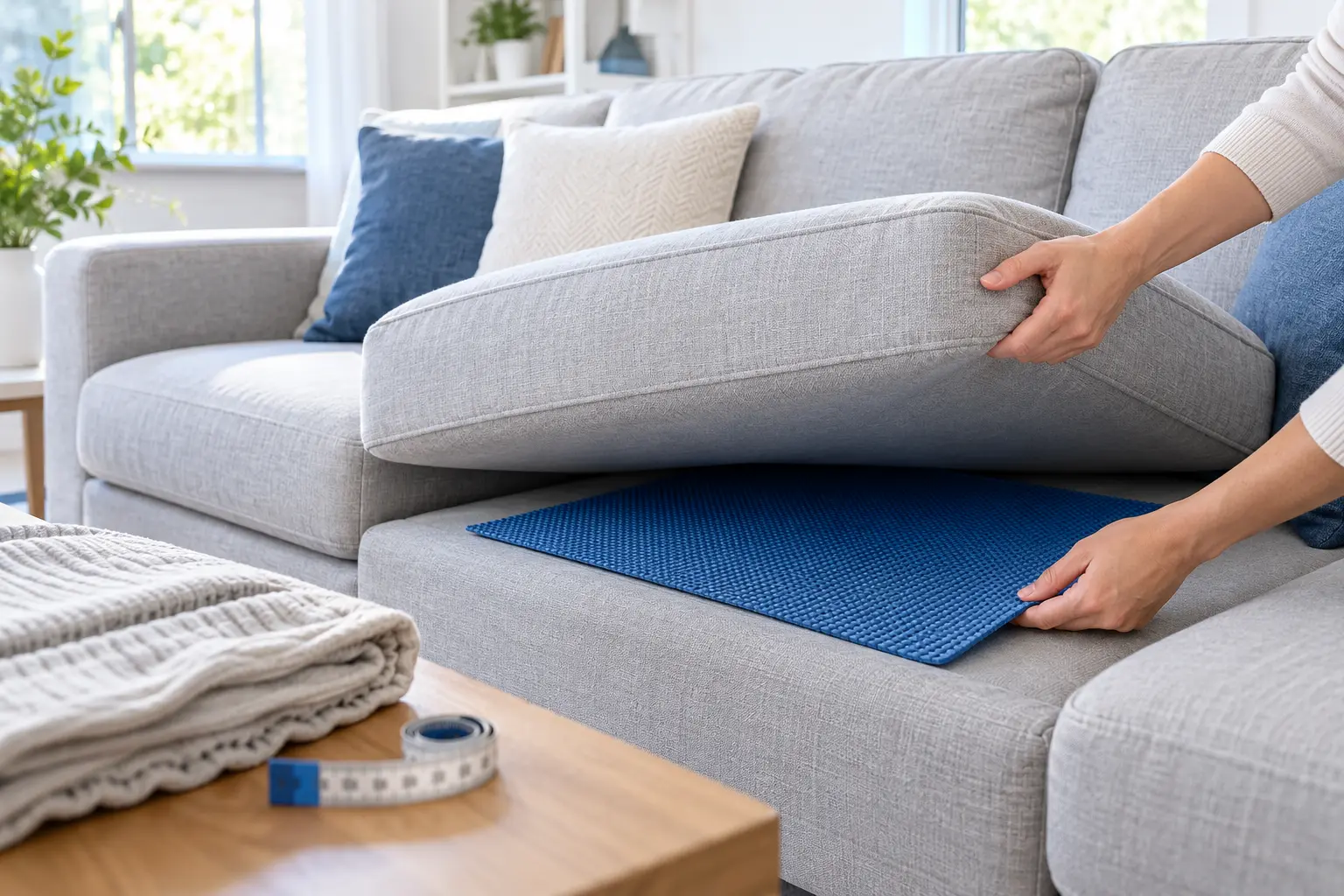
Protect the sofa: Follow the sofa, cover and accessory instructions. Test hidden contact areas first, keep products away from zippers, vents, heating elements and moving mechanisms, and stop if you see residue, color transfer, stretched seams or blocked movement. Structural damage belongs with the maker or an upholstery professional.
Why do couch cushions keep moving out of place?
Watch the cushion during normal use before adding anything. A cushion that moves straight toward the front usually has low friction, a slight deck slope or a rounded, flattened insert. Cushions that separate sideways may be too small for their openings or may need a multi-cushion solution. If the whole sofa moves, cushion products are solving the wrong problem.
Remove one cushion if the maker allows it. Check for a smooth underside, lint on the deck, folded lining, stretched cover, uneven insert or a low point in the seat base. Compare the left and right cushions. A difference in shape or deck height is more useful than assuming every movement needs stronger grip.
Recliners, sleepers and modular sofas need extra care. A hidden product must not enter a hinge, track, air opening or connecting joint. Use only an accessory the furniture instructions allow, and keep the original labels and access points visible.
What should you measure before buying a cushion gripper?
Measure while the cushion sits in its normal position, then measure the space underneath. A pad should remain hidden inside the edges; a support panel must not bridge a moving joint; a replacement insert must match the cover in three dimensions, not only width.
Which products help keep couch cushions in place?
Cut-to-fit non-slip cushion pad
Best when a removable seat cushion stays firm but slides across a compatible fabric deckA thin grippy layer increases contact across the underside without changing the cushion itself. It is the simplest reversible option when the deck is flat and the cushion still holds its shape.
- Benefits
- Reversible and easy to inspect
- Adds little height
- Can be sized to one cushion
- Check before buying
- Measure the cushion underside and seat deck, then confirm the pad is approved for both upholstery materials. Keep it inside the cushion edge, away from zippers, vents and moving mechanisms. Check whether it may be cut and how it must be cleaned.
- Possible drawback
- Dust and fabric lint reduce grip, and some rubber-like materials can transfer color, leave a pattern or react with a finish. It will not correct a sagging deck or flattened insert.
Removable hook-and-loop cushion fastener
Best when the sofa maker allows an attachment system and the same cushion repeatedly moves in one directionMatching strips create defined connection points between a removable cushion and its base. This can control forward movement more directly than a loose pad while still allowing the cushion to be removed when the system is designed for repeated opening.
- Benefits
- Targets repeat movement
- Keeps the contact points hidden
- Cushion may remain removable
- Check before buying
- Use only a fastener approved by the sofa maker and for the exact upholstery or hidden mounting surface. Check adhesive, sew-on or strap installation, removal instructions and the number of points required. Do not attach anything to a recliner mechanism, heated seat, air opening or unknown lining.
- Possible drawback
- Adhesive can mark fabric or leave residue; sewn systems alter the cover. A strong attachment may pull at seams when the cushion is removed, so this is not a universal renter-friendly choice.
Fitted sofa cover with separate cushion pieces
Best when several cushions drift apart and a washable cover is already useful for the roomA fitted outer cover can add surface tension around the sofa while separate cushion pieces keep the seat shape defined. It addresses movement as part of a full-cover setup rather than adding hidden hardware.
- Benefits
- Treats several cushions together
- Adds a washable outer layer
- No adhesive on the original fabric
- Check before buying
- Measure sofa width, depth, arm shape, back height and every removable cushion. Confirm compatibility with loose cushions, recliners and care instructions. Look for access to zippers and mechanisms and a return policy for fit.
- Possible drawback
- It changes the sofa's appearance and can wrinkle or shift itself. A cover that is too tight may pull seams or interfere with moving sections; one that is too loose will not control the cushions.
Under-cushion support panel
Best when the seat deck visibly sags and the cushions slide toward the lowest pointA support panel creates a flatter base beneath the cushions. It treats the slope that is encouraging movement instead of relying only on surface grip.
- Benefits
- Addresses a sloped seating base
- Supports several cushions at once
- Removes without altering cushion covers
- Check before buying
- Inspect the sofa frame and deck first. Measure the usable seat area and confirm the panel is permitted for that sofa type, load and any sleeper or reclining mechanism. Check edge padding, ventilation, folding joints and how it is removed for cleaning.
- Possible drawback
- It changes seat feel and height and may concentrate pressure where the sofa was not designed for it. It cannot repair a damaged frame, broken spring or mechanism and must not block moving parts.
Correct-size replacement cushion insert
Best when the cover still fits but the insert has flattened, twisted or no longer fills the front cornersAn insert matched to the original cover restores the shape that helps a cushion sit level against adjacent pieces. It is most relevant when the movement begins with a deformed cushion rather than a slippery deck.
- Benefits
- Treats lost cushion shape
- Keeps the original outer cover
- Can restore even contact with the deck
- Check before buying
- Remove the insert only if the cover is designed to open. Measure length, width, thickness and edge shape without stretching the cover. Match the sofa maker's material, density, fire-label and care requirements; use an upholsterer when the cushion is sewn closed or unusually shaped.
- Possible drawback
- Foam feel and fit are difficult to judge online. An insert that is too large strains the zipper and seams; one that is too small creates gaps and may slide even more.
ProblemPick compares product types, not current offers. Amazon shows products, prices, ratings, availability and seller terms only after you choose to open a link.
Quick comparison: which cushion solution fits?
| Product type | Best use | Main limitation |
|---|---|---|
| Cut-to-fit non-slip cushion pad | Best when a removable seat cushion stays firm but slides across a compatible fabric deck | Dust and fabric lint reduce grip, and some rubber-like materials can transfer color, leave a pattern or react with a finish. It will not correct a sagging deck or flattened insert. |
| Removable hook-and-loop cushion fastener | Best when the sofa maker allows an attachment system and the same cushion repeatedly moves in one direction | Adhesive can mark fabric or leave residue; sewn systems alter the cover. A strong attachment may pull at seams when the cushion is removed, so this is not a universal renter-friendly choice. |
| Fitted sofa cover with separate cushion pieces | Best when several cushions drift apart and a washable cover is already useful for the room | It changes the sofa's appearance and can wrinkle or shift itself. A cover that is too tight may pull seams or interfere with moving sections; one that is too loose will not control the cushions. |
| Under-cushion support panel | Best when the seat deck visibly sags and the cushions slide toward the lowest point | It changes seat feel and height and may concentrate pressure where the sofa was not designed for it. It cannot repair a damaged frame, broken spring or mechanism and must not block moving parts. |
| Correct-size replacement cushion insert | Best when the cover still fits but the insert has flattened, twisted or no longer fills the front corners | Foam feel and fit are difficult to judge online. An insert that is too large strains the zipper and seams; one that is too small creates gaps and may slide even more. |
Which option matches the way the cushions move?
Does one firm cushion slide on a flat fabric deck?
Begin with a cut-to-fit pad approved for both materials. It is the easiest option to remove, clean and inspect before considering an attachment system.
Does the same cushion move forward every time?
An approved hook-and-loop fastener can create defined holding points. Use it only when the mounting surface and removal method are explicitly allowed.
Do several loose cushions drift apart?
A fitted cover with separate cushion pieces can manage the group without modifying each insert. Measure every section and confirm that no mechanism is covered.
Do all cushions slide toward a low middle?
Inspect the seat deck. A support panel may flatten an otherwise sound base, but broken springs, a damaged frame or a mechanism problem need the maker or an upholsterer.
Has one cushion become rounded or flat?
Compare it with the others. A correctly sized replacement insert addresses the lost shape; adding stronger grip beneath a deformed cushion usually treats only the symptom.
How do you set up a reversible cushion solution?
If a floor rug is moving rather than the sofa cushion, use the separate guide to keep an area rug from sliding. If the gaps are swallowing the TV control, use the focused guide to stop losing remote controls. For surface cleaning, compare products to remove pet hair from a sofa. Browse more Home guides and Organization guides.
Couch-cushion buying checklist
Couch-cushion sliding FAQs
Why do my couch cushions keep sliding forward?
The underside may have little grip, the seat deck may slope, the insert may have flattened, or normal sitting may push the cushion toward the front edge. Remove one cushion and inspect its shape, the deck and the direction of movement before choosing a product.
What can I put under couch cushions to stop them sliding?
A cut-to-fit non-slip pad is the most reversible starting point when both upholstery materials allow it and the deck is flat. Keep it within the cushion edges and inspect regularly for lint, residue, color transfer or material changes.
Can non-slip rug pads be used under sofa cushions?
Do not assume they are interchangeable. A rug pad may be formulated for flooring rather than upholstery and can be too thick, abrasive or chemically incompatible. Choose a product that explicitly names the sofa and cushion materials.
Will hook-and-loop tape damage a sofa?
It can mark fabric, leave adhesive or pull at seams when removed. Use it only when the sofa maker and fastener instructions allow the exact mounting surface. Prefer a reversible pad when approval is unclear.
How do I stop sectional cushions from separating?
First confirm whether each cushion slides on the deck or the entire sectional shifts. Individual pads or approved fasteners can address cushion movement; a fitted cover can help several loose cushions. Connect or restrain furniture sections only with the system supplied or approved for that model.
Should I replace a sliding sofa cushion?
Replacement is worth considering when the insert is permanently flattened, twisted, crumbling or no longer fills its cover after the allowed care routine. Measure the original shape and check manufacturer specifications before replacing only the insert or the complete cushion.